Quick Summary
Forestry mulching is a good fit for a residential lot when you want cedar, brush and small trees gone and the soil left covered. If part of the lot needs bare dirt for a house pad, slab or driveway, that part needs dozer land clearing instead.
- A high-flow track loader with a mulching head grinds cedar, brush and small trees in place. No burn piles, no haul-off.
- Stumps below grade and roots stay in the ground, so bare-dirt work is a separate job.
- Forestry mulching runs $2,300 per day. You can choose a project price or our day rate.
- Texas A&M Forest Service advises keeping the first 5 feet around a home free of combustible material such as mulch.
- Mark the trees you want to keep before the owner site walk.
Table of Contents
- What Forestry Mulching Does on a Residential Lot
- What a Forestry Mulcher Removes and What It Leaves
- Forestry Mulching vs. Dozer Clearing
- What Forestry Mulching Costs on a Residential Lot
- Getting Your Lot Ready
- After the Mulch: Using Your Cleared Lot
- How to Get a Quote
- Frequently Asked Questions
What Forestry Mulching Does on a Residential Lot
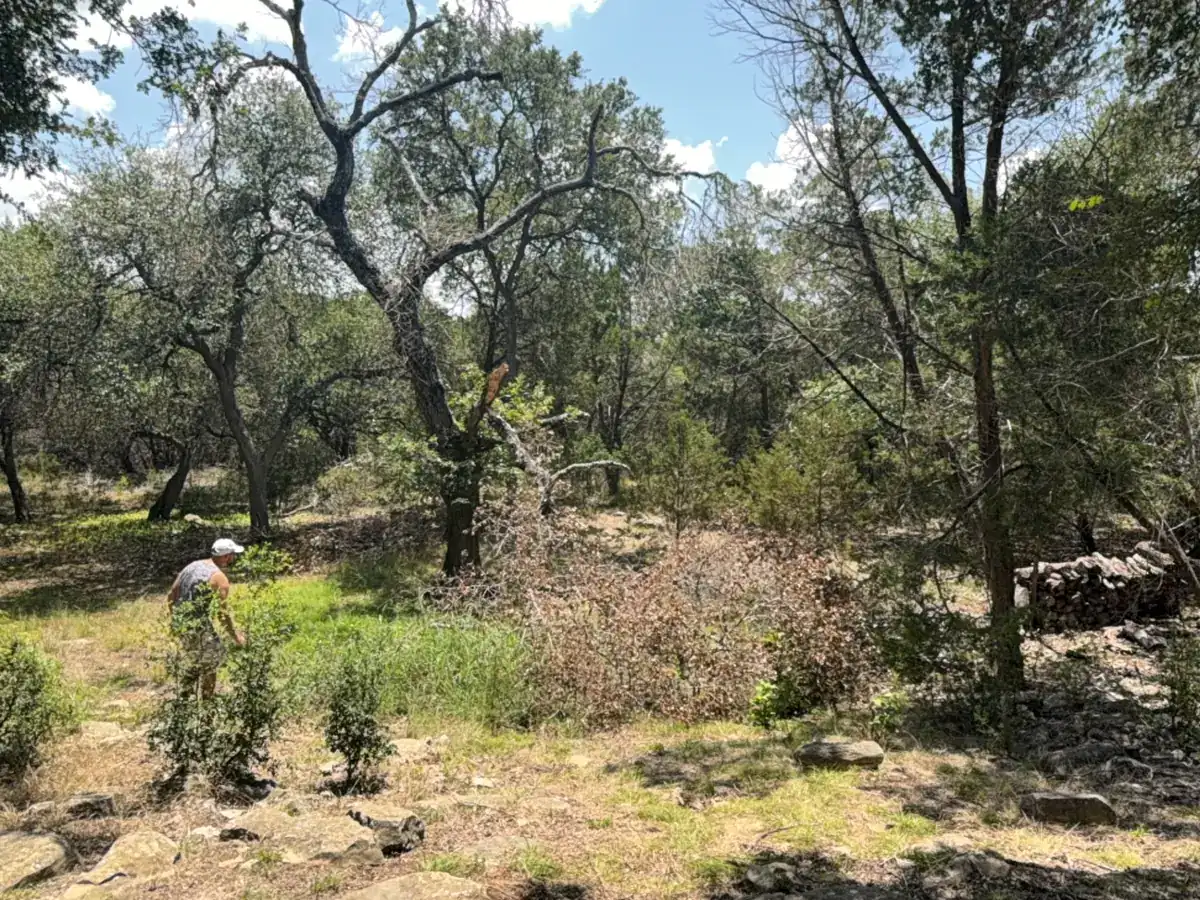
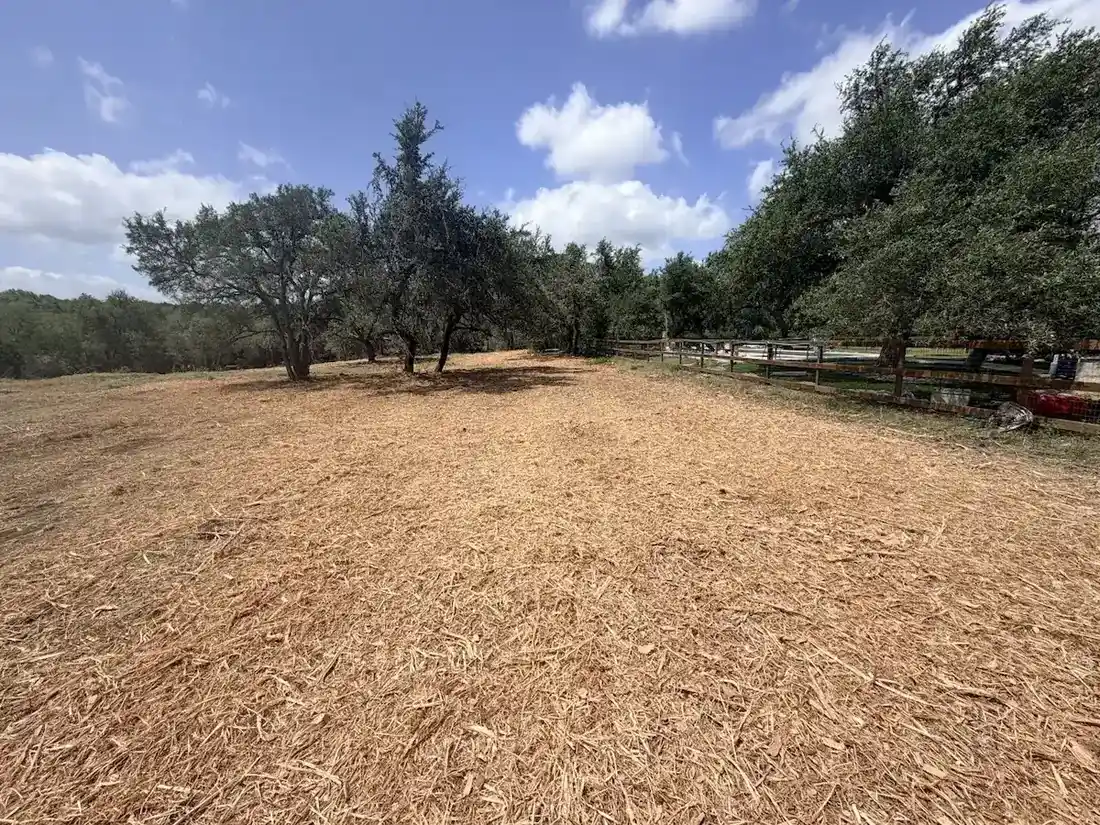
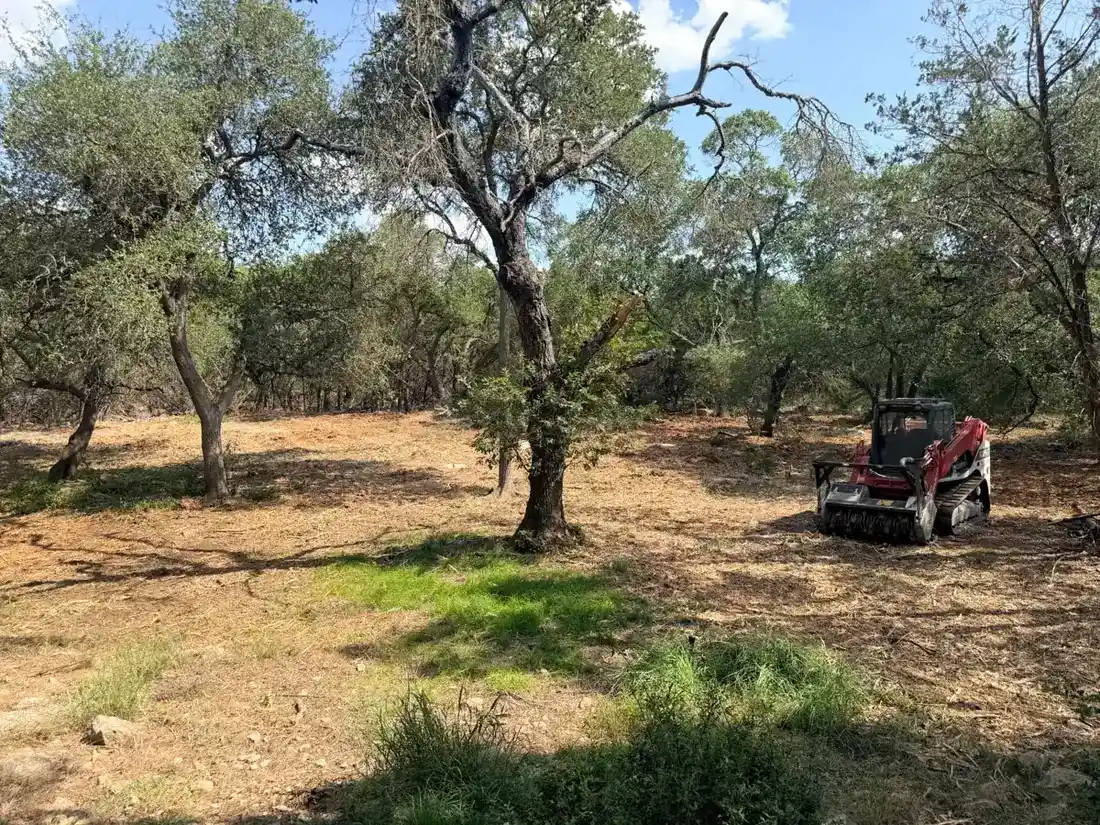
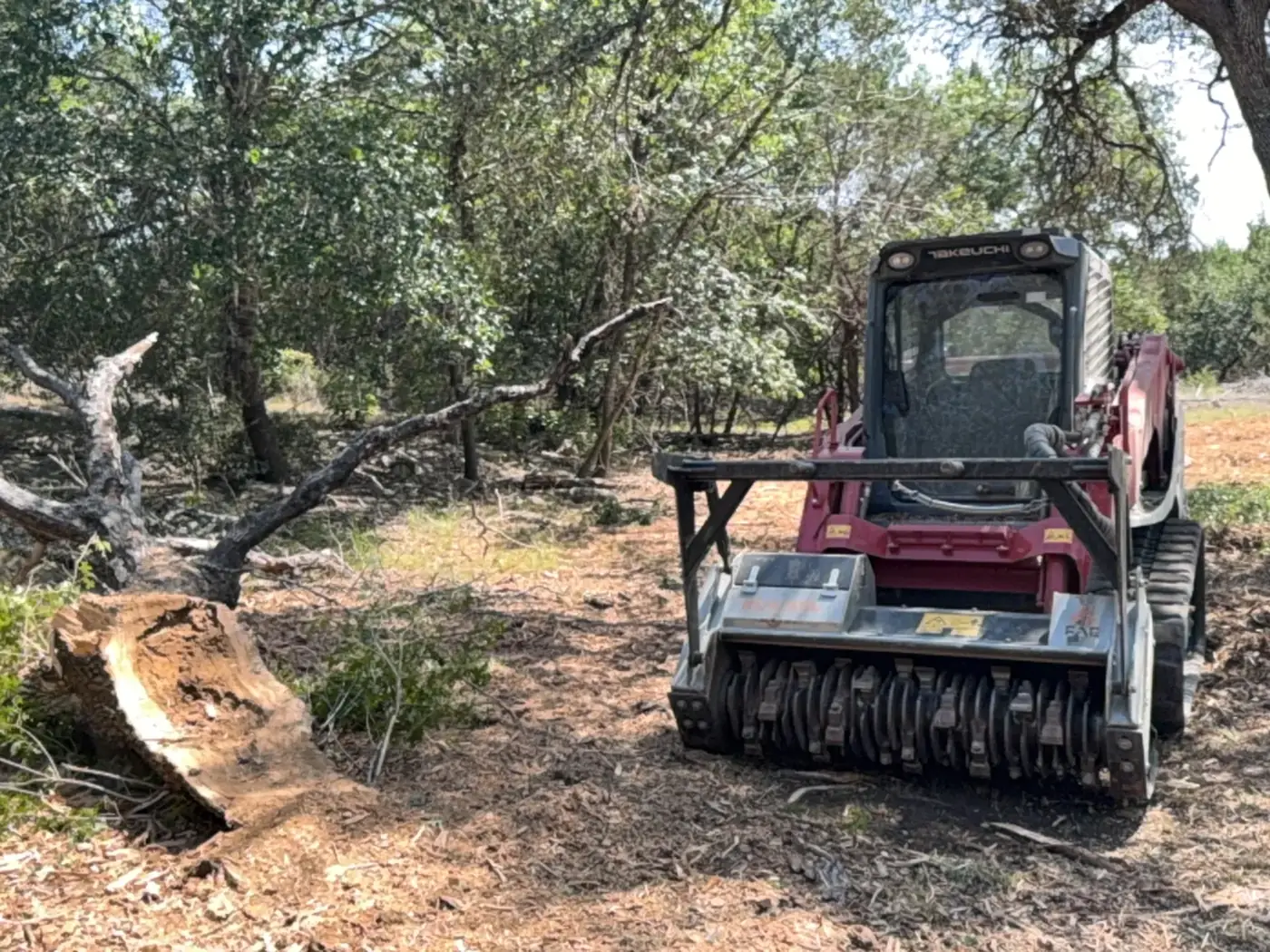
Forestry mulching clears land by grinding cedar, brush and small trees in place. A high-flow track loader runs a mulching head that cuts and shreds vegetation where it stands and leaves it as a mulch layer on the ground. There are no burn piles and no haul-off.
On a residential lot, that usually means opening up space around the house, clearing for a view or a trail, cutting back cedar near the home to reduce wildfire fuel, or getting brush off ground you want to use.
The mulch matters here. Hill Country soil is thin and rocky, and the mulch layer protects it, holds moisture and slows regrowth.
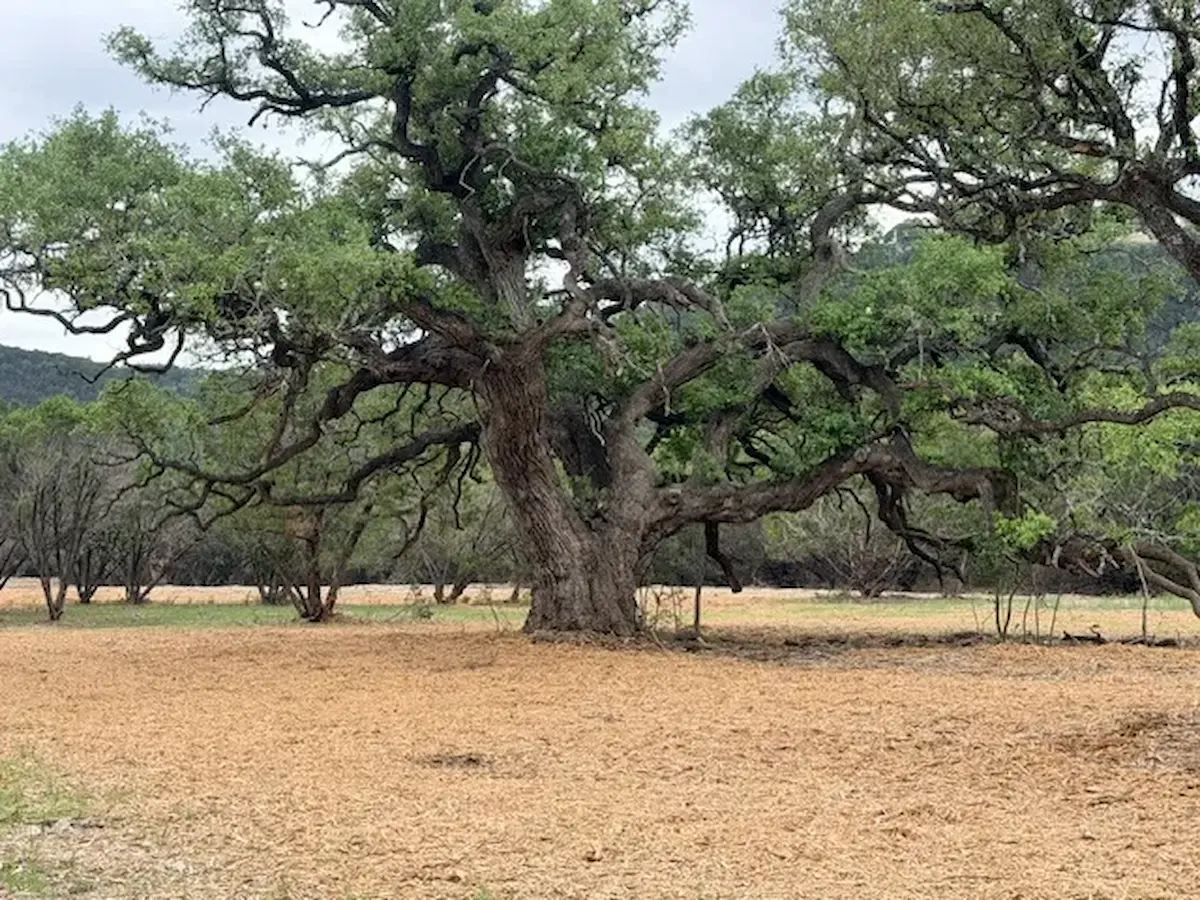
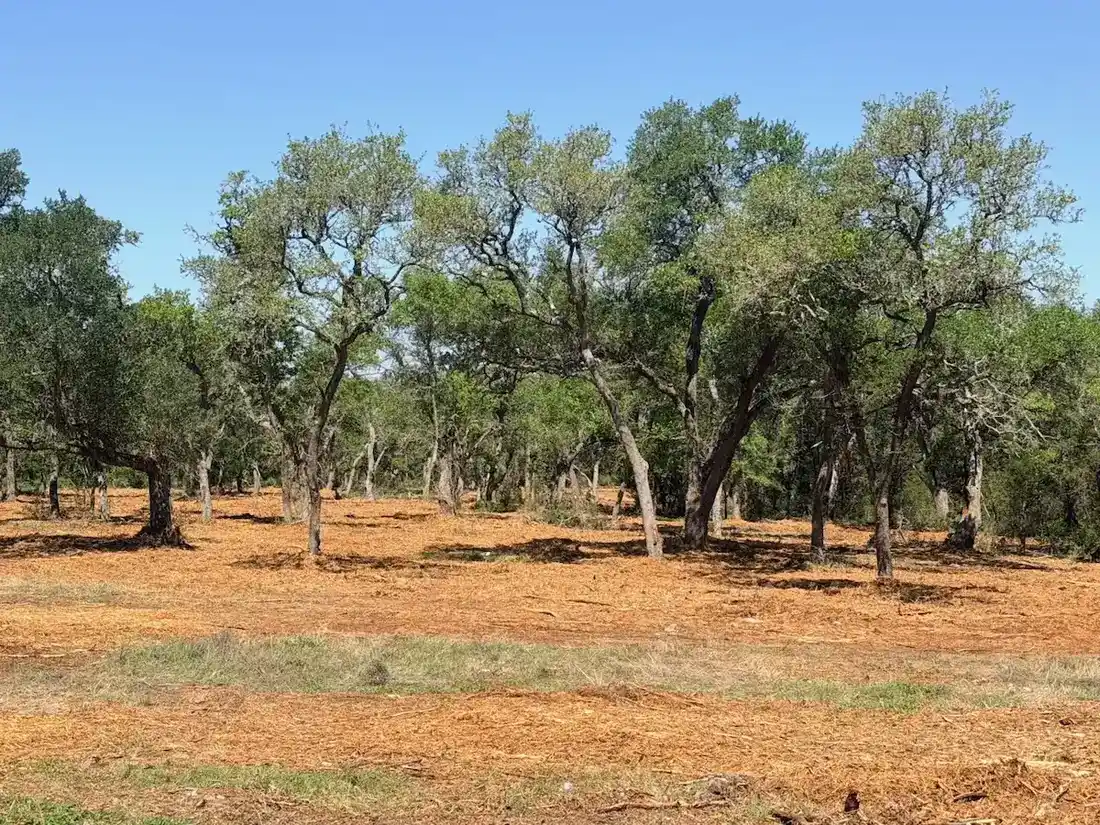
Cedar (Ashe juniper) is usually the main target. We work around the oaks and other trees you want to keep. Our forestry mulching page covers the service in more detail.
What a Forestry Mulcher Removes and What It Leaves
The mulching head grinds cedar, brush and unwanted trees down to the ground. Fixed carbide teeth handle material up to 8 inches. For trees over 8 inches, up to 12 inches and larger, we run knife and chisel teeth.
What stays in place:
- Stumps below grade and the roots
- Every oak and other tree you mark to keep
Mesquite is a separate job. It resprouts after cutting, so forestry mulching doesn’t remove or control it. Mesquite removal is dozer and grubbing work.
Forestry Mulching vs. Dozer Clearing
Forestry mulching leaves mulch and roots in place. Dozer clearing removes vegetation, stumps and roots down to bare dirt and usually requires haul-off. The right choice depends on what you want the land to become.
Mulching fits ground you want cleared but not stripped: yard space, views, trails, defensible space and pasture.
Dozer work fits bare-dirt projects: house pads, slabs, driveways and foundations. Those need stumps and roots out of the ground. Dozer work is quoted per job.
Factor | Forestry Mulching | Dozer Clearing |
|---|---|---|
Ground result | Mulch layer, roots in place | Bare dirt |
Debris | Left on-site as mulch | Hauled off |
Soil disturbance | Low | High |
Best for | Brush, cedar, trails, defensible space | Pads, slabs, driveways, ponds |
Haul-off needed | No | Usually yes |
Some lots need both. If you’re building, decide which part gets dozer work and which part gets mulched. Our land clearing page covers the dozer side.
What Forestry Mulching Costs on a Residential Lot
Forestry mulching, cedar removal, wildfire mitigation, selective clearing and trail cutting run $2,300 per day, one rate across the Texas Hill Country. You can choose a project price or our day rate. Either way, the price is agreed before work starts.
How many days a lot takes depends on how much ground you’re clearing, how dense the cedar and brush are, and the slope, rock and access. In typical dense, rocky, hilly Hill Country cedar, forestry mulching covers about half an acre per day. On flat ground with light brush, it can cover up to about 3 acres per day.
Financing is available for projects over 10 acres. For more detail, see how our forestry mulching day rate works.
Getting Your Lot Ready
Before the owner site walk, flag every tree you want to keep with bright paint or flagging tape. Start with the mature oaks. We avoid wounding or pruning oaks February through June and schedule oak-adjacent work with that window in mind.
Then mark anything we need to know about:
- Property pins or boundary stakes
- Septic lids, shallow water lines and underground electrical
- Old T-posts, wire or junk piles hidden in the brush
- Gates and fences on the way in, so our truck and trailer can get through
If your lot is in an HOA or has deed restrictions, check what they allow before work starts. Our project preparation guide has the full checklist.
After the Mulch: Using Your Cleared Lot
Cedar doesn’t resprout from the stump once it’s cut below the green. New cedar comes back from seed that birds and wildlife spread, so a maintenance pass every few years keeps regrowth small. Our cedar regrowth and maintenance guide explains how that works.
Around the house. Any wood mulch can burn and throw embers. Texas A&M Forest Service advises keeping the first 5 feet around a home free of combustible material such as mulch. If cedar is cleared close to the house, keep mulch out of that zone and use rock or other noncombustible cover there. Clearing cedar and brush farther out reduces wildfire risk, but it doesn’t eliminate it. Our wildfire mitigation page covers defensible space, and Does Forestry Mulch Increase Fire Risk? covers the mulch side.
Pasture and open ground. Cleared ground can come back in native grasses.
Trees and habitat. If you want to keep wildlife cover or a wooded feel, our selective clearing work takes the cedar and leaves the trees you choose.
Some programs and insurers may recognize documented brush management. If that matters to you, check with them directly.
How to Get a Quote
Click “Get a Free Quote Today” and send your project details first, then a few photos. We typically reply within minutes. Before any contract is signed, an owner walks the property with you. You can also call or text (512) 641-5658.
We’re a family-run company, licensed and insured.
Frequently Asked Questions
Is forestry mulching a good fit for a residential lot?
Yes, when you want cedar, brush and small trees cleared and the soil left covered. It grinds vegetation in place with no burn piles or haul-off. If part of the lot needs bare dirt for a house pad, slab or driveway, that part needs dozer land clearing instead.
Can forestry mulching clear cedar while preserving mature oaks?
Yes. We clear the cedar and brush and work around the oaks and other trees you mark to keep. We avoid wounding or pruning oaks February through June and schedule oak-adjacent work with that window in mind.
Does forestry mulching remove tree stumps and roots?
No. The mulching head grinds trees down to the ground, but stumps below grade and roots stay in place. If you need them out for bare dirt, such as a house pad or driveway, that’s dozer land clearing, which is quoted per job.
What should I do before a forestry mulching crew arrives?
Flag every tree you want to keep, and mark property pins, septic lids, buried lines and anything hidden in the brush. Make sure our truck and trailer can get through the gate. To get started, click “Get a Free Quote Today” and send your project details first, then a few photos.
Forestry mulching fits a residential lot when you want cedar and brush gone and the soil kept covered. Plan any bare-dirt areas for dozer work, mark the trees you want to keep, and we’ll clear the cedar and brush around them.