Last Updated: November 2, 2026
Quick Summary
Before you close on cedar-covered acreage, walk it with clearing in mind. How much of it is cedar, which oaks are worth keeping, how a crew gets in, where the rock and slope are, and where the house will go all shape what it will take to open the land up.
- Walk the land itself. Dense cedar hides the ground, the rock and the trees worth keeping.
- Patches of dead or dying live oaks are worth having checked for oak wilt before you close.
- Know where the boundary and any easements run, and how a truck and trailer get in.
- Forestry mulching runs $2,300 per day, and the price is agreed before work starts.
Table of Contents
- Walk the Land, Not the Listing
- How Much of It Is Cedar
- Which Oaks Are Worth Keeping
- Boundaries, Easements and Access
- Rock and Slope
- Where the House Will Go
- Wildfire Risk Near a Homesite
- Ag or Wildlife Valuation
- Cost-Share Timing
- What Clearing Will Cost
- Get a Free Quote Today
- Frequently Asked Questions
Walk the Land, Not the Listing
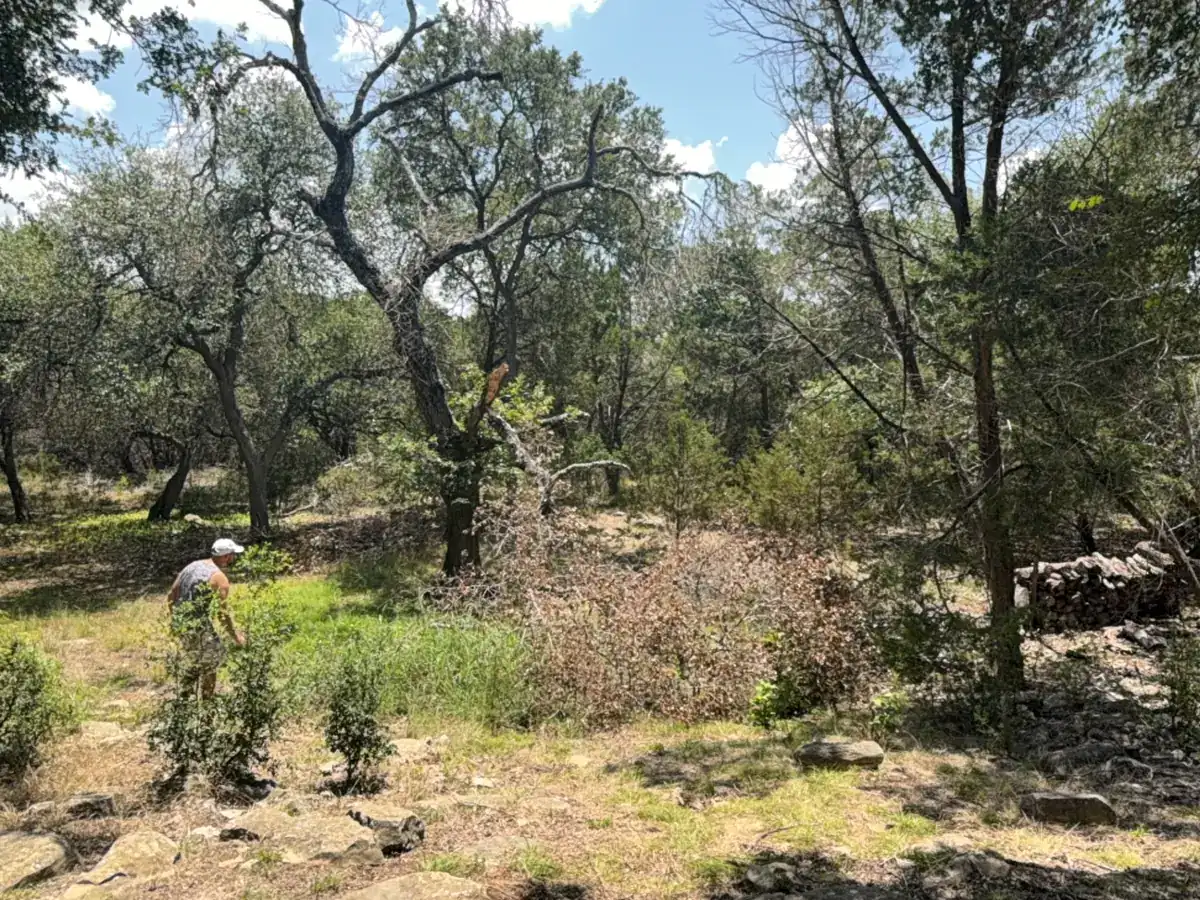
When you’re buying land in the Texas Hill Country, listing photos show the views and the open spots. Dense cedar hides the rest: the ground, the rock, old fences, and which trees are worth keeping.
Walk the parts of the property you plan to use, and take photos as you go.
Cedar here is Ashe juniper, and it’s native to the Hill Country. Left alone, it spreads into pasture and around oaks and crowds out native grasses.
How Much of It Is Cedar
Look at how much of the property is cedar and how thick it is. Open ground with scattered cedar is a different job than a thicket you can’t walk through.
Cedar cut below the green does not resprout from the stump. New cedar comes back from seed, carried in by birds and wildlife that eat the berries, mostly from cedar standing nearby. So clearing doesn’t end the work for good. A maintenance pass every few years keeps new cedar small.
Our cedar removal page covers how we clear it.
Which Oaks Are Worth Keeping
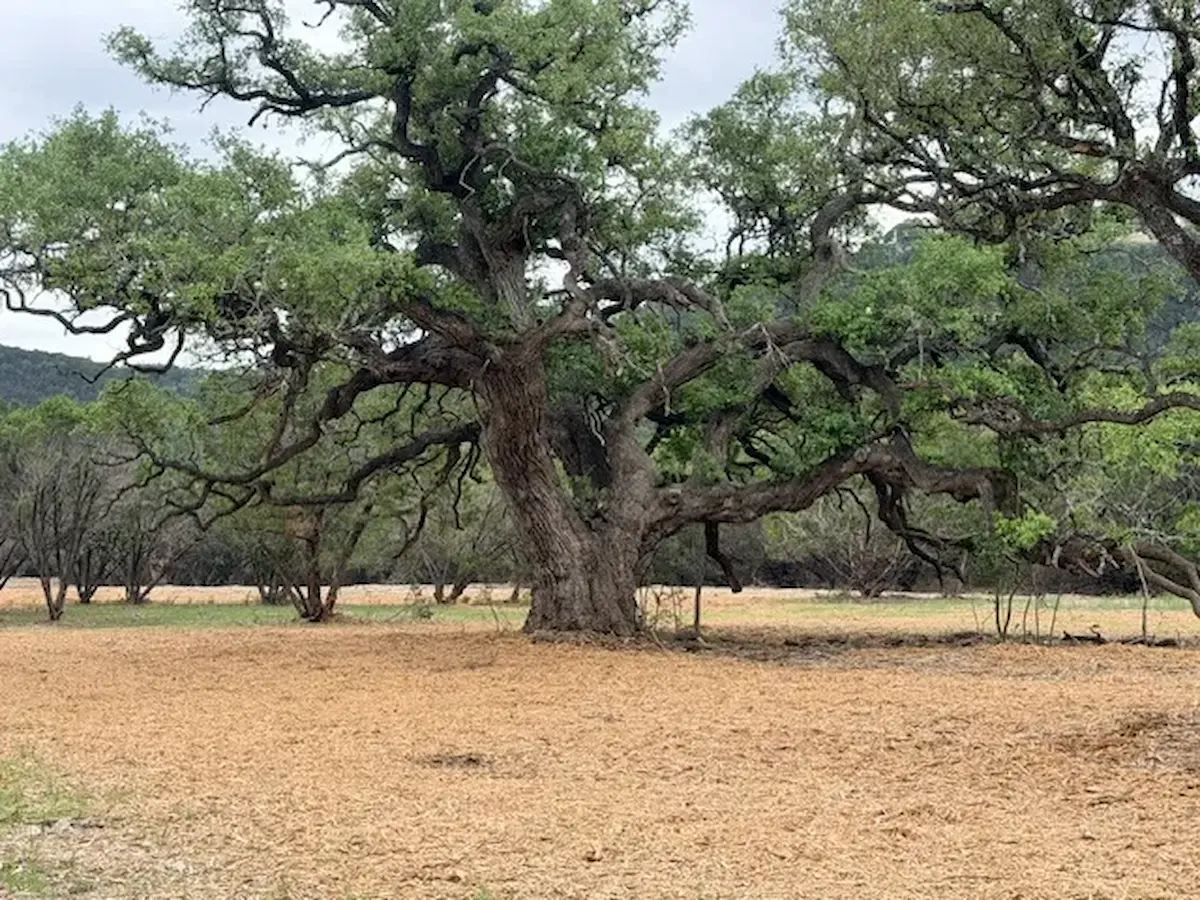
For many buyers, the oaks are the reason to buy. Note where the big live oaks are, along with any other trees you’d keep, and whether cedar is crowding them.
Look for patches of dead or dying live oaks. Live oaks often grow with connected roots, and oak wilt can spread through them and kill trees in groups. Leaves with yellow veins that turn brown are another sign. If you see either, have it checked before you close.
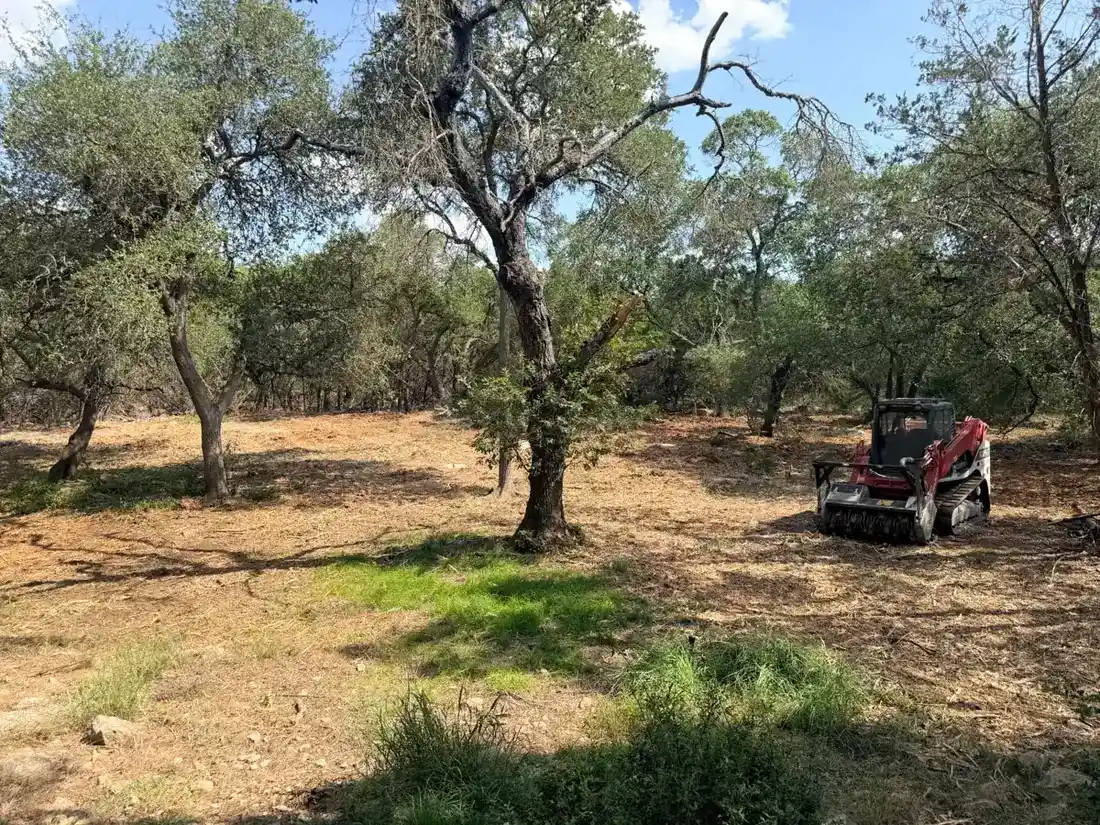
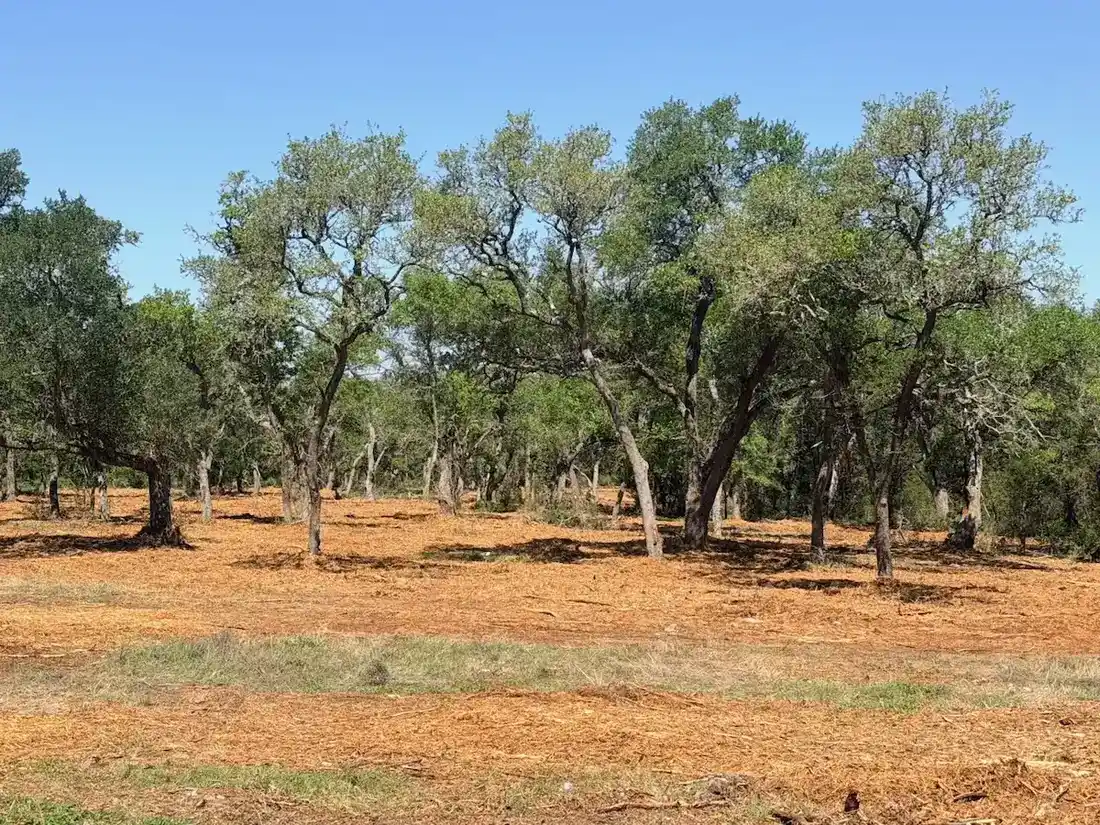
Keeping mature oaks is central to how we work. We clear around oaks and any other trees you want kept. Texas A&M Forest Service advises against wounding or pruning oaks February through June. Our selective clearing page explains how we plan what stays.
Boundaries, Easements and Access
Find the corner pins and know where the line runs. If the corners are missing or you’re unsure of the line, ask about a survey before you close. It’s far easier to settle now than after clearing starts.
Ask about easements too. A power line, pipeline or shared road may cross the property, and the easement holder may have its own rules about what happens there.
Then look at how a crew gets in. Our truck and trailer need an entry about 10 feet wide, and gates have to open. Our project preparation checklist covers what else to mark before a crew arrives.
Rock and Slope
A lot of Hill Country acreage has limestone ledges, exposed rock and steep draws. Note where the exposed rock and steep ground are on your walk.
Rock, slope and large timber slow the pace. They also wear the teeth, knives and mulching head faster, which is part of why the work costs what it does. We plan the work around the terrain and price for it before we start.
If the road in is rough, broken limestone, that’s a separate job. Our rock grinding service grinds rock in place on driveways and ranch roads.
Where the House Will Go
Decide roughly where the house, barn and driveway will sit. That tells us which ground needs bare dirt and which ground just needs the cedar and brush gone.
Forestry mulching | Dozer clearing | |
|---|---|---|
What it does | Grinds cedar, brush and small trees in place into a mulch layer | Pushes out cedar, brush, stumps and roots down to bare dirt |
What it leaves | A mulch layer over the soil; no burn piles, no haul-off | Bare dirt; debris usually hauled off |
Best fit | Pasture, views, trails and brush around the trees you keep | House pads, slabs, driveways and foundations |
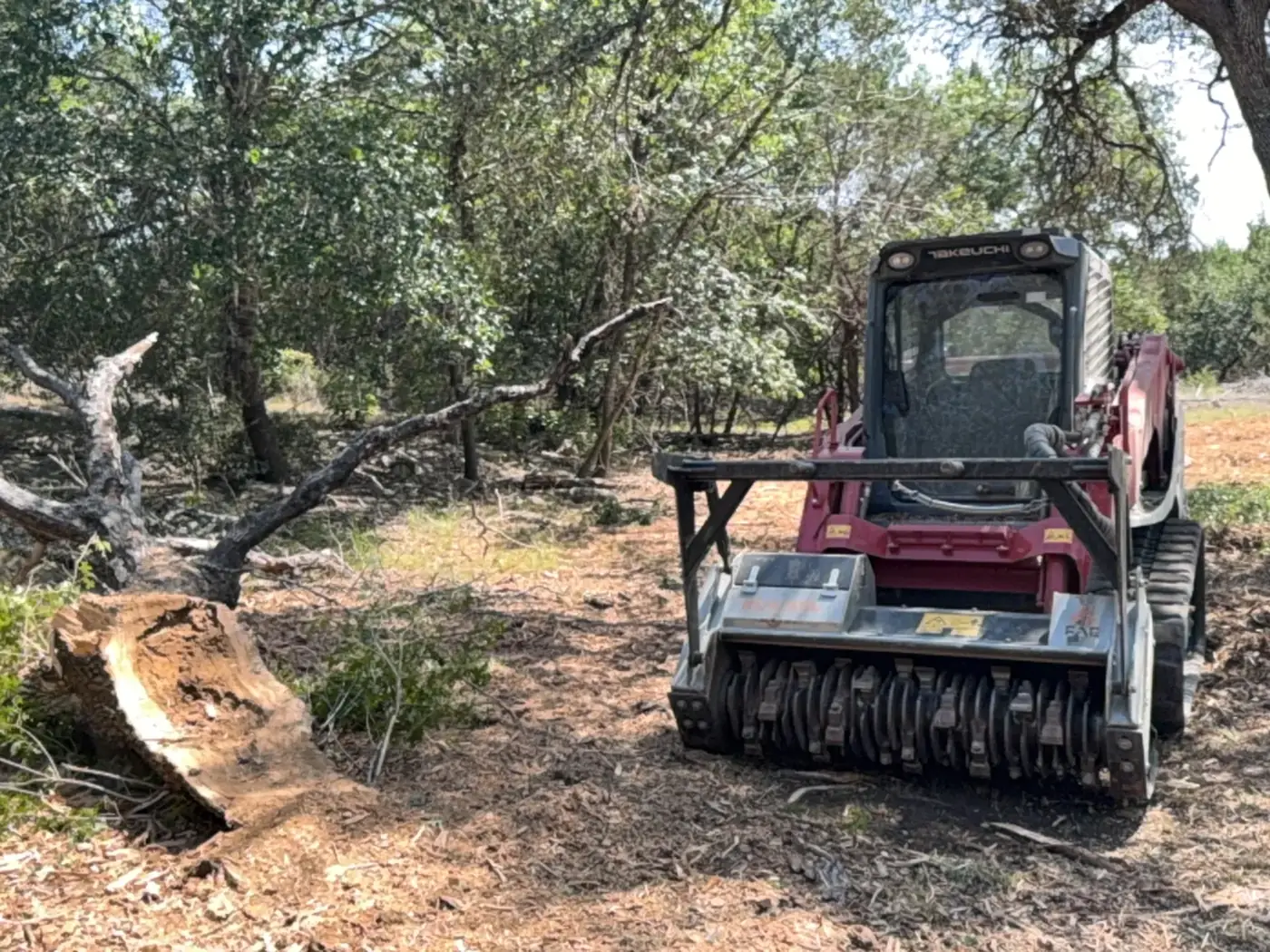
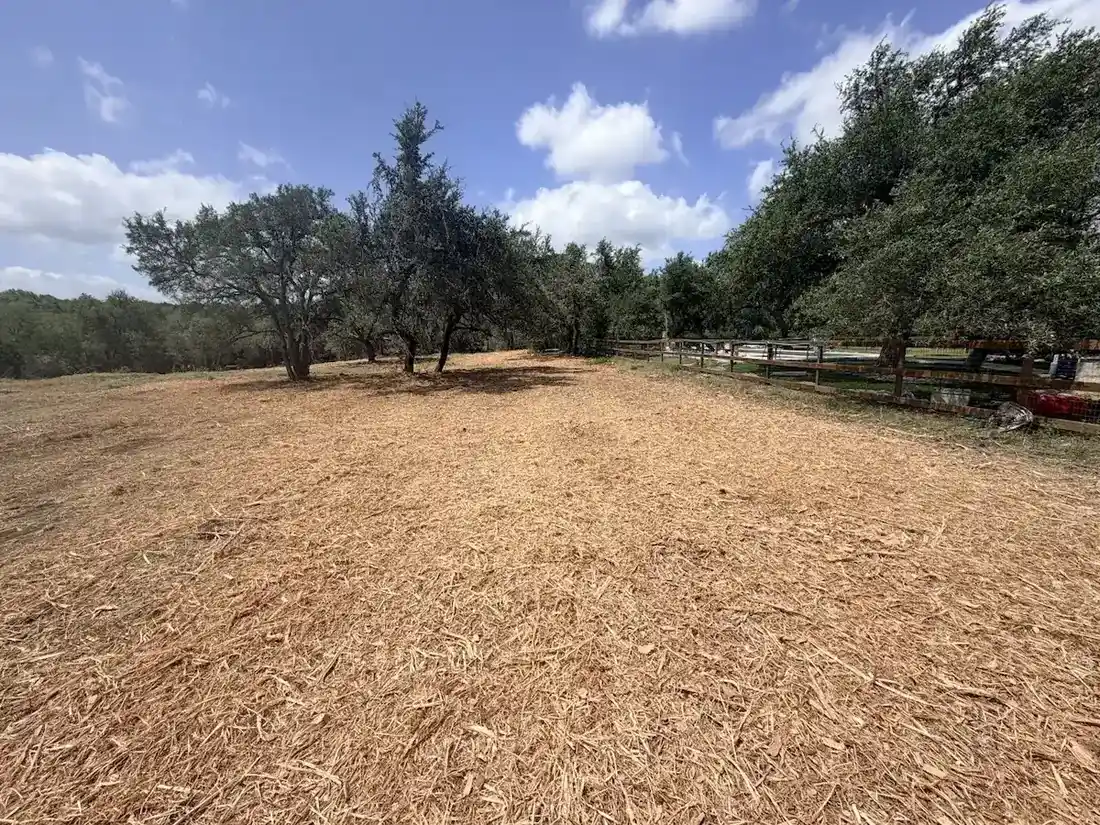
Many properties use both: forestry mulching across most of the land and dozer work only where the house goes. The mulch protects thin, rocky soil, holds moisture and slows regrowth. Our land clearing page explains the dozer side.
Wildfire Risk Near a Homesite
Thick cedar is heavy fuel. A homesite surrounded by it carries more wildfire risk than one with the brush thinned back.
Clearing reduces that risk. It doesn’t eliminate it. Any wood mulch can burn and throw embers, so Texas A&M Forest Service recommends no wood mulch in the first 5 feet around a home. Use rock or other noncombustible cover there instead.
Our wildfire mitigation page covers how we clear around homes. For background on cedar, oak wilt and wildfire, see our land education page.
Ag or Wildlife Valuation
If the property has an agricultural or wildlife appraisal for property taxes, ask the county appraisal district what it takes to keep it before you close.
The Texas Comptroller notes that changing land to a non-agricultural use can trigger a rollback tax. We can’t tell you how your plans will be treated. The appraisal district can.
Cost-Share Timing
Some landowners apply to the Texas A&M Forest Service Mechanical Fuel Reduction (MFR) grant or NRCS EQIP Practice 314 for brush management. If you might, timing matters.
Work done before the MFR pre-inspection, or before an EQIP contract is signed, isn’t paid. EQIP applicants also need a deed or lease showing control of the property, so the application comes after you own or lease it. Don’t start clearing first if you plan to apply.
Our grants page lays out what each program requires.
What Clearing Will Cost
Forestry mulching and cedar removal run $2,300 per day, one rate across the Texas Hill Country. In typical dense, rocky, hilly cedar, we mulch about half an acre per day. On flat ground with light brush, we can cover up to about 3 acres per day.
You can choose a project price or our day rate. Either way, the price is agreed before work starts. Financing is available for projects over 10 acres.
If you want a clearing price in hand before you close, send us your project details and photos from your walk. An owner walks the property before any contract is signed.
Get a Free Quote Today
Cedar-covered land can be a good buy when you know what it will take to open it up. Walk it, check the oaks, the line, the access and the rock, and know where the house goes before you close.
To get a quote, click “Get a Free Quote Today” and submit your project details first, then a few photos of the property. We typically reply within minutes. You can also call or text us at (512) 641-5658.
Frequently Asked Questions
Should I get a clearing quote before buying land?
It can help. Send us your project details and photos from your walk so you know what the clearing involves before you close. An owner walks the property before any contract is signed.
How much does it cost to clear cedar on land I’m buying?
Forestry mulching and cedar removal run $2,300 per day. We mulch about half an acre per day in typical dense, rocky, hilly cedar and up to about 3 acres per day on flat ground with light brush.
How can I tell if the oaks on a property have oak wilt?
Look for patches of dead or dying live oaks and for leaves with yellow veins that turn brown. If you see either, have it checked before you close.
Will cedar grow back after the land is cleared?
Cedar cut below the green won’t resprout from the stump, but new cedar comes back from seed. A maintenance pass every few years keeps it small.
Should I ask about the ag valuation before clearing?
Yes. Ask the county appraisal district what it takes to keep an agricultural or wildlife appraisal before you close. Changing land to a non-agricultural use can trigger a rollback tax.
Can I clear first and apply for cost-share later?
No. Work done before the MFR pre-inspection, or before an EQIP contract is signed, isn’t paid.