Quick Summary
Selective land clearing removes cedar and brush while keeping the oaks and other trees you want. To preserve oak trees, decide what stays before work starts, limit machine traffic over root zones, keep mulch piles off them, and avoid wounding oaks February through June, when oak wilt spreads most easily.
- Set your goals first. They decide how much to open up and what to leave.
- Every oak stays. Favor the mature ones and clear the cedar and brush crowding them.
- Most feeder roots sit in the top foot of soil and reach past the canopy edge, so protect the root zone, not just the trunk.
- Paint any fresh oak wound right away, any time of year, as Texas A&M Forest Service recommends.
- Forestry mulching grinds cedar and brush in place, leaving a mulch layer that protects thin, rocky soil and slows regrowth.
Table of Contents
- Step 1: Decide What the Clearing Should Accomplish
- Step 2: Pick the Oaks You Want to Favor
- Step 3: Sort Everything Else Into Keep or Remove
- Step 4: Thin Around Keepers Without Clearing to Bare Ground
- Step 5: Mark Your Keepers and Protect Their Root Zones
- Step 6: Time Oak-Adjacent Work Around Oak Wilt
- Step 7: Clear Around the Oaks With Forestry Mulching
- Pricing and Getting a Quote
- Frequently Asked Questions
Step 1: Decide What the Clearing Should Accomplish
Selective land clearing means taking out the cedar, brush and small trees you don’t want and leaving the oaks and other trees you do. Nothing gets cleared just because it’s there.
Start with the goal. Open pasture for native grasses, a view, room around the house, less wildfire fuel or better wildlife habitat each call for a different amount of clearing. Decide what you want the land to look like when we’re done.
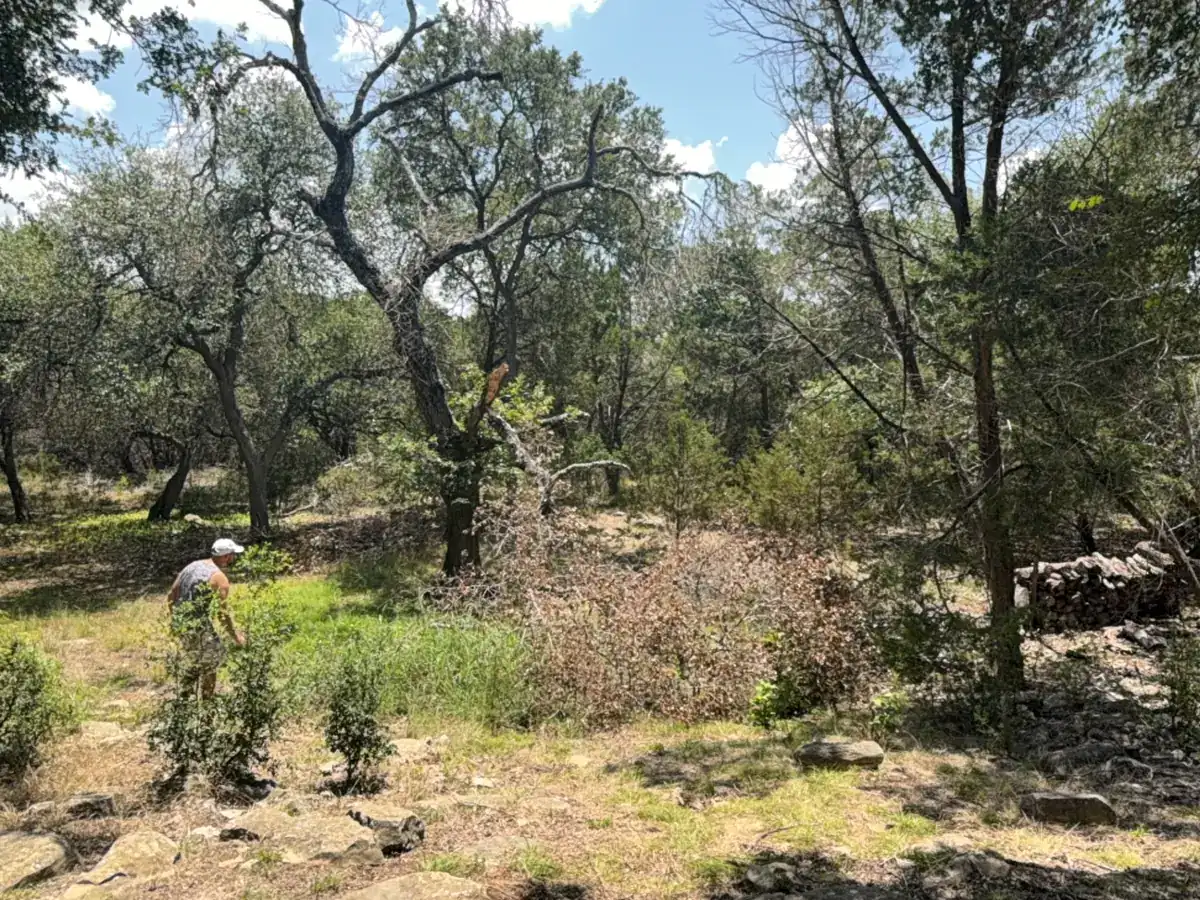
Cedar (Ashe juniper) is usually the main target. It’s native to the Hill Country, but left unmanaged it spreads into pasture and around oaks, crowds out native grasses and builds up wildfire fuel. Our selective clearing work is built around taking the cedar and leaving the oaks.
Step 2: Pick the Oaks You Want to Favor
Every oak stays. The question is which ones get the most room.
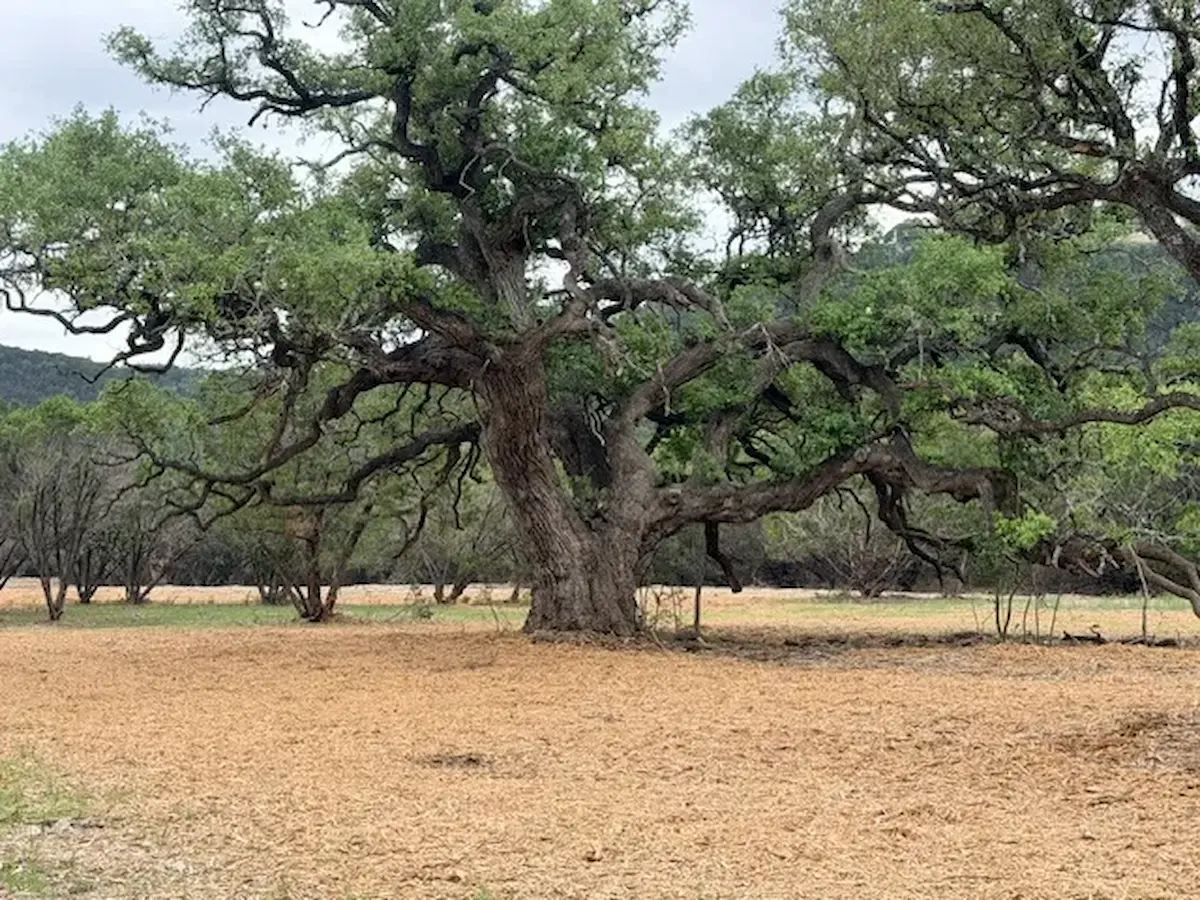
Mature oaks come first. A broad canopy and a thick, solid trunk mark the trees that define the property and give the most shade and wildlife value.
Look for young oaks too. They’re often hidden inside cedar thickets, and clearing the cedar around them gives them the light and water they need to grow.
Note any other trees you want to keep, such as shade trees near the house, barn or stock tank, and trees with cavities, fruit or nuts that wildlife use.
Step 3: Sort Everything Else Into Keep or Remove
Common removal targets
- Cedar crowding a keeper oak’s canopy
- Cedar and brush spreading into pasture and competing with native grasses
- Brush and small trees shading out young oaks
- Invasive brush wherever it shows up
Trees and cover worth leaving
- Every oak
- Native shrubs and small trees that give wildlife cover
- Trees that provide shade or screening
- Vegetation holding soil on a slope or along a creek
A quick keep-or-remove check
For anything that isn’t an oak, ask these in order:
- Is it crowding a keeper oak? If yes, mark it for removal.
- Does it give wildlife cover, shade or screening, or hold soil on a slope? If yes, keep it.
- Is it cedar or brush in ground you want open? If yes, it goes.
- Still not sure? Flag it and leave it standing. We’ll look at it together on the site walk.
Step 4: Thin Around Keepers Without Clearing to Bare Ground
Oak stands that haven’t been worked in decades are usually crowded. Cedar and brush compete with the oaks for water and light.
Plan from the keepers outward. Decide how much open space each mature oak gets, then thin brush and small trees between them, leaving enough native cover for wildlife.
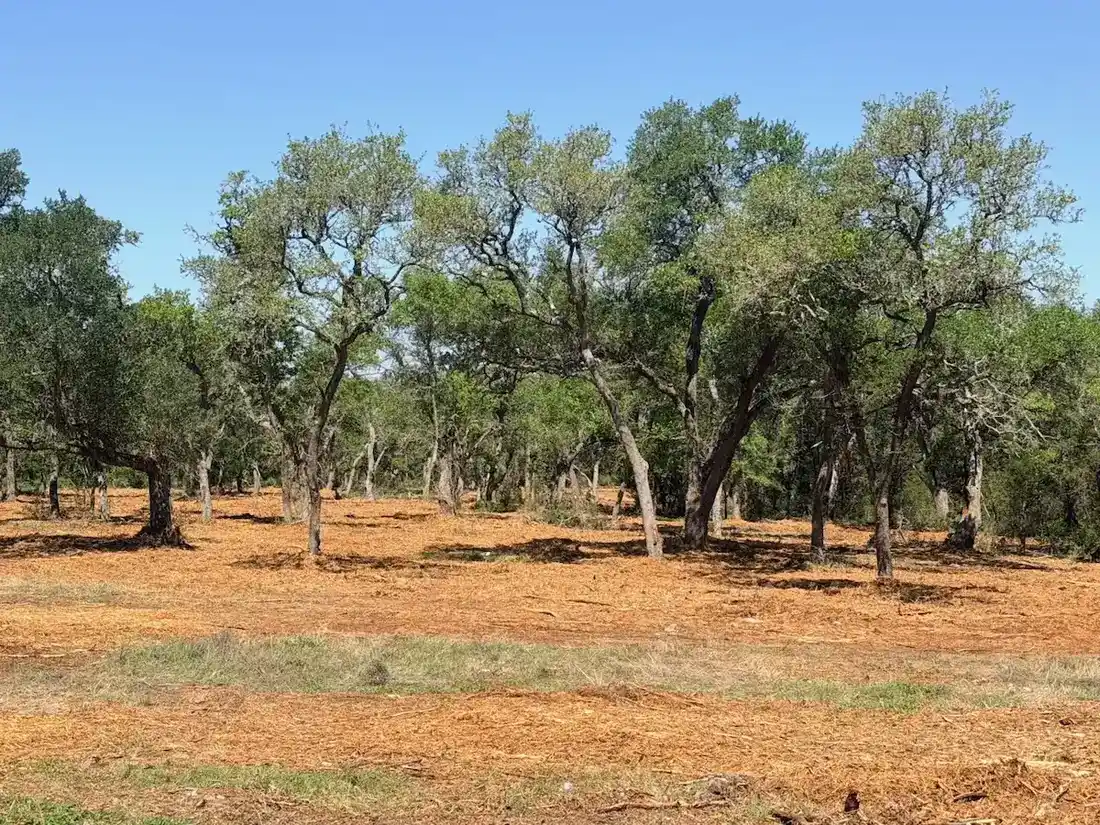
Don’t clear to bare ground between oaks. A mulch layer and scattered native shrubs hold the soil and give wildlife somewhere to go. The goal is an open, park-like oak stand, not a lawn.
Step 5: Mark Your Keepers and Protect Their Root Zones
Walk the property and mark every tree you want to keep with bright paint or flagging tape. Before any contract is signed, an owner walks the land with you and goes over every keeper, root zone and equipment route.
Why the root zone matters
Most oak damage from land work happens below ground. Texas A&M AgriLife notes that a tree’s fine feeder roots sit mostly in the top 12 inches of soil and spread out past the drip line, the outer edge of the canopy. Three things hurt them:
- Compaction. Machine traffic presses the air out of the soil, and roots need oxygen.
- Grade changes. Adding or removing soil over the root zone smothers or exposes roots.
- Cut roots. Grubbing, trenching or stump grinding inside the root zone severs roots the tree depends on.
We plan machine routes to limit traffic over keeper root zones, and we don’t park or pile material in them. Mulch stays spread on the cleared ground and pulled back from trunks, because mulch piled against bark holds moisture against the tree.
If keeper oaks sit on a slope, point them out on the site walk. We plan the work around the terrain and the trees on it.
For a full walkthrough of staking a tree protection zone, see our guide on how to protect heritage trees during land clearing.
Step 6: Time Oak-Adjacent Work Around Oak Wilt
Oak wilt is a fungal disease that kills oaks across Central Texas. According to Texas A&M Forest Service, it spreads above ground when sap-feeding beetles carry spores to fresh wounds, and underground through connected roots.
Avoid wounding or pruning oaks February through June. We schedule oak-adjacent work with that window in mind.
Texas A&M Forest Service also recommends painting any fresh oak wound right away, no matter the time of year. Any paint works. The point is to cover the wound before beetles find it.
If any oaks already show browning leaves or dieback, mention it in your project details so we can plan the work around them. Our Hill Country land education guide covers oak wilt in more detail.
Step 7: Clear Around the Oaks With Forestry Mulching
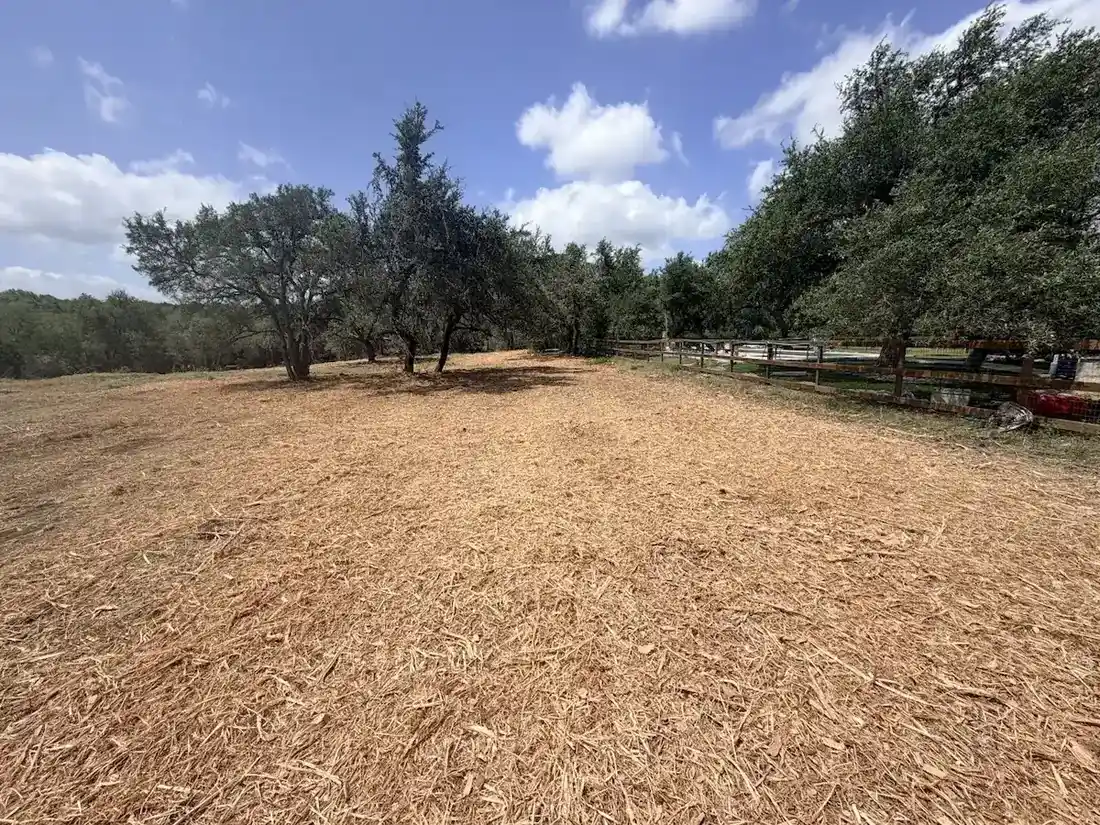
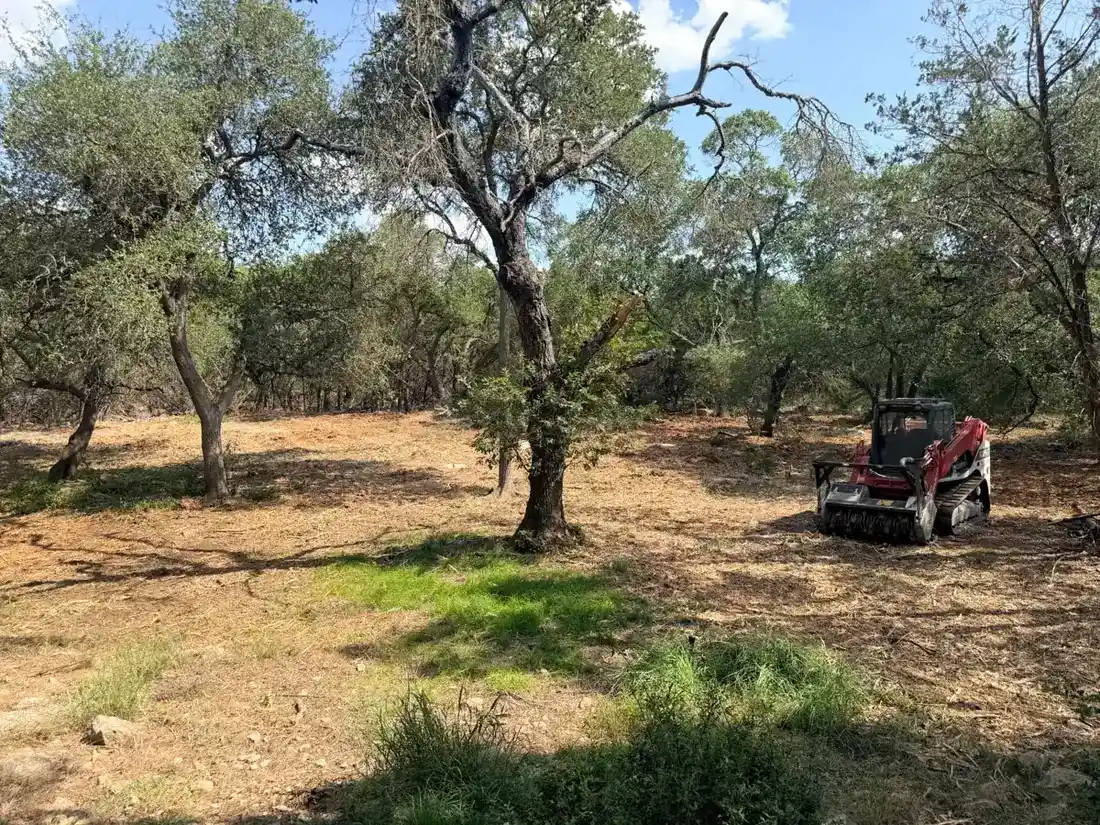
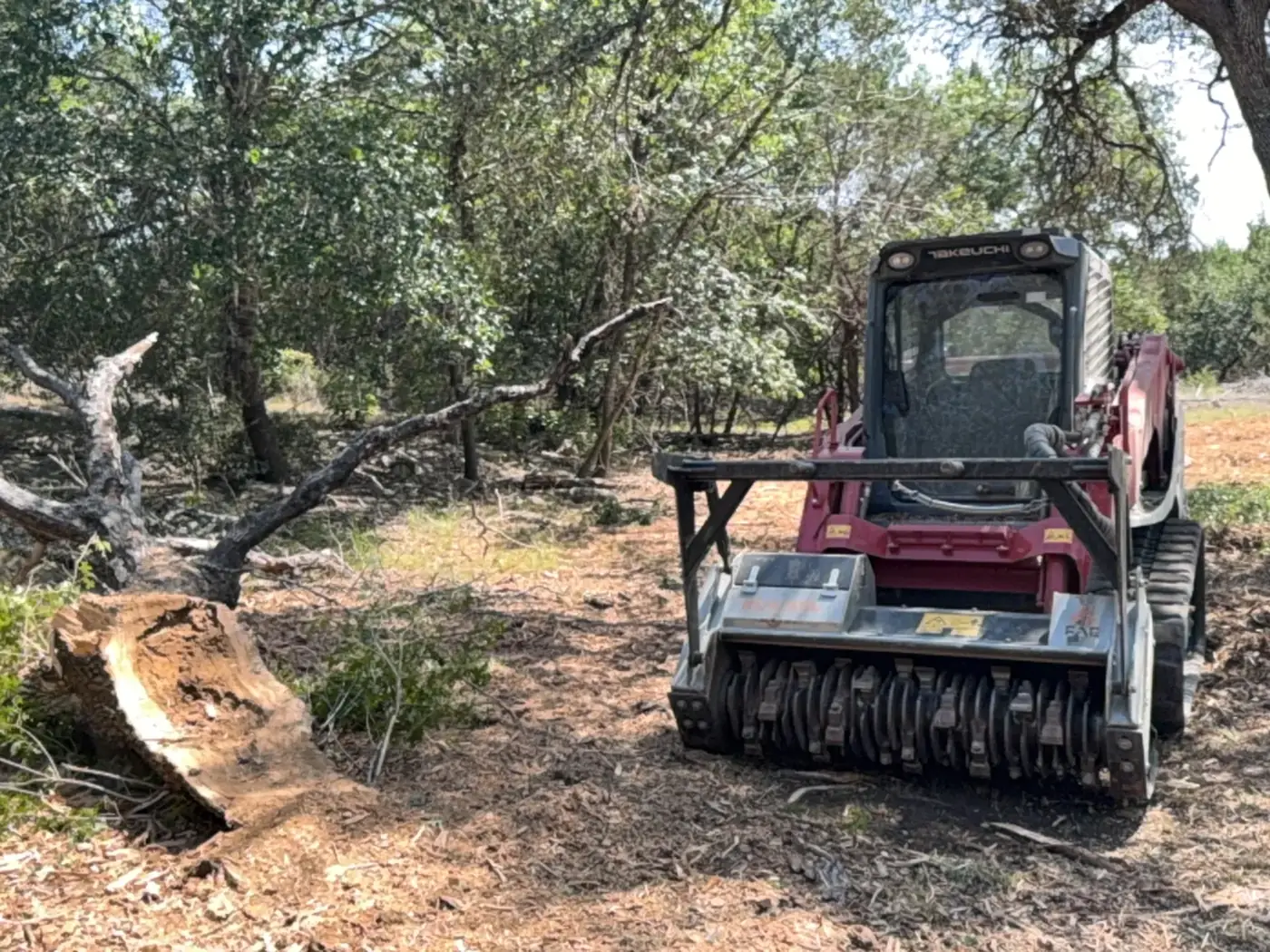
Forestry mulching is how we do most selective work. A high-flow track loader with a mulching head grinds cedar, brush and small trees in place into a mulch layer in one pass. There are no burn piles and no haul-off.
The machine takes out one tree or thicket at a time, so the operator can work around the oaks and other keepers you marked. The mulch left behind protects thin, rocky soil, holds moisture and slows regrowth.
Cedar doesn’t resprout from the stump once it’s cut below the green. New cedar comes back from seed spread by birds and wildlife, so a maintenance pass every few years keeps regrowth small. Our cedar regrowth and maintenance guide explains how that works, and our cedar removal page covers the service.
If part of the property needs bare dirt for a house pad or driveway, that’s dozer land clearing. It removes stumps and roots and is quoted separately, so plan pads and driveways away from keeper root zones.
Pricing and Getting a Quote
Forestry mulching and selective clearing run $2,300 per day, one rate across the Texas Hill Country. You can choose a project price or our day rate. Either way, the price is agreed before work starts.
In typical dense, rocky, hilly Hill Country cedar, forestry mulching covers about half an acre per day. On flat ground with light brush, it can cover up to about 3 acres per day. Financing is available for projects over 10 acres.
To get started, click “Get a Free Quote Today” and send your project details first, then a few photos, including your marked keeper oaks. We typically reply within minutes. You can also call or text (512) 641-5658.
Frequently Asked Questions
What is selective land clearing?
Selective land clearing removes the cedar, brush and small trees you don’t want while leaving the oaks and other trees you do. Clear-cutting takes everything. We do most selective work with forestry mulching, which grinds cedar and brush in place into a mulch layer that protects thin, rocky soil.
How do you decide which trees to keep when clearing around oaks?
Every oak stays, and mature oaks get the most room. Beyond the oaks, keep native shrubs and trees that give wildlife cover, shade or screening, or hold soil on a slope, and remove the cedar and brush crowding your keepers. If you’re unsure about a tree, flag it and leave it standing. An owner goes over it with you on the site walk before any contract is signed.
How does oak wilt affect clearing near oaks?
It means avoiding wounding or pruning oaks February through June, when oak wilt spreads most easily. We schedule oak-adjacent work with that window in mind. Texas A&M Forest Service also recommends painting any fresh oak wound right away, no matter the time of year.
Can forestry mulching clear brush around mature oaks without harming them?
Yes, when the work is planned around the oaks. We plan machine routes to limit traffic over keeper root zones, don’t park or pile material in them, and keep mulch pulled back from trunks. The mulch left on the cleared ground protects the soil and slows regrowth.
Preserving oak trees during selective land clearing comes down to planning: know what you want, decide what stays, protect the root zones and time the work around oak wilt. We clear the cedar and brush and leave your oaks standing.