Last Updated: November 1, 2026
Quick Summary
Clear the land before a new fence goes in, not after. On Hill Country land, that means an articulating brush cutter for brush and limbs up to 4 inches in diameter, and a forestry mulcher for anything larger. Confirm your boundary first, decide which trees stay, and schedule the clearing ahead of the fence crew.
- Know where the line runs before anything gets cut.
- Cut material is shredded or mulched in place, so there are no burn piles and no haul-off. Dozer work is for mesquite and stretches that need bare dirt.
- We work around oaks and other trees you want to keep.
- Fence line clearing is quoted per job, and an owner walks the property before any contract is signed.
Table of Contents
- Why Clear Before the Fence Goes In
- Settle the Boundary First
- How We Clear a Fence Route
- Brush Cutter, Mulcher or Dozer
- Keeping Your Oaks
- Cedar Regrowth After Clearing
- How Pricing and the Site Walk Work
- Get a Free Quote Today
- Frequently Asked Questions
Why Clear Before the Fence Goes In
A fence builder needs an open line to work. Posts have to be set, wire has to be stretched, and their truck or machine has to get down the route. Cedar and brush in the way slow all of that down.
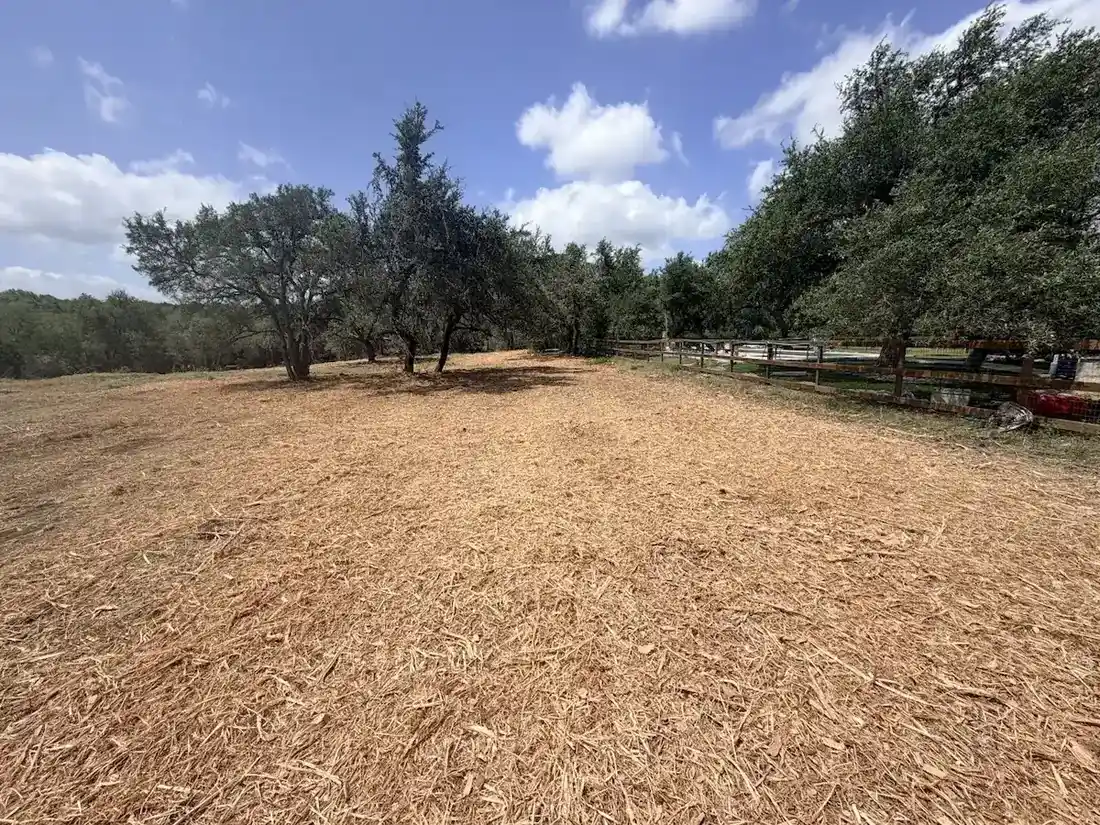
Clearing first is also easier on the new fence. Once wire is up, every pass along the line means working around it. With the clearing done first, our machine isn’t working next to new posts and wire.
The same goes for replacing an old fence. A cleared fence row gives your fence builder room to pull the old wire and set the new line.
Settle the Boundary First
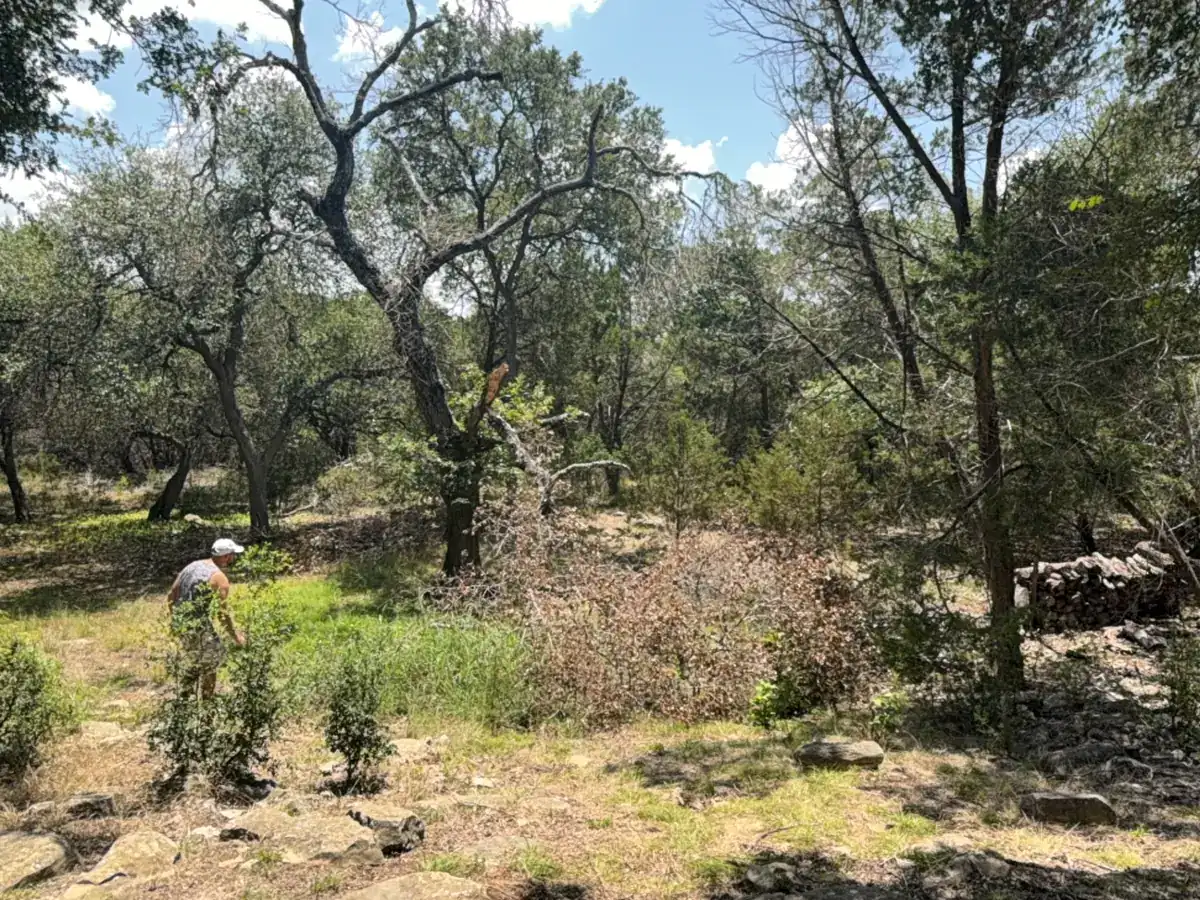
Before anything gets cut, know where the line actually runs. Find your corner pins or boundary stakes and walk the route.
If the corners are missing or you’re not sure where the line is, have it surveyed before clearing. It’s far easier to settle the line now than after the brush on the wrong side is gone.
If the line borders a neighbor, talk to them before work starts. A short conversation about what’s being cleared saves a longer one later.
Old fence rows also hide things a machine shouldn’t hit: old T-posts, loose barbed wire and junk piles buried in the brush. Mark any you know about before we arrive. Our project preparation checklist covers what else to mark.
How We Clear a Fence Route
For brush and limbs along a fence route, we run an articulating brush cutter on a skid steer. The cutting head sits on an arm that pivots, so it can be angled to cut along the fence line.
It handles brush, saplings and limbs up to 4 inches in diameter. It cuts a clean vertical line along the route and above it, so posts and wire have room. The cut material is left shredded on the ground. There are no burn piles and no haul-off.
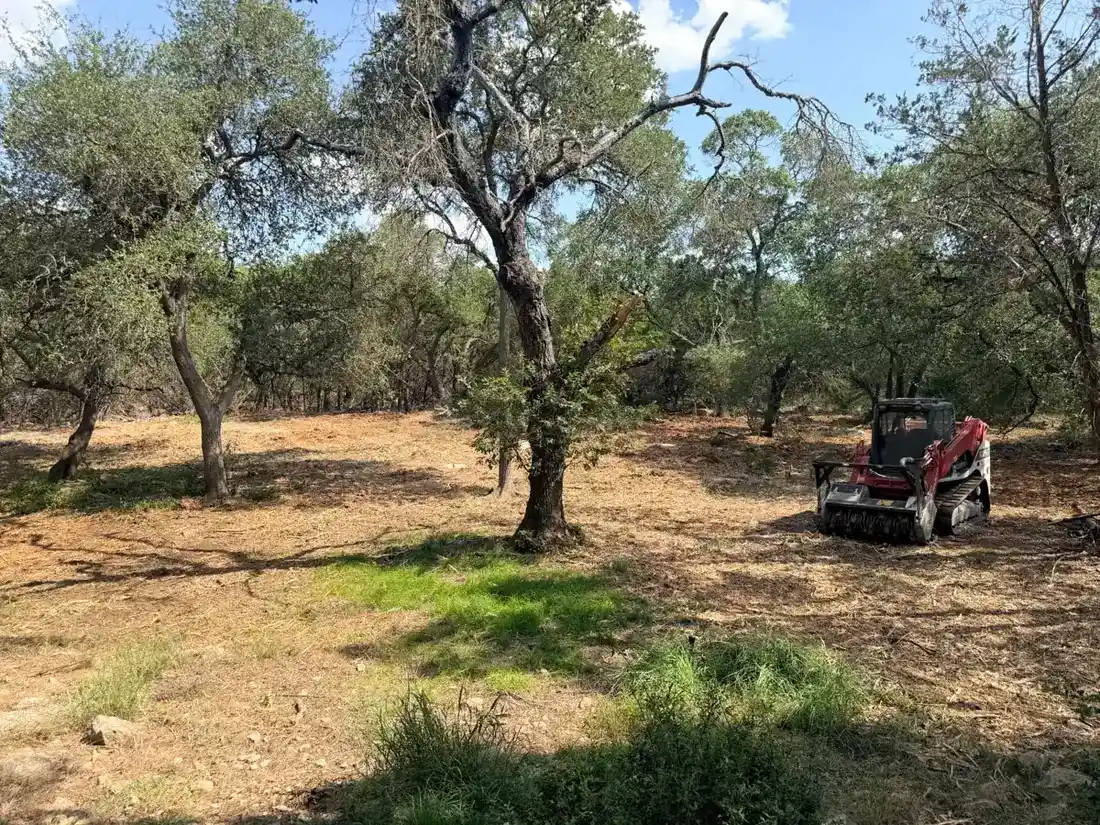
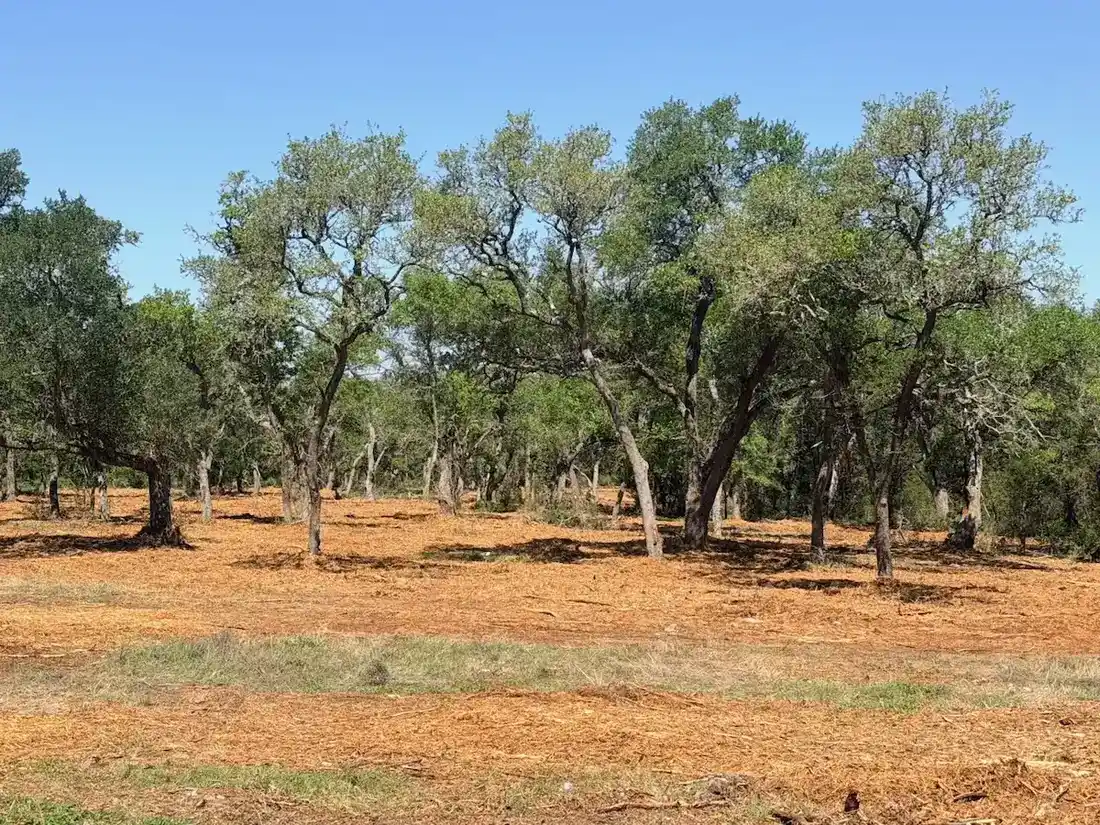
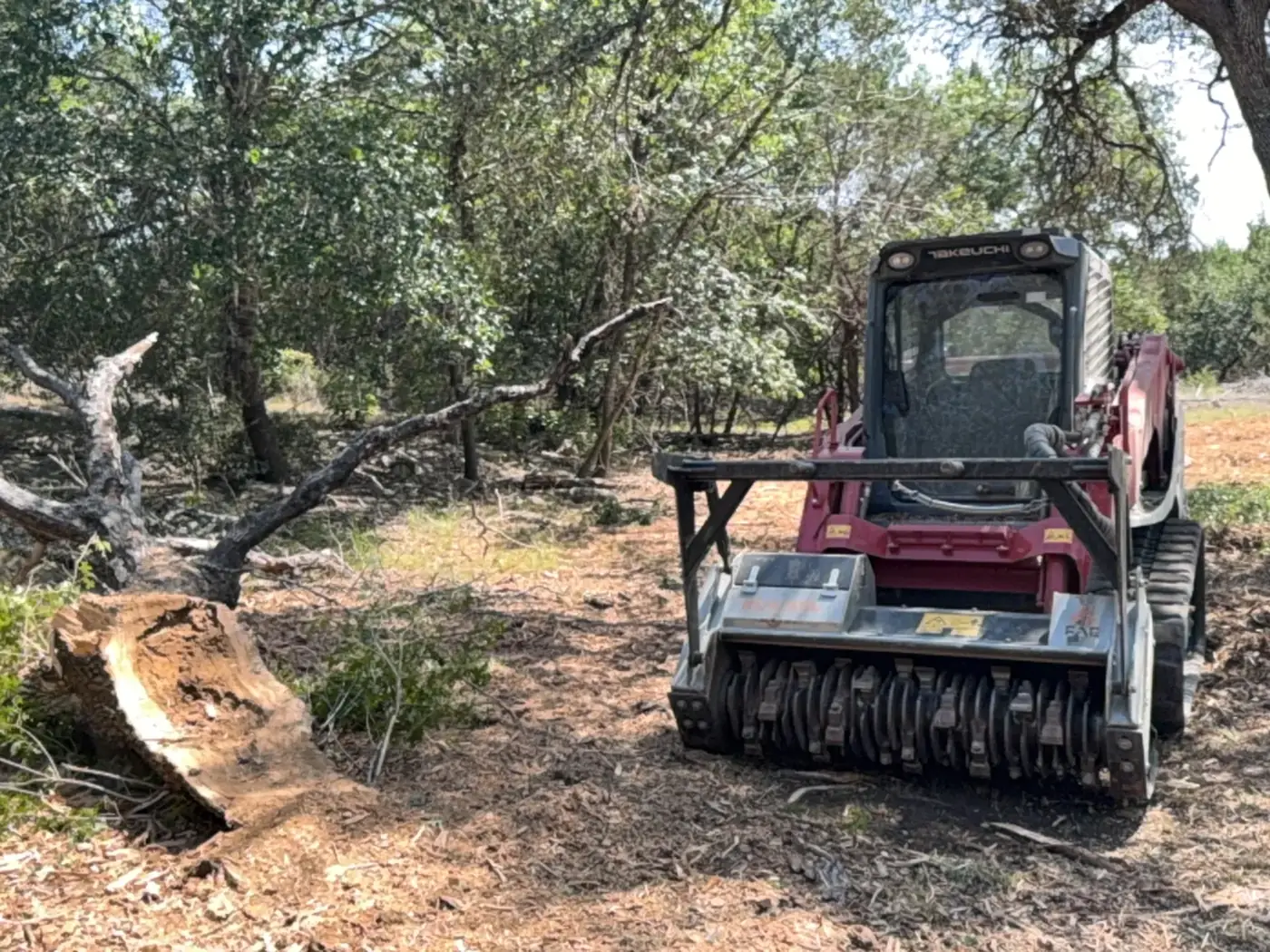
When there’s larger material, our forestry mulcher takes over. It’s a grinding head on a high-flow track loader, and it grinds cedar and larger trees in place into a mulch layer. Our forestry mulching page covers it in more detail.
We clear a strip sized to the fence and to what your fence builder needs. When you request a quote, tell us the type of fence and whether you want to drive along the line later.
Rock, slope and larger timber slow the pace and add wear to the equipment. We plan and price for that up front.
Brush Cutter, Mulcher or Dozer
Each machine has its own job. Dozer work comes in where a stretch needs bare dirt, or where mesquite is part of the brush.
Articulating brush cutter | Forestry mulcher | Dozer | |
|---|---|---|---|
Machine | Skid steer | High-flow track loader | Dozer |
What it handles | Brush, saplings and limbs up to 4 inches in diameter | Cedar and larger trees | Stumps, roots and mesquite |
What it leaves | Shredded material on the ground | A mulch layer over the soil | Bare dirt; debris usually hauled off |
Best fit | A clean vertical line along and above the fence route | Larger material along the route | Mesquite and stretches that need bare dirt |
Some properties need more than one: brush cutter and mulcher work along the fence, and dozer work for a house pad or driveway elsewhere on the property. Our land clearing page explains how dozer work fits in.
Keeping Your Oaks
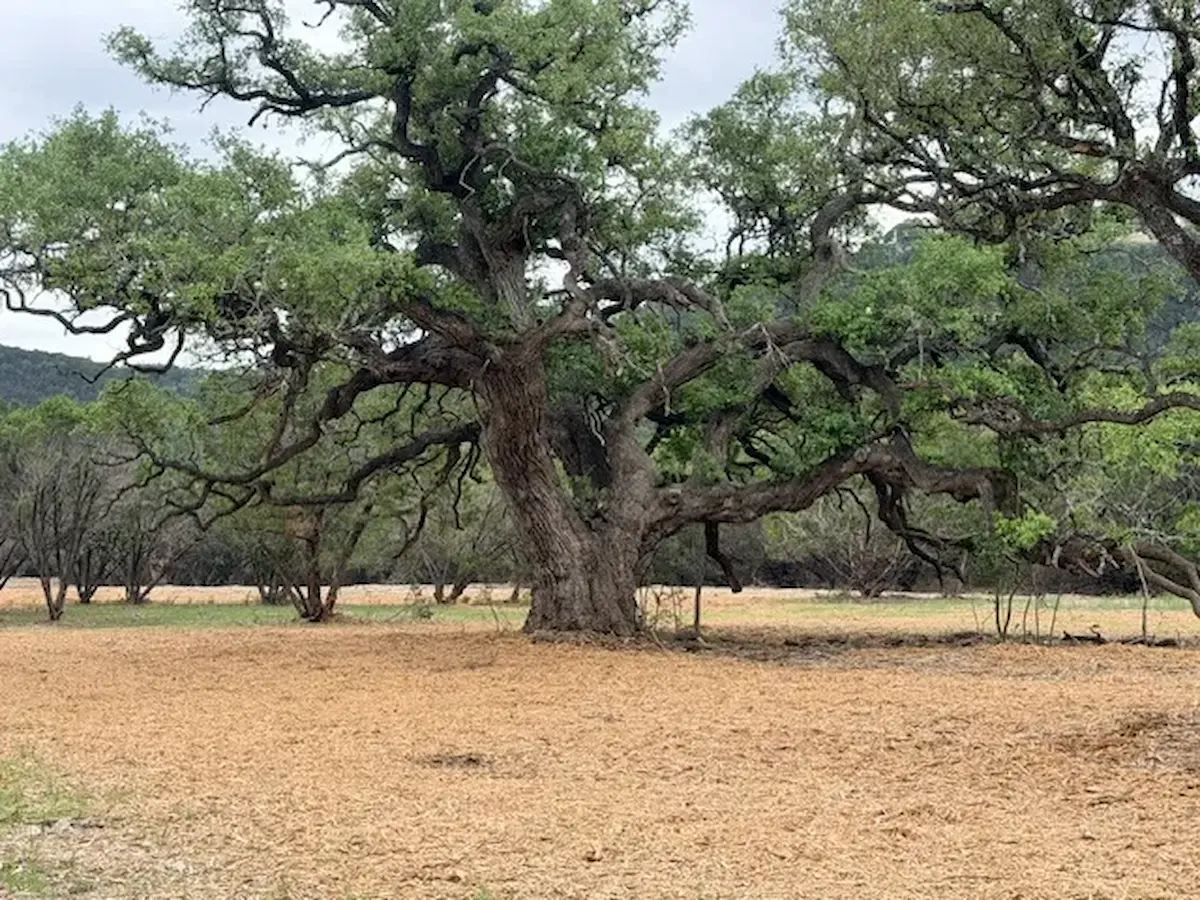
Keeping mature oaks is central to how we work. We clear around oaks and any other trees you want kept, and we plan the clear-and-keep pattern with you on the site walk. Our selective clearing page covers that approach.
Oak wilt also shapes the schedule. Texas A&M Forest Service advises against wounding or pruning oaks February through June, and we schedule oak-adjacent work with that in mind.
Cedar Regrowth After Clearing
Cedar cut below the green does not resprout from the stump. New cedar comes back from seed, carried in by birds and wildlife that eat the berries, and fence lines are a common place for that seed to land.
Clearing doesn’t stop new seedlings. A maintenance pass every few years keeps new cedar small before it crowds the fence. Our cedar regrowth and maintenance guide goes deeper.
How Pricing and the Site Walk Work
Fence line clearing is quoted per job, and the price is agreed before work starts. There’s no hourly billing.
An owner walks the property before any contract is signed. On a fence job, that walk covers the length of the route, the boundary, access, rock, slope, how dense the brush is, and which trees stay.
Those are the things that set the price. A short route through light brush is a different job than a long, steep, rocky line through thick cedar. For more on the service itself, see our fence line clearing page.
Get a Free Quote Today
Settle the boundary, keep the trees that matter, and clear the line before the fence crew shows up. That order gets your new fence in cleanly and makes the line easier to keep open.
To get a quote, click “Get a Free Quote Today” and submit your project details first, then a few photos of the fence route. We typically reply within minutes. You can also call or text us at (512) 641-5658.
Frequently Asked Questions
Should you clear land before or after installing a fence?
Before. Clearing first gives your fence builder an open line to set posts and stretch wire, and it keeps our machine from working next to new posts and wire.
Does clearing a fence line mean burn piles or haul-off?
No. The brush cutter leaves brush and limbs shredded on the ground, and the forestry mulcher grinds larger material in place, so there are no burn piles and no haul-off. Dozer clearing, used for mesquite and stretches that need bare dirt, usually does mean haul-off.
Can you keep the oaks along a new fence line?
Yes. We clear around oaks and any other trees you want kept, and we schedule oak-adjacent work with the oak wilt window, February through June, in mind.
How much does it cost to clear land for a new fence?
It’s quoted per job, and the price is agreed before work starts. An owner walks the property first, and the length of the route, brush density, rock, slope and the trees you’re keeping set the price.
Will cedar grow back along a new fence?
New cedar can come back from seed, but cedar cut below the green won’t resprout from the stump. A maintenance pass every few years keeps new cedar small.
What size brush can a brush cutter clear along a fence?
Our articulating brush cutter handles brush, saplings and limbs up to 4 inches in diameter. Larger material goes to the forestry mulcher.