Dozer & Excavator Clearing

Land Clearing Texas Hill Country

Realistic AI preview with every quote. Reveal your vistas, site prep for a new home, driveway, or pond.

  • Excavation & Grading: Dozer work, excavation, root raking, grubbing, and full debris haul-off — for pad sites, slabs, ponds, fill areas, and bare, workable dirt.
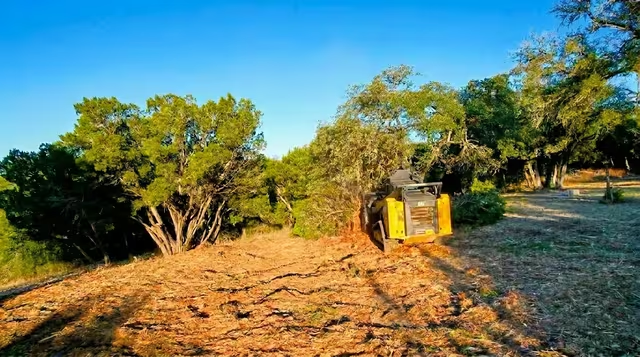
  • Forestry Mulching — an economical solution for revealing Hill Country views and recreational use, with mulch left in place to protect your soil, no haul-off needed.
  • Right-of-Way Clearing — utility lines, easements, and access roads cleared to spec.

Submit photos, and we will reply with a realistic AI preview of your property cleared of cedar & brush — Click 'Get a Free Quote Today' to upload photos and project details.

Prefer an in-person visit? Schedule a free site visit with an owner.

Forestry Mulching vs. Land Clearing — Which Do You Need?

Forestry Mulching

Brush ground in place into a 2–4 inch mulch layer. Faster, lower cost, protects soil. Best for pasture reclamation, view corridors, and wildfire prevention.

Land Clearing (this page)

Dozer and excavator work, root raking, and haul-off to a debris site. Higher cost, but leaves bare dirt. Best for pad sites, slabs, fill areas, and ponds.

Not Sure Which?

We'll walk the property with you and recommend whichever option fits your end-use, budget, and timeline. Many projects use a mix of both.

When Land Clearing Is the Right Call

  • Slab-on-grade home and barn pads
  • Commercial pad sites that must be stripped
  • Pond, tank, and detention-basin excavation
  • Driveway and road cuts requiring fill
  • Multi-lot subdivisions with grading plans
  • Sites where mulch would interfere with future grading
  • Stump and root removal (orchards, fence-line excavation)
  • Owners who simply prefer bare dirt over mulch
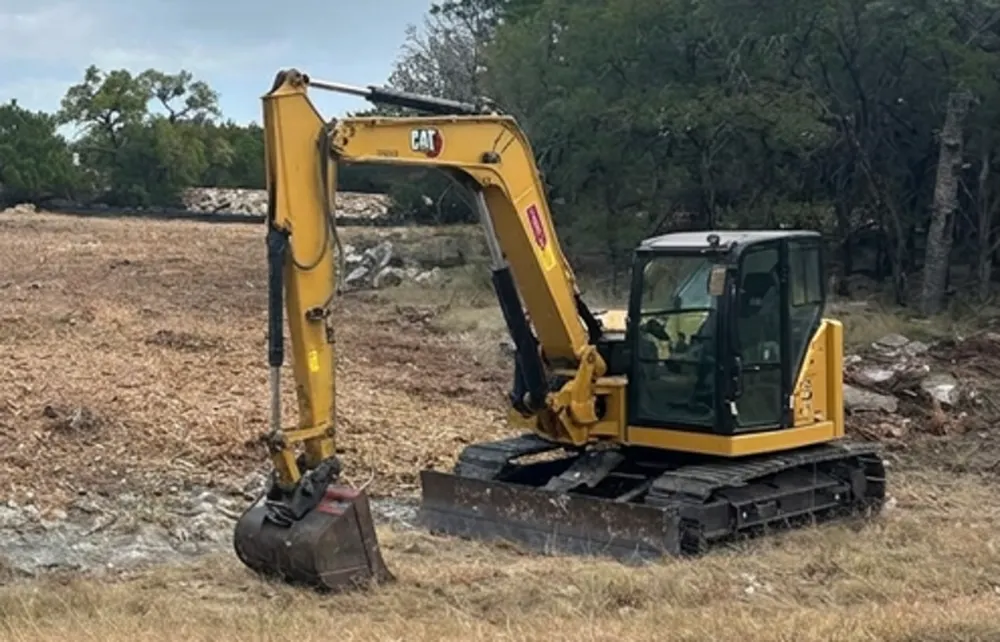
Yellow CAT excavator on a rocky, brush-cleared Hill Country lot during land clearing work

How Our Land Clearing Process Works

1

Walk the Property

We walk the land with you (or your builder), flag heritage trees to keep, and confirm the clearing footprint and haul-off plan.

2

Fixed-Price Quote

Project pricing — no hourly meter. Includes dozer and excavator work, root raking, piling, and trucking to an approved debris site.

3

Push, Dig, Rake & Pile

Trees and brush pushed with the dozer and dug out with the excavator, then root-raked into haul piles. We protect flagged heritage oaks throughout.

4

Haul Off & Sign-Off

Debris loaded and trucked off-site. We walk the cleared lot with you and deliver before/after photos.

Service Areas

We serve 19 counties across the Texas Hill Country and Central Texas, including Hays, Blanco, Comal, Bandera, Kerr, Guadalupe, Burnet, Llano, Kendall, Gillespie, Caldwell, Bastrop, Real, Uvalde, Medina, Gonzales, Williamson, Travis, and Bexar Counties.

View all cities and service areas

What Land Clearing Is — And When It's the Right Call

Land clearing — sometimes called lot clearing or site clearing — is the traditional bare-dirt approach to preparing a Texas Hill Country property. We use dozers and excavators to push and dig out trees, brush, and root systems, then root-rake the debris into piles and haul it off-site to an approved disposal facility. What's left behind is a clean, workable lot ready for a foundation contractor, an excavator running pond work, or a paving crew laying a driveway.

This is the right method when a mulch layer simply won't work for the end use: slab-on-grade homes, commercial pad sites, ponds and detention basins, fill areas needing imported dirt, and any project where a grading plan requires bare ground to start. For pasture reclamation, view corridors, or wildfire mitigation, forestry mulching is usually cheaper and gentler — we'll tell you straight up which approach fits your project.

Benefits Over the Alternatives

Versus forestry mulching, land clearing gives you fully bare dirt with no root crowns left to interfere with future excavation, foundation work, or fine grading. Versus DIY clearing with a small skid steer, our larger dozers and excavators handle mature cedar, oak, and mesquite root balls that small machines can't move. Versus burning, full haul-off avoids burn-ban delays, smoke complaints, and the fire risk that comes with piles of dry brush sitting for weeks.

Vegetation, Terrain, and Property Types We Handle

We clear Ashe juniper, mesquite, scrub oak, hackberry, persimmon, agarita, prickly pear, and the heavy understory that defines untouched Hill Country lots. We work rocky limestone soils, sloped sites, narrow infill lots, and large multi-acre tracts. Typical clients: custom-home builders prepping a single lot, small developers clearing a subdivision phase, ranchers excavating a new pond, and individual landowners who want bare dirt instead of mulch in place.

What to Expect During the Project

We start with a free on-site walkthrough — you, us, and (if applicable) your builder. We flag heritage trees to preserve, confirm the clearing footprint, and review access for trucks and equipment. You receive a fixed project quote that includes dozer and excavator work, root raking, piling, and haul-off. On clearing day, our crew pushes and digs out the marked area, rakes roots, loads debris into dump trailers, and trucks it to an approved disposal site. We walk the finished lot with you and deliver before/after photos.

Why Hill Country Property Owners Choose Us

Local, insured, and easy to work with — every job.

Texas Hill Country Based

Deep roots across Hays, Blanco, Comal & Travis counties.

Free Site Visits

No-obligation, on-site walk-throughs — we come to you and quote the work in person.

Project-Based Pricing

Fixed quotes for the whole job — no hourly meter, no surprise add-ons.

Licensed & Insured

Fully insured crews and equipment — your property is protected from day one.

Fast Response Time

Quick scheduling and same-week site visits across the Hill Country in most cases.

Frequently Asked Questions

Land Clearing — answers to the questions we hear most often.

How do I prepare my land for clearing?
Before our crew arrives: mark any trees you want preserved with bright ribbon or flagging tape, identify property pins so we stay inside your boundaries, flag septic lids, water lines, electrical, and any buried utilities, remove valuable equipment and vehicles from the work area, and confirm gate codes or leave gates unlocked. We send a short prep checklist with every signed quote so nothing gets missed. For a full printable checklist, see our project preparation guide.
What is the best method for clearing land in the Hill Country?
It depends on the end use. For pasture reclamation, wildfire mitigation, view corridors, and wildlife habitat work, forestry mulching is almost always best — faster, cheaper, soil-protective, and leaves a useful mulch layer. For slab-on-grade construction, commercial pad sites, ponds, and any project needing bare dirt, traditional land clearing with dozer and excavator is the right call. Many projects use a mix: mulching across most of the property and bare-dirt clearing only on the building footprint.
How long does it take to clear an acre of land?
With a dozer and excavator running together, dense Hill Country cedar and brush typically takes a half-day to a full day per acre to push, dig, rake, and pile — plus haul-off time. Loading and trucking debris to a disposal site usually adds 25–50% to the total project duration.
Will land clearing damage my soil?
Some disturbance is unavoidable when you're stripping vegetation to bare dirt — that's the trade-off versus mulching. We minimize damage by using rubber-tracked equipment where possible, working when soil is dry (not after heavy rain), and limiting traffic to the cleared footprint. For projects where soil protection is a priority, ask us about a hybrid plan that mulches most of the acreage and only clears bare dirt on the building pad.
Can you clear land near a creek or waterway?
Yes, but with care. Riparian buffers along creeks and tributaries are sensitive — and in some jurisdictions regulated. We typically recommend selective mulching rather than bare-dirt clearing within 50–100 feet of any flowing water to protect bank stability and water quality. We'll flag the buffer zone during the site visit and tailor the clearing plan to fit.

Prefer Bare Dirt, Over Mulch?

Get a fixed-price quote for traditional dozer and excavator clearing, root raking, and full debris haul-off anywhere in central Texas — send photos and we'll reply with a realistic AI preview of the cleared site.