Table of Contents
- Why Does Cedar Grow Back After Clearing?
- How Cedar Spreads: Seeds, Seedlings, and Saplings
- How Often Should You Clear Cedar Regrowth?
- Forestry Mulching Cedar for Long-Term Control
- Cedar Clearing While Preserving Oak Trees
- Restoring Pasture and Grassland After Cedar Removal
- Building Your Maintenance Plan
- Frequently Asked Questions
- Keep Cedar From Taking Back Your Land
Last Updated: October 18, 2026
Why Does Cedar Grow Back After Clearing?
Cedar (Ashe juniper) does not resprout from the stump once it's cut below the lowest green branch. That sets it apart from many other woody plants. New cedar comes back from seed, not from the stumps left behind. That's why cedar regrowth calls for a long-term plan, not a single clearing job.
Female cedar trees produce heavy crops of blue berries. Birds and other wildlife eat the berries and drop the seed across your property, especially along fence lines and under trees where birds perch. Once the cedar is cleared, that seed lands on open ground with full sunlight, and new seedlings follow.
One cedar removal pass solves the immediate problem. Without a plan for what comes next, regrowth eventually takes over again. At Legacy Oak Land Clearing, Inc., we help landowners understand this cycle so the clearing work lasts.
How Cedar Spreads: Seeds, Seedlings, and Saplings
Cedar moves through three stages, and each one calls for a different response.
Seeds. Cedar seed travels inside the berries. Birds and wildlife carry it from standing cedar to cleared ground, where it sprouts when moisture and soil contact line up.
Seedlings. Young cedar is small, with soft foliage. Regrowth at this stage is the quickest and cheapest to clear.
Saplings. As cedar gets older, it turns woody and fills in. When regrowth starts to thicken, it's time for a mulching pass.
How Often Should You Clear Cedar Regrowth?
There's no single calendar answer. A maintenance pass every few years keeps regrowth small. The right interval for your land depends on how much seed is coming in from nearby cedar, rainfall, and how much ground cover you have.
Let size set the schedule, not the date. Walk the ground and look at what's coming back. If it's still small seedlings, you have time. If it's turning woody, schedule the next pass.
Seed sources speed things up. Land next to standing cedar, or with cedar left on fence lines, gets more seed and comes back faster. Ground with good grass cover and fewer nearby seed sources comes back slower.
Your goal matters. Open pasture and defensible space around a home need tighter control than ranch habitat, where some cedar cover may be fine. For defensible space, keep the ground closest to structures clean first.
A light pass beats a heavy one. Knocking back young regrowth takes far less time than clearing an established thicket. Catch it early and maintenance stays small. Wait too long and you're paying for a full clearing job again.
Not sure whether your regrowth is ready for a pass? Click Get a Free Quote Today and send your project details and a few photos so we can talk through timing.
Forestry Mulching Cedar for Long-Term Control
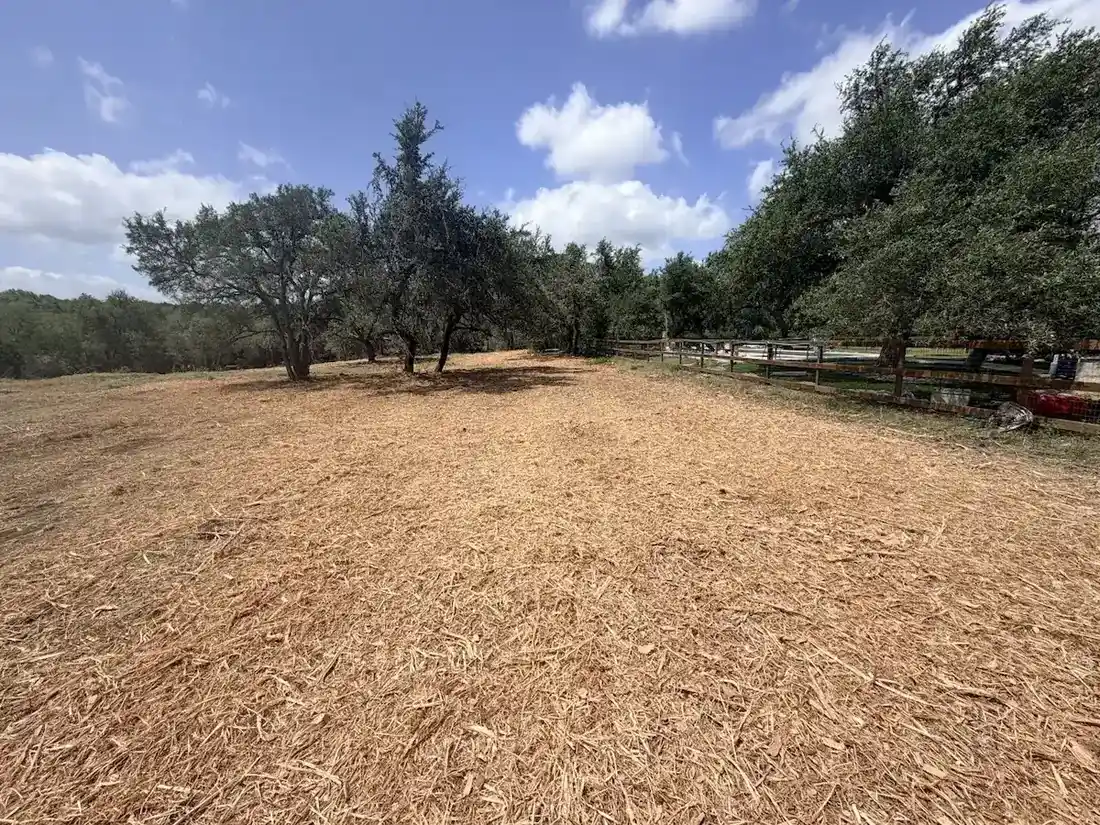
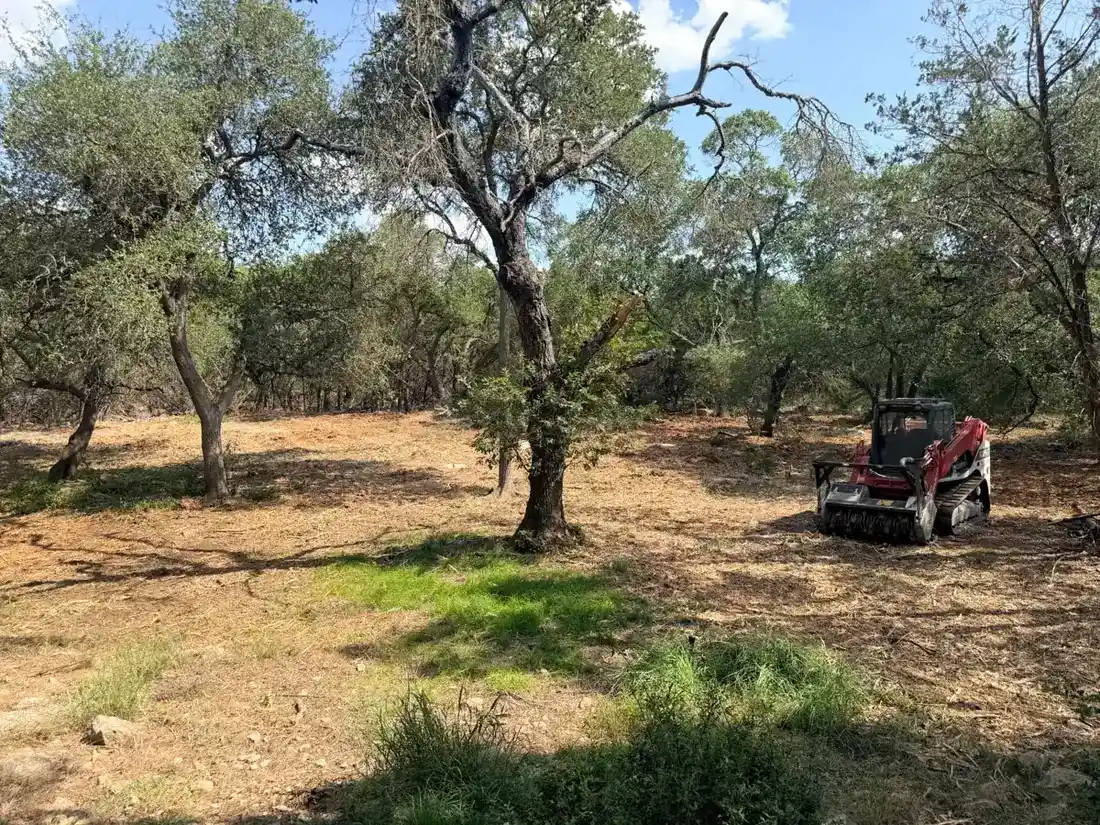
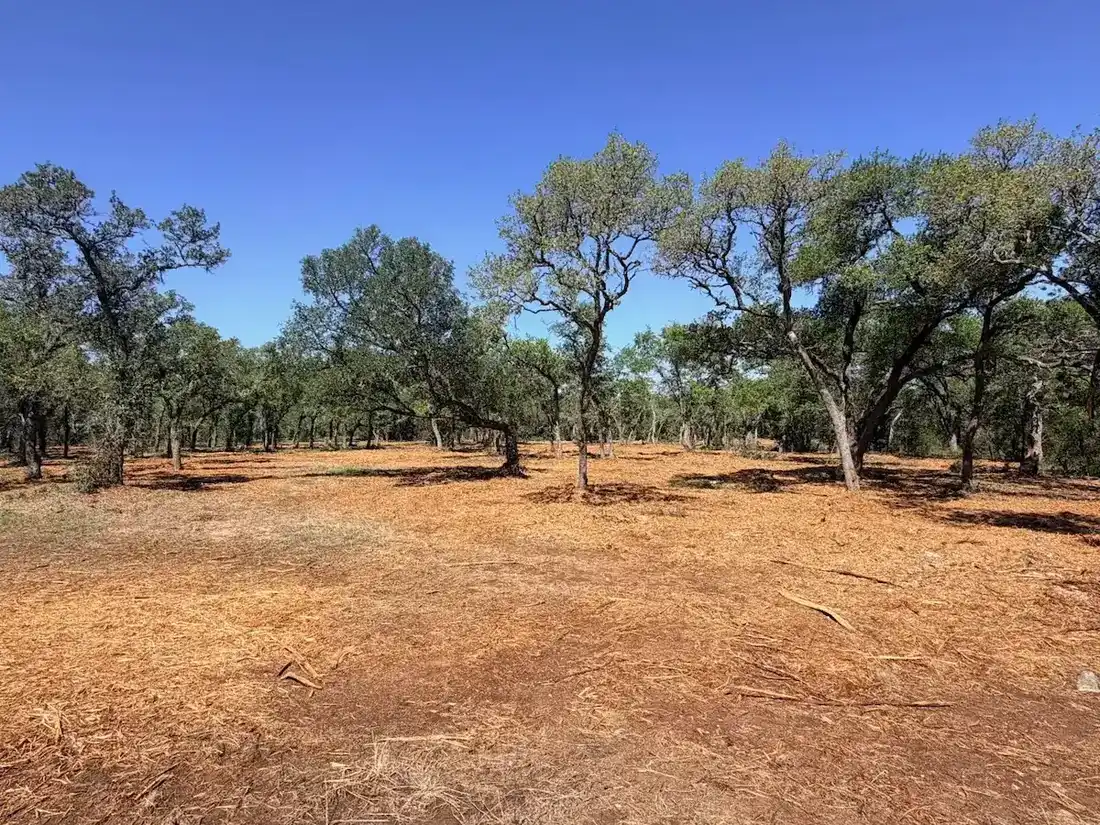
Forestry mulching clears cedar and slows regrowth at the same time. It grinds cedar, brush, and small trees in place into a mulch layer in one pass. No burn piles. No haul-off. The mulch stays on your land and does real work.
The mulch layer covers and shades the soil, which makes it harder for new seedlings to take hold. It slows regrowth but doesn't stop it. As the mulch breaks down over time, new seedlings can establish. That's why mulching works best paired with a maintenance plan.
Mulch also protects thin, rocky Hill Country soil. It holds moisture, reduces erosion, and slows runoff. Bare ground after clearing washes and dries out quickly; mulch keeps the soil in place.
In typical dense, rocky, hilly cedar, forestry mulching covers about half an acre per day. On flat ground with light brush, it can reach about three acres per day. Terrain and density set the pace, and we plan the work around what's on your property.
Cedar Clearing While Preserving Oak Trees
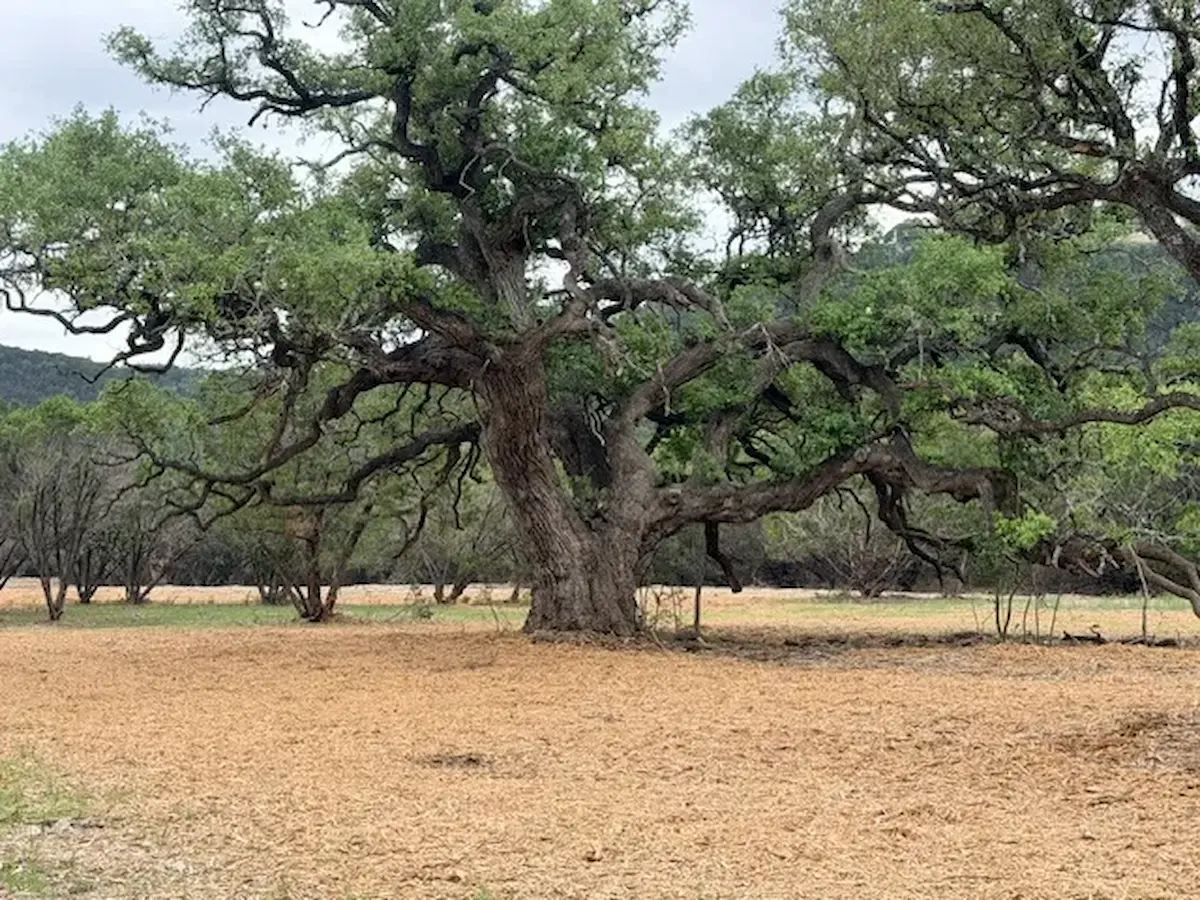
Clearing cedar without harming oaks takes planning. Mature oaks take decades to grow, and they're a big part of what makes Hill Country land valuable.
The main risk is wounding. A cut or scrape in oak bark can open the door to oak wilt, a serious disease in our region. Avoid wounding or pruning oaks February through June. We schedule oak-adjacent work with that in mind.
We work around oaks and other trees you want to keep. When you request a quote, tell us which trees matter to you, and we'll plan the work around them.
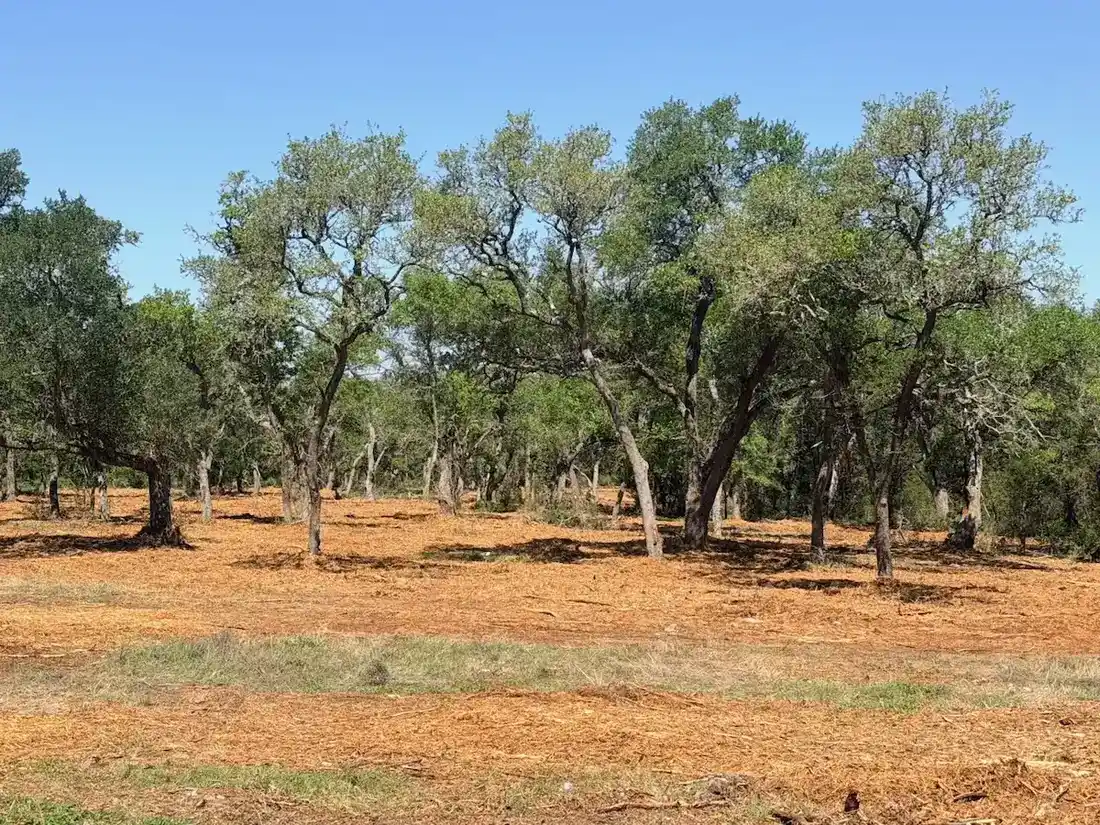
Selective clearing removes cedar and brush while leaving oaks, other hardwoods, and the trees you value standing. It takes more precision than clearing everything, but it protects what makes your land worth owning.
Restoring Pasture and Grassland After Cedar Removal
Once cedar comes out, your land can recover, but recovery goes better with protected soil.
Bare ground after clearing is vulnerable. Exposed soil erodes and dries out. The mulch layer from forestry mulching protects the soil while native grasses come back. Dozer clearing leaves bare dirt, and that ground needs time and rain before grass takes hold.
With the cedar gone, sunlight and rain reach the ground again. Native grasses that were shaded out start to return.
Some landowners choose to overseed after clearing to speed things up. Native recovery is often enough. Let the land show you what it needs.
Building Your Maintenance Plan
A maintenance plan is a written schedule tied to what you find on the ground, not a vague intention to "clear again someday." Here's how to build one you'll actually follow.
Step 1: Define the end state. Decide what the cleared ground should look like long term: open pasture, defensible space, habitat with some cover, or a mix. That decides how much regrowth you can live with.
Step 2: Map the property into zones. Most Hill Country tracts aren't uniform. You might have a rocky cedar slope on one side, flatter pasture on another, and a defensible-space ring around the house. Treat each zone separately.
Step 3: Scout regularly. Walk each zone and pay extra attention to fence lines and edges, where new seedlings show up first.
Step 4: Set your trigger. For each zone, write down what regrowth looks like when it's time to call, such as seedlings turning woody or edges starting to close in.
Step 5: Phase the work. When a zone hits its trigger, you don't have to clear the whole property. Forestry mulching, cedar removal, and selective clearing run $2,300 per day. You can choose a project price or the day rate, and either way the price is agreed before work starts.
Step 6: Protect what's coming back. The point of maintenance isn't just knocking cedar down. If you're managing for wildlife or native grass, selective clearing removes cedar without setting back the plants you want.
Step 7: Log what you did. A quick note of the date, the zone, and what you found makes the next decision easier. Over a few cycles, you'll see which zones come back fastest and can adjust your schedule.
If cost is the constraint, look into cost-share before you schedule. The Texas A&M Forest Service Mechanical Fuel Reduction (MFR) grant and NRCS EQIP (Practice 314, brush management) can offset clearing costs for eligible landowners. Work done before the MFR pre-inspection or before an EQIP contract is in place isn't paid, so line that up first. Details are on our grants page.
When a zone hits its trigger, click Get a Free Quote Today and send your project details and a few photos. We typically reply within minutes, and an owner walks the property before any contract is signed.
Frequently Asked Questions
Why does cedar grow back after clearing?
Cedar grows back from seed, not from the stump. It doesn't resprout once it's cut below the lowest green branch. Birds and other wildlife carry seed in from cedar still standing nearby, and that seed sprouts on open ground. That's why a maintenance plan matters.
How often should you clear cedar regrowth?
A maintenance pass every few years keeps regrowth small. The exact interval depends on how much seed comes in from nearby cedar, rainfall, and your ground cover. Small regrowth is faster and cheaper to clear than a thicket.
Does forestry mulching help slow cedar regrowth?
Yes. Forestry mulching grinds cedar, brush, and small trees in place into a mulch layer that protects thin, rocky soil, holds moisture, and slows regrowth. It doesn't stop regrowth entirely, so it works best paired with a maintenance plan.
Can you clear cedar while keeping mature oaks?
Yes. We work around oaks and other trees you want to keep, and keeping mature oaks is central to how we work. Avoid wounding or pruning oaks February through June because of oak wilt risk; we schedule oak-adjacent work with that in mind.
Keep Cedar From Taking Back Your Land
Cedar comes back from seed, so clearing is only half the job. A simple maintenance plan, with passes timed to what's growing on the ground, keeps regrowth small, protects your oaks, and keeps your land open.