Reclaim Your Land

Cedar Removal Texas Hill Country

Realistic AI preview with every quote. Take Back Your Land from Ashe Juniper

  • A mature cedar drinks 30+ gallons of water a day — clearing it brings springs, seeps, and pasture grasses back to life.
  • Cedar is the #1 wildfire fuel in the Hill Country — removing it around your home creates real defensible space.
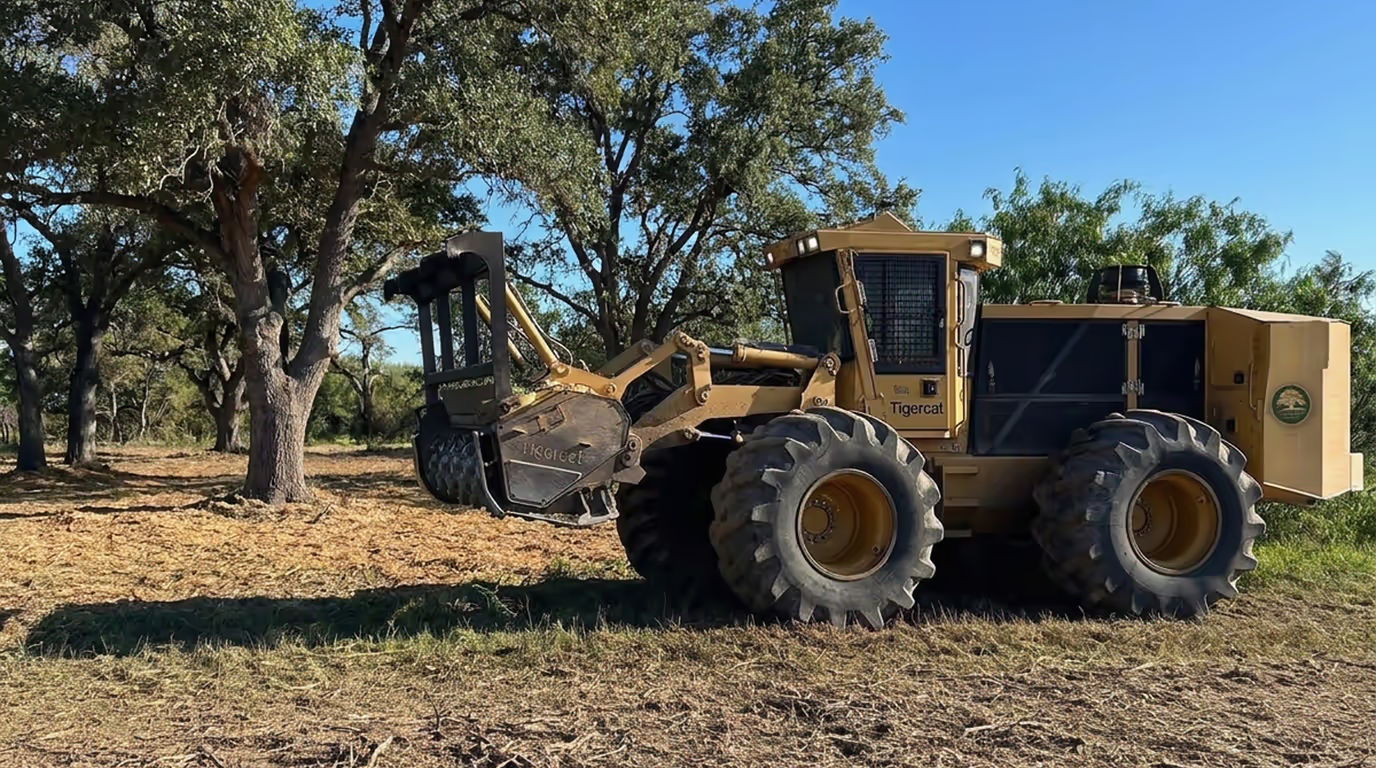
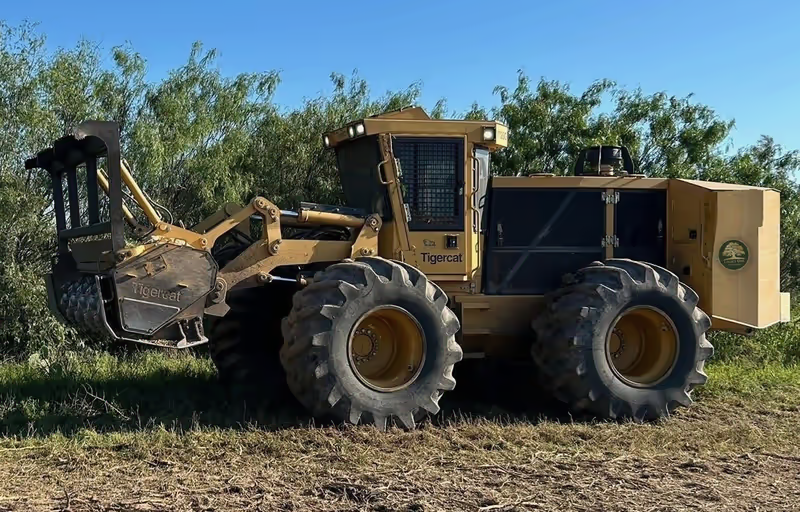
  • We grind cedar in place — no burn piles, no hauling, and the mulch suppresses regrowth while protecting topsoil.

Submit photos, and we will reply with a realistic AI preview of your property with the Ashe juniper (cedar) removed and the land opened back up — Click 'Get a Free Quote Today' to upload photos and project details.

Prefer an in-person visit? Schedule a free site visit with an owner.

Why Remove Cedar?

Restore Water & Pasture

Removing cedar lets springs run, recharges groundwater, and gives native grasses room to come back — turning brush land into productive pasture.

Reduce Wildfire Risk

Cedar is highly flammable and acts as a ladder fuel. Strategic removal around homes and structures is the single biggest win for wildfire mitigation.

Protect Heritage Oaks

We selectively remove cedar while preserving live oaks, post oaks, and other Legacy trees — restoring the open oak savanna the Hill Country was meant to be.

Cedar Removal Applications

  • Ranch and pasture reclamation
  • Defensible space and wildfire mitigation
  • Spring and creek restoration
  • Supports native habitat by reducing cedar competition for grasses and forbs
  • View and sight-line clearing
  • Fence-line cedar removal
  • Building site and homestead prep
Cedar removal in progress on a Texas Hill Country ranch

Our Cedar Removal Process

1

Free Site Visit

We walk your property with you, identify which trees stay and which go, and map out a clearing plan that protects heritage oaks and native species.

2

Project-Based Quote

You get a clear, fixed quote for the whole job — not a vague day rate. No surprises, no hidden fees.

3

Mulch In Place

Our compact track loaders grind cedar into a nutrient-rich mulch right where it stands. No burning, no hauling, no scarred ground.

4

Walk-Through & Maintenance Plan

We finish with a walk-through and give you a simple plan to manage cedar regrowth so the land stays open for the long haul.

Service Areas

We serve 19 counties across the Texas Hill Country and Central Texas, including Hays, Blanco, Comal, Bandera, Kerr, Guadalupe, Burnet, Llano, Kendall, Gillespie, Caldwell, Bastrop, Real, Uvalde, Medina, Gonzales, Williamson, Travis, and Bexar Counties.

View all cities and service areas

Why Cedar Removal Is the Highest-Value Land Improvement in the Hill Country

Ashe juniper — what most people call mountain cedar — is the dominant invasive woody species across the Texas Hill Country. Before European settlement and the suppression of natural fire cycles, Hill Country savanna was open grassland with scattered live oaks. Today, dense cedar thickets cover millions of acres, drinking 30+ gallons of water per mature tree per day, choking out native grasses, fueling wildfires, and sheltering the worst of the deer-tick and pollen problems that come with the species. Strategic cedar removal reverses all of that.

We grind cedar in place with forestry mulchers — no burn piles, no haul-off, no scarred ground. The mulch layer suppresses cedar seedlings while native grasses (little bluestem, Indiangrass, sideoats grama) and forbs return. Within a single growing season after clearing, most properties see dramatic improvement in pasture productivity, spring flow, wildlife habitat, and fire safety.

For a deeper look at cedar, oak wilt, and wildfire risk in the Hill Country, read our Hill Country Land Education guide.

Vegetation, Terrain, and Property Types We Handle

We remove Ashe juniper and eastern red cedar across every Hill Country setting: dense cedar breaks on rocky limestone slopes, mature cedar choking live oak groves, scattered cedar regrowth in old pastures, fence-row cedar, and defensible-space cedar around homes. We work residential acreage, working ranches, hunting properties, wildlife-exemption land, HOAs, and church and school grounds.

What to Expect During the Project

Free on-site walk-through, flagging of heritage trees to preserve, fixed project quote, and same-week scheduling in most cases. On clearing day, our crew works steadily through the marked area, leaving a clean mulch layer behind. We finish with a walk-through and a simple maintenance plan to keep regrowth controlled long-term.

Why Hill Country Property Owners Choose Us

Local, insured, and easy to work with — every job.

Texas Hill Country Based

Deep roots across Hays, Blanco, Comal & Travis counties.

Free Site Visits

No-obligation, on-site walk-throughs — we come to you and quote the work in person.

Project-Based Pricing

Fixed quotes for the whole job — no hourly meter, no surprise add-ons.

Licensed & Insured

Fully insured crews and equipment — your property is protected from day one.

Fast Response Time

Quick scheduling and same-week site visits across the Hill Country in most cases.

Frequently Asked Questions

Cedar Removal — answers to the questions we hear most often.

How much does cedar removal cost in the Texas Hill Country?
$2,600 per day, plus tax — one flat rate across our Hill Country territory. In typical dense, hilly, and rocky terrain, we clear about half an acre a day, and up to 3 acres per day with flatter terrain and light density brush. Every property is walked and quoted as a fixed price before we start — no hourly meter, no surprises.
Will the cedar grow back?
Cut cedar does not resprout from the root — once the trunk is ground, the individual tree is dead. However, the soil holds a massive seed bank, and new cedar seedlings will germinate. The mulch layer left behind suppresses most seedlings; a maintenance pass every 3–5 years prevents young cedar from re-establishing.
Is cedar removal good for water on my property?
Yes — well-documented. A mature Ashe juniper drinks 30+ gallons of water per day. Removing dense cedar consistently improves spring flow, increases groundwater recharge, and lets native grasses (which slow runoff and improve infiltration) come back. Many Hill Country landowners report previously dry seeps and creeks running again within a year or two of major cedar clearing.
Does cedar removal qualify for any tax exemptions or programs?
Yes, in some cases. Properties under an agricultural or wildlife (1-d-1) exemption can often count cedar clearing as qualifying brush management. The Texas Parks & Wildlife Department, NRCS (EQIP), and some local groundwater conservation districts also offer cost-share programs for brush management on qualifying acreage. We don't administer these programs but can provide documentation suitable for them.
Do you only remove cedar, or do you preserve other trees?
We selectively remove cedar while preserving live oaks, post oaks, pecans, elms, and any other heritage trees you want to keep. Our operators work right up to the trunks of preserved trees without touching them. This is the opposite of dozer clear-cutting — see our selective clearing page for more detail.

Ready to Reclaim Your Land?

Get a free, no-obligation site visit and project-based quote for cedar removal anywhere in the Texas Hill Country. Call (512) 641-5658.