Table of Contents
- Forestry Mulching on Rocky Texas Terrain: What Actually Happens
- What Forestry Mulching Does to Brush and Cedar
- Why Hill Country Ground Is Different
- A Pre-Job Rocky-Site Assessment Checklist
- Forestry Mulching on Steep Ground: What Changes
- Forestry Mulching Production Rate on Rocky Acreage
- Forestry Mulching Site Preparation: Getting the Property Ready
- Forestry Mulching vs Dozer Clearing on Rocky Ground
- Conclusion
- Frequently Asked Questions
Last Updated: October 14, 2026
Forestry Mulching on Rocky Texas Terrain: What Actually Happens
Forestry mulching on rocky Texas terrain means grinding cedar, brush, and trees into a mulch layer in one pass, with a machine built for limestone, flint, and thin soil. We run this work across the Texas Hill Country every week.
A flat pasture with light brush is a different job than a cedar-choked slope with rock ledges.
Here is what happens when a mulcher meets rocky ground.
What Forestry Mulching Does to Brush and Cedar
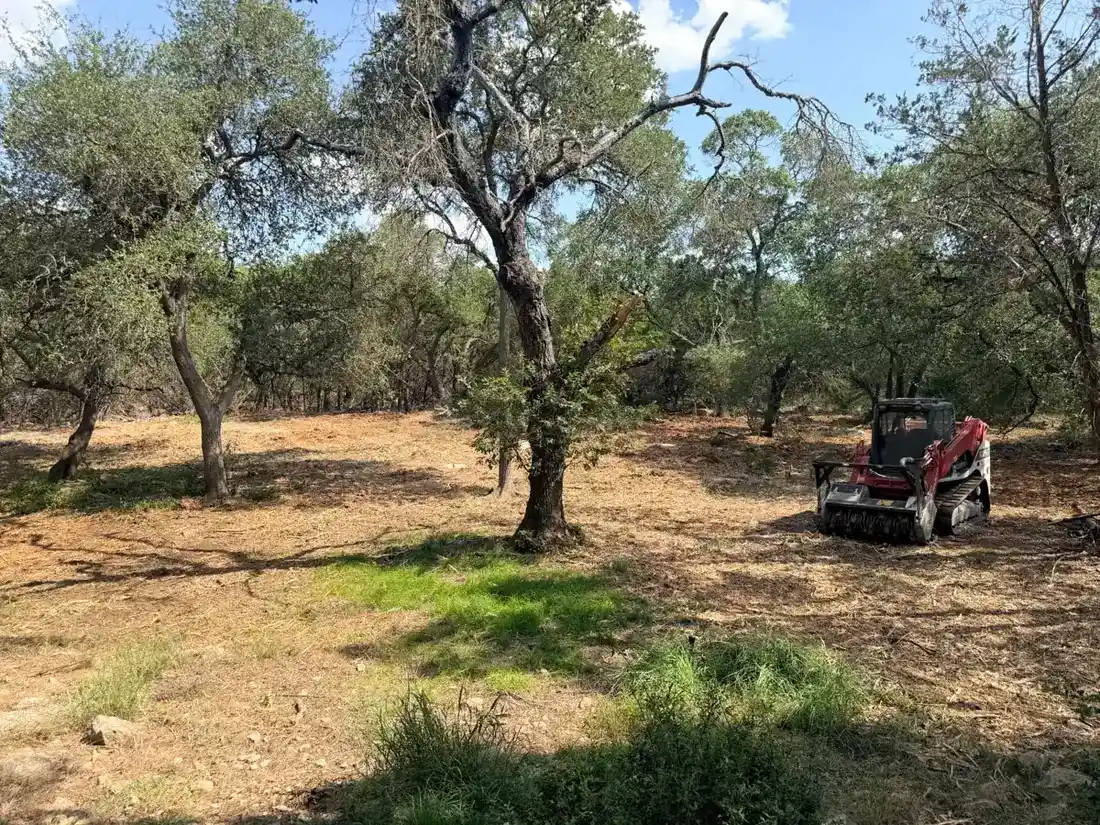
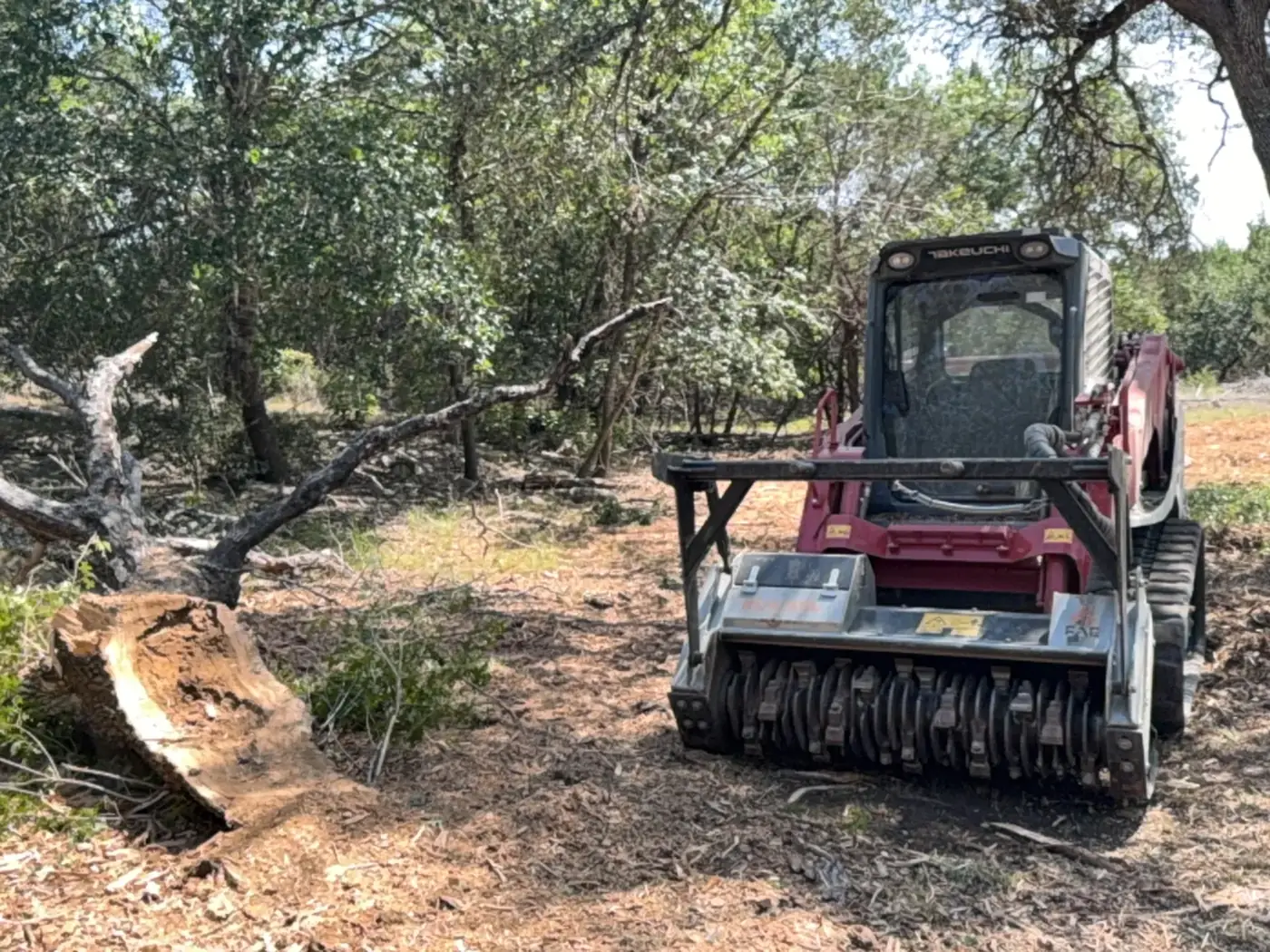
We run high capacity FAE and Prinoth mulching heads on high horsepower, high-flow track loaders. Fixed carbide teeth handle cedar and brush up to 8 inches, and for trees over 8 inches we switch to knife and chisel style teeth, which take on trunks over 12 inches.
On Hill Country land, the main target is cedar, also called Ashe juniper.
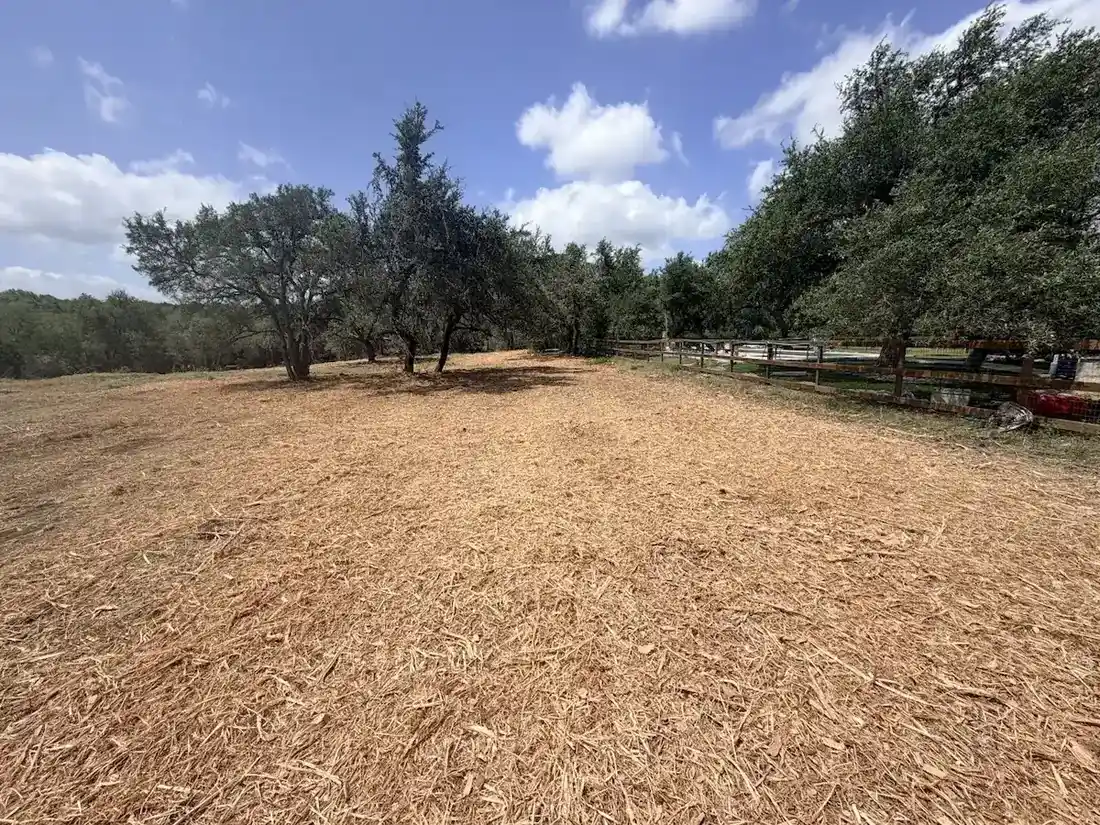
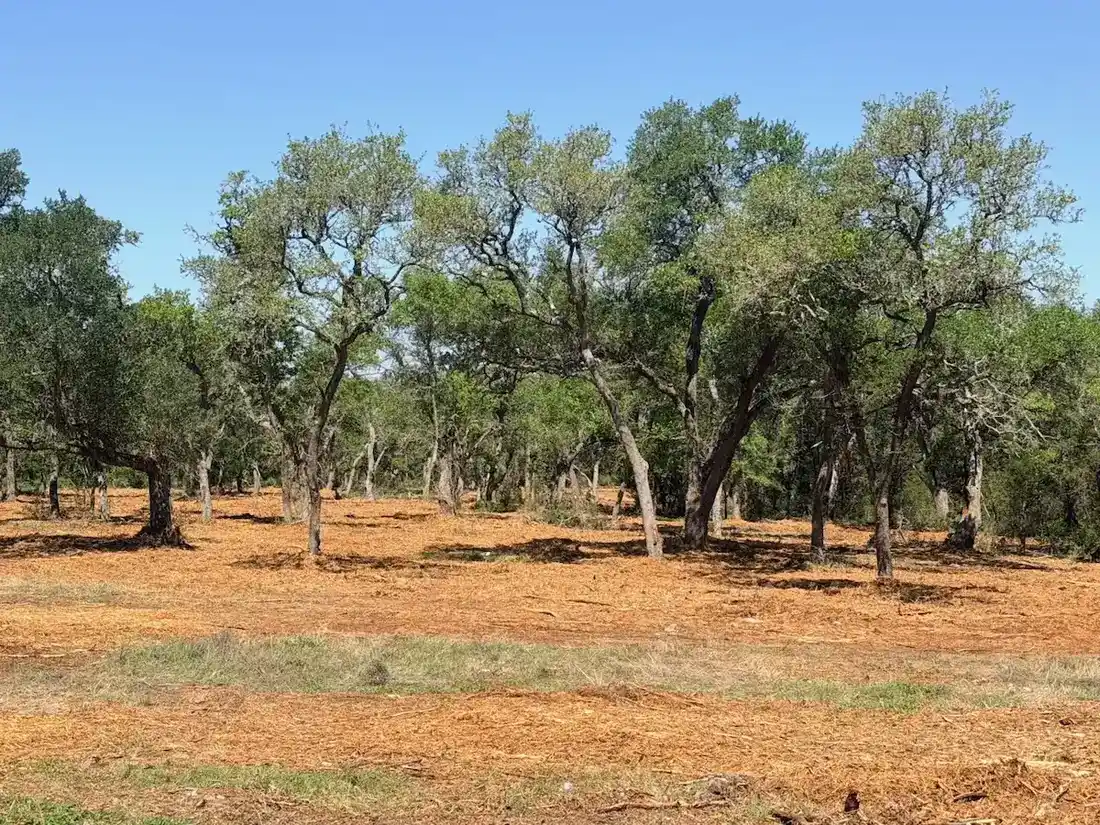
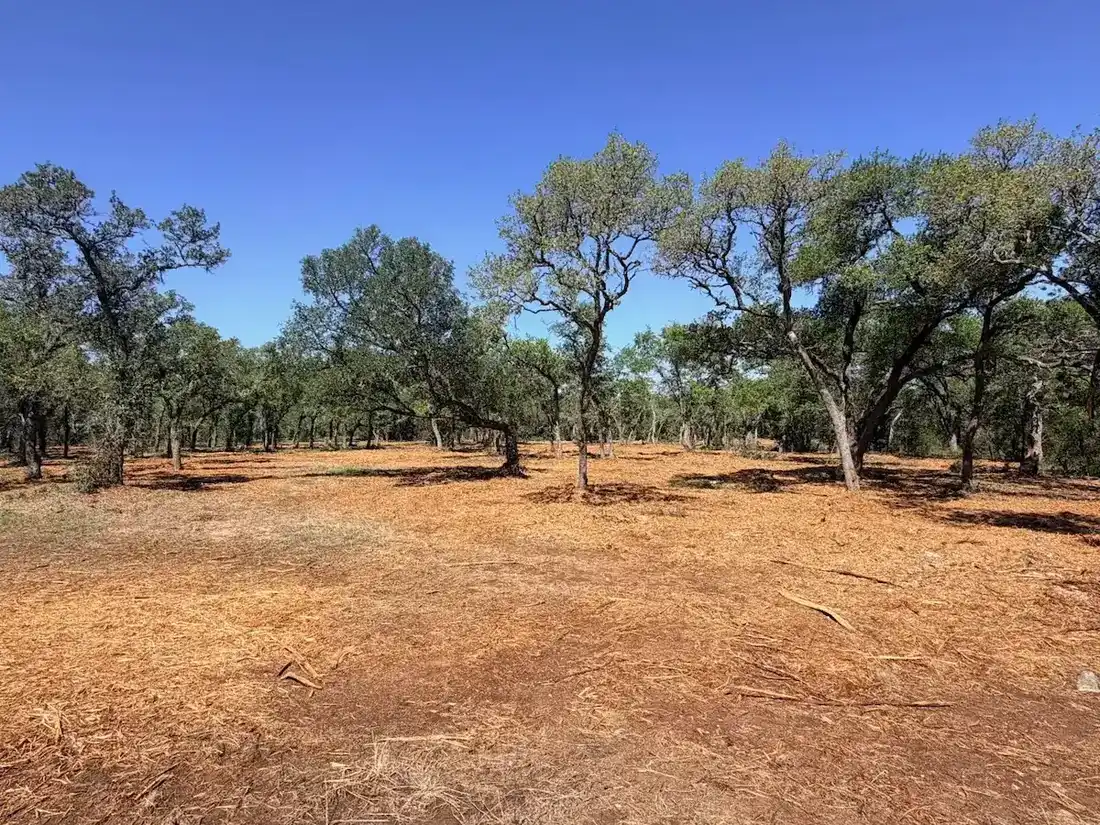
The mulch layer protects thin, rocky soil from erosion, holds moisture, and slows new growth.
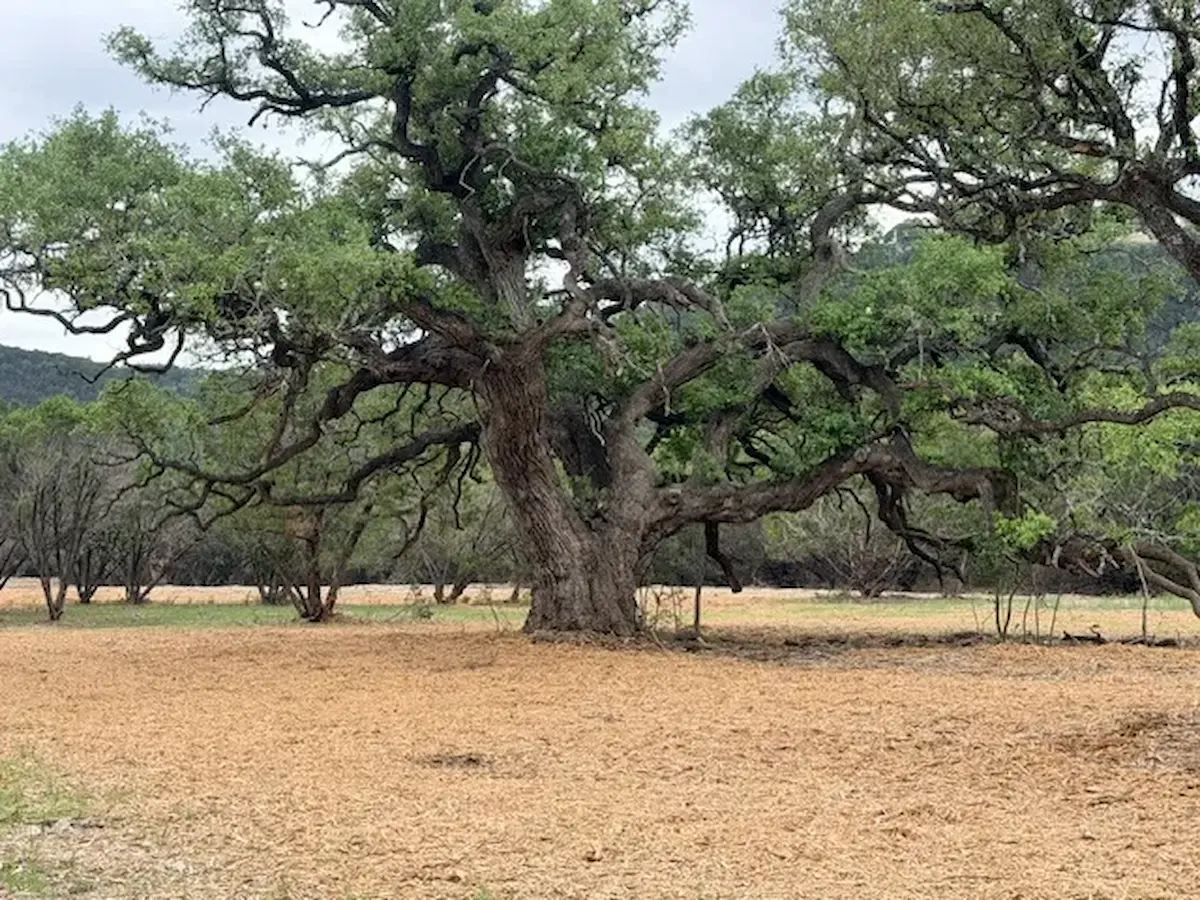
We work around oaks and other trees the owner wants to keep. See our selective clearing page for how that plays out on a mixed property.
One thing to know up front: forestry mulching does not control mesquite. Mesquite resprouts from the root.
Why Hill Country Ground Is Different
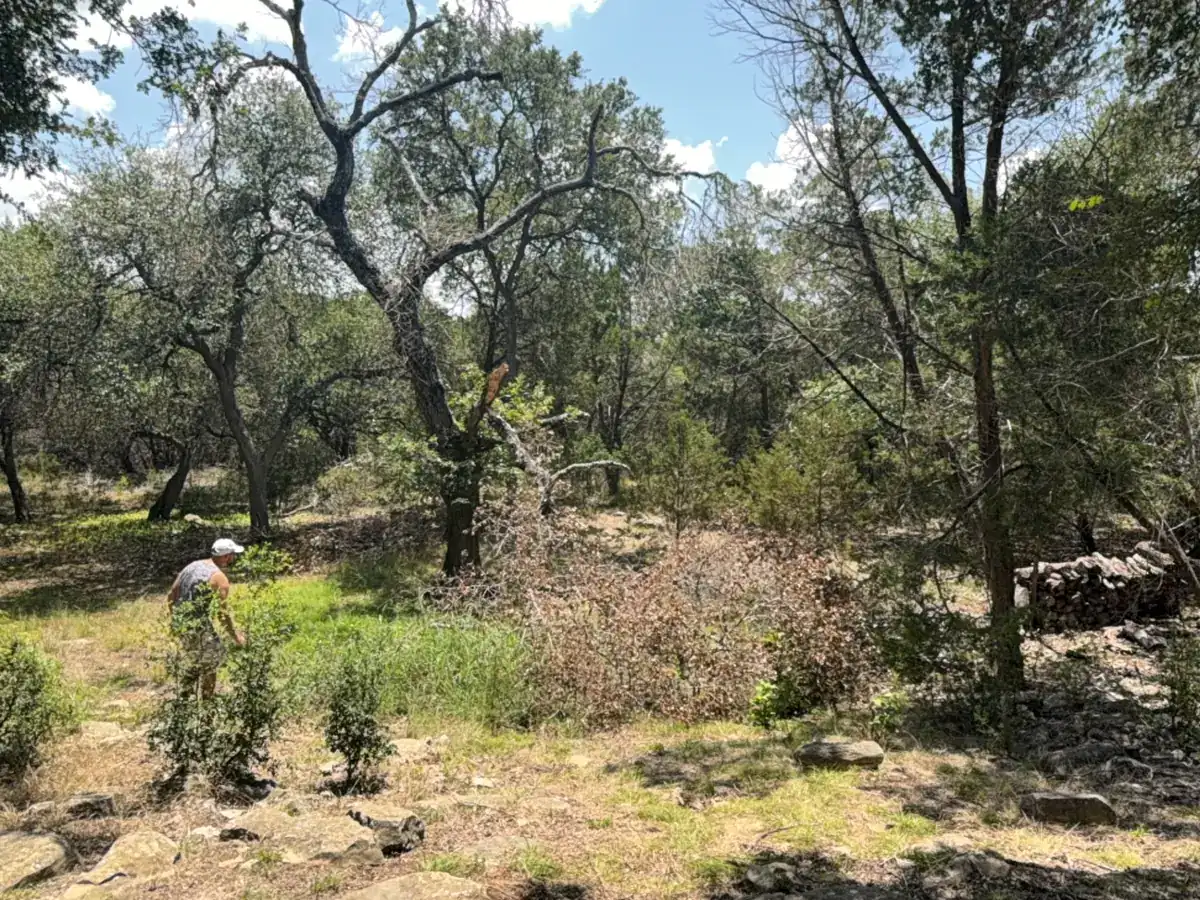
Hill Country ground is different because of what sits under the topsoil. Much of this land rests on limestone, often at or near the surface.
The soil layer is thin, and in spots there is barely any soil. A mulcher head at the right height can skim over rock, but the operator has to read the ground constantly.
Three things make Hill Country terrain hard:
- Rock at the surface. Ledges, slabs, and loose stone.
- Slope. Cedar loves a hillside, and hillsides are where the rock shows.
- Density. Thick, mature cedar stands slow the machine to a crawl.
Put all three together and you have a typical Hill Country job.
A Pre-Job Rocky-Site Assessment Checklist
A pre-job assessment tells you whether forestry mulching fits the ground. An owner walks the property with you before any contract is signed. Here is what we look at.
- Surface rock. How much rock is visible? Ledges, slabs, or loose float?
- Slope. Where does the grade get steep enough to limit machine travel?
- Vegetation density. Light brush, or thick cedar with trunks to grind?
Your goals shape the plan too. Open pasture and a fire break around the house get different plans.
Checking Machine Access Before You Start
Access decides how we lay out the work. During the walk we flag narrow gaps, deep gullies, and soft creek bottoms so the crew has a clear plan on day one.
How We Handle Rock: Carbide Teeth and Knives
Carbide is built for a hard working environment, but rock and large timber still wear teeth and knives faster. All of our cutting tools are maintained wear parts. We keep them sharp and replace them on schedule so the head cuts clean all day.
On rocky ground, the operator’s job is to keep the cutting edge in the wood and out of the stone. That comes down to cutting height and ground speed.
Cutting Height and Ground Speed
On rocky ground, cutting height is a judgment call the operator makes yard by yard. Running the head a little high over known ledges saves teeth and keeps production steady. A few habits matter most:
- Set the head to skim, not dig. Cut the stem just above the soil line. That leaves a clean mulch layer and protects thin soil.
- Read the ground ahead. A color change, a slab edge, or a line of loose rock tells the operator to lift the head before contact.
- Match ground speed to the terrain. Steady speed in rock keeps the cut clean and production consistent.
A steady pace beats a fast one. That is how we keep production predictable.
Safe Operating Practices Around Rock
A mulcher throwing rock is the real hazard, not the wear bill. A few rules keep people and property safe:
- Keep an exclusion zone. Nobody but the operator inside the work area, including the landowner who wants to watch.
- Wear the gear. Eye, face, and hearing protection and a hard hat for anyone near the machine. The operator stays in the cab with the door closed.
- Watch the debris arc. Rock throws in the direction the head is spinning. Know which way that is before a pass near a fence, vehicle, or structure.
For background on how cedar, oak wilt, and fire risk interact on Hill Country land, see our land education page. For the mulching service itself, see our forestry mulching page.
Forestry Mulching on Steep Ground: What Changes
Steep ground changes the method and the pace, not the result. Our track loader holds well on Hill Country grade, and the operator works the slope in a planned pattern.
Reading the Slope Before We Start
- Grade. We map where the ground steepens and plan passes around it.
- Direction. We work up and down the slope rather than across it.
- Rock underfoot. Loose rock on a slope gets flagged during the walk and worked carefully.
How the Work Changes
Passes are shorter and more deliberate, and the operator works around rock outcrops. Steep, rocky, dense cedar takes longer per acre, and we build that into the plan up front.
We plan an exit for every pass, keep people well clear of the work area because debris can roll as well as fly, and never push a section the ground does not support.
Forestry Mulching Production Rate on Rocky Acreage
In typical dense, rocky, hilly Hill Country cedar, forestry mulching covers about half an acre per day. On flat ground with light brush, it can clear up to about 3 acres per day.
Here is how the main factors stack up:
Factor | Slows Production | Speeds Production |
|---|---|---|
Rock | Surface rock, ledges, float | Deep soil, few rocks |
Slope | Steep, uneven grade | Flat to gentle grade |
Density | Thick mature cedar | Light brush, saplings |
Access | Narrow gaps, gullies | Open, easy machine travel |
Forestry mulching, cedar removal, wildfire mitigation, selective clearing and trail cutting run $2,300 per day. That rate reflects what the work takes: high-flow machinery, and the wear rock and large timber put on teeth, knives and the mulching head. You can choose a project price or our day rate, and either way the price is agreed before work starts. Our post on how our forestry mulching day rate works goes into more detail. The site walk confirms the plan for your acreage.
Forestry Mulching Site Preparation: Getting the Property Ready
Forestry mulching site preparation is mostly about clearing the way for the machine and flagging what stays. Before the crew arrives:
- Mark the trees you want kept. Flag oaks and any other tree you want left standing.
- Point out the boundaries. Show where the work starts and stops.
- Clear the access route. Move junk, old wire, and anything that blocks the machine.
That is it. We handle the rest. For a fuller walkthrough, see our project preparation guide.
Forestry Mulching vs Dozer Clearing on Rocky Ground
Forestry mulching and dozer clearing solve different problems.
Forestry mulching grinds vegetation in place and leaves mulch on top.
Dozer clearing strips everything to bare dirt, removes stumps and roots, and usually needs haul-off.
Forestry Mulching | Dozer Clearing | |
|---|---|---|
Result | Mulch layer on top | Bare dirt |
Stumps and roots | Left in place | Removed |
Haul-off | None | Usually needed |
Best for | Pasture, cedar, defensible space, trails | Pads, slabs, driveways |
Soil impact | Protects thin soil | Disturbs soil |
On rocky ground, the choice comes down to the goal. See our land clearing page for the dozer side.
Some landowners can offset part of the cost through cost-share programs. Check with Texas A&M Forest Service or your NRCS office, and see our grants page for background.
Conclusion
Rocky Texas terrain does not have to stay overgrown. It takes the right machine, the right plan, and an operator who reads the ground.
At Legacy Oak Land Clearing, Inc., we are family-owned, licensed, and insured, and an owner walks your property before any contract is signed.
Get a Free Quote Today by submitting your project details and a few photos. We typically reply within minutes.
Frequently Asked Questions
What are the downsides of forestry mulching on rocky ground?
Rocky ground slows the pace and adds wear. Exposed rock and bedrock mean slower ground speed, more careful passes and faster wear on teeth and knives, and we build that into the plan. Some spots on very rocky sites are not worth mulching, and we flag those during the site walk. The upside is that the mulch layer stays on site, protects thin soil and holds moisture.
Can a forestry mulcher work on steep, rocky ground?
Yes. Our track loader handles most Hill Country slopes. Slope combined with loose rock, wet ground, or tight access can rule out a small section, so we walk the property first and mark what we will mulch. Steep, rocky ground usually means slower production and a higher day count, and we plan for that up front.
When is dozer clearing a better fit than forestry mulching on rocky ground?
Dozer clearing is the better fit when you need bare dirt, not a mulch layer. House pads, slabs, driveways, ponds and foundations need the stumps and roots out, and that usually means haul-off. If you want the soil kept covered and the roots left in place, forestry mulching is usually the better call.
How should I prepare rocky acreage for a forestry mulching crew?
Mark the trees you want to keep, especially mature oaks, and point out boundaries, gates and anything buried. Clear junk, old wire and T-posts from the work area and the path the machine will take. An owner walks the property with you before any contract is signed. To get started, send your project details and a few photos through “Get a Free Quote Today,” and we typically reply within minutes.