Table of Contents
- What Is a Forestry Mulching Day Rate?
- How Forestry Mulching Production Rate Affects Your Cost
- Forestry Mulching Project Price vs. Day Rate
- Preparing Your Property Before the Crew Arrives
- What Changes the Pace of the Work
- How to Get an Accurate Quote
- Conclusion
- Frequently Asked Questions
What Is a Forestry Mulching Day Rate?
A forestry mulching day rate is what we charge for one working day of a high-flow track loader with a dedicated mulching head on your property. Our rate is $2,300 per day for forestry mulching, cedar removal, wildfire mitigation, selective clearing and trail cutting. It's one rate across the whole Texas Hill Country.
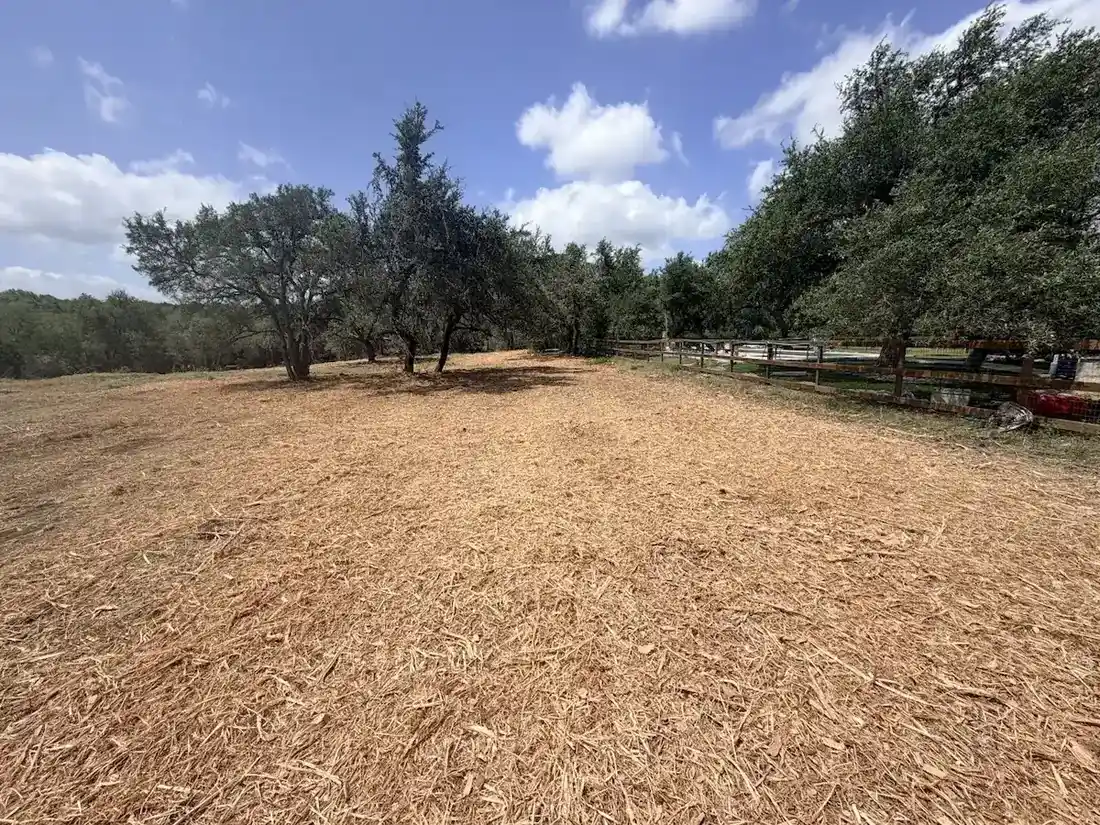
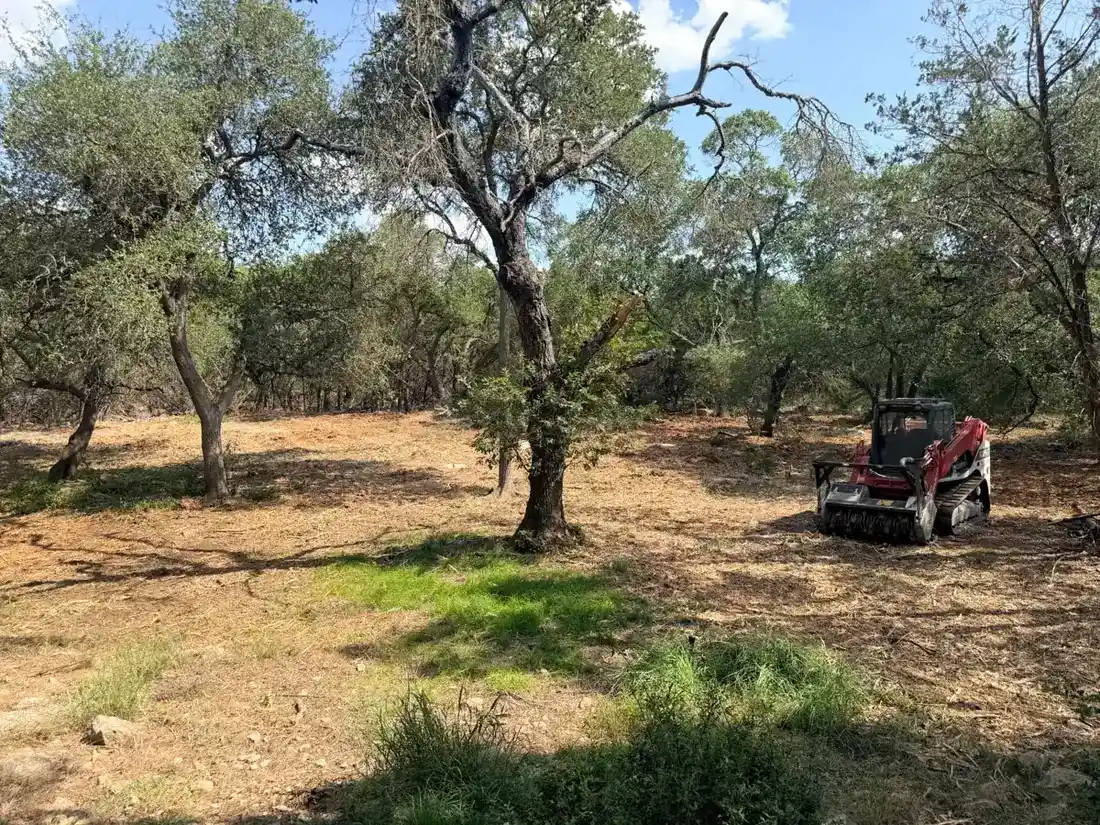
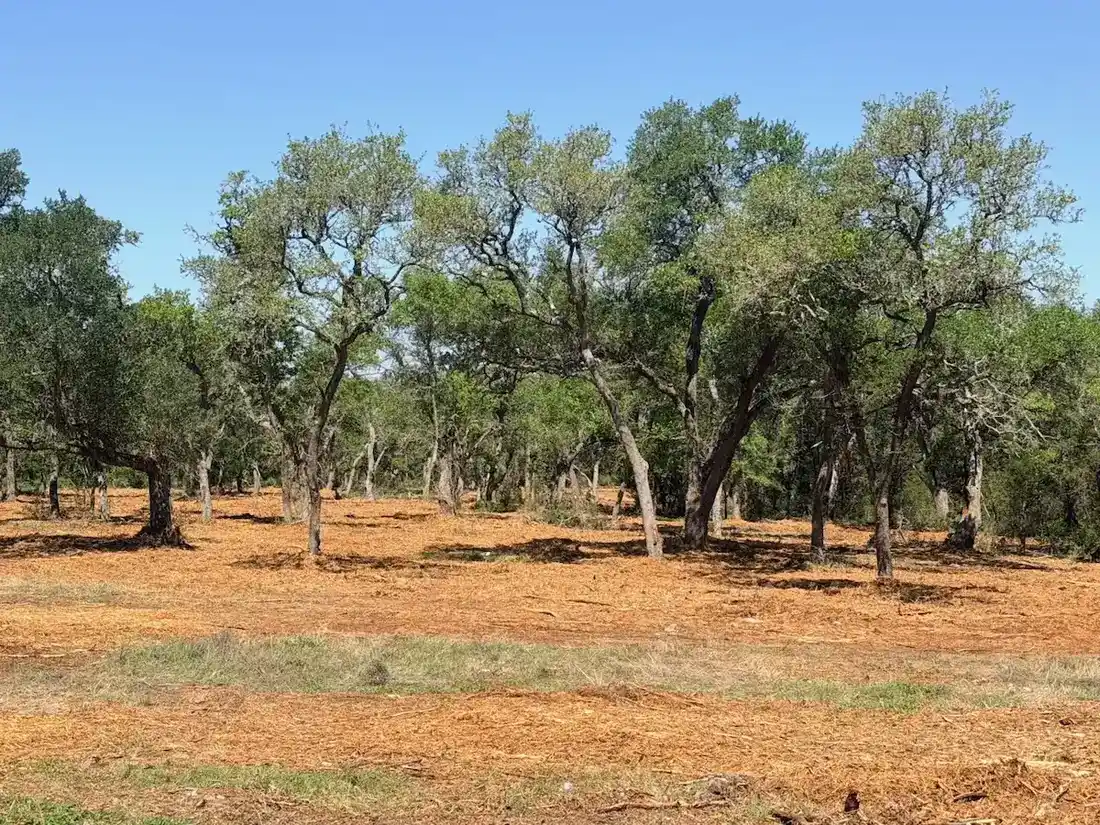
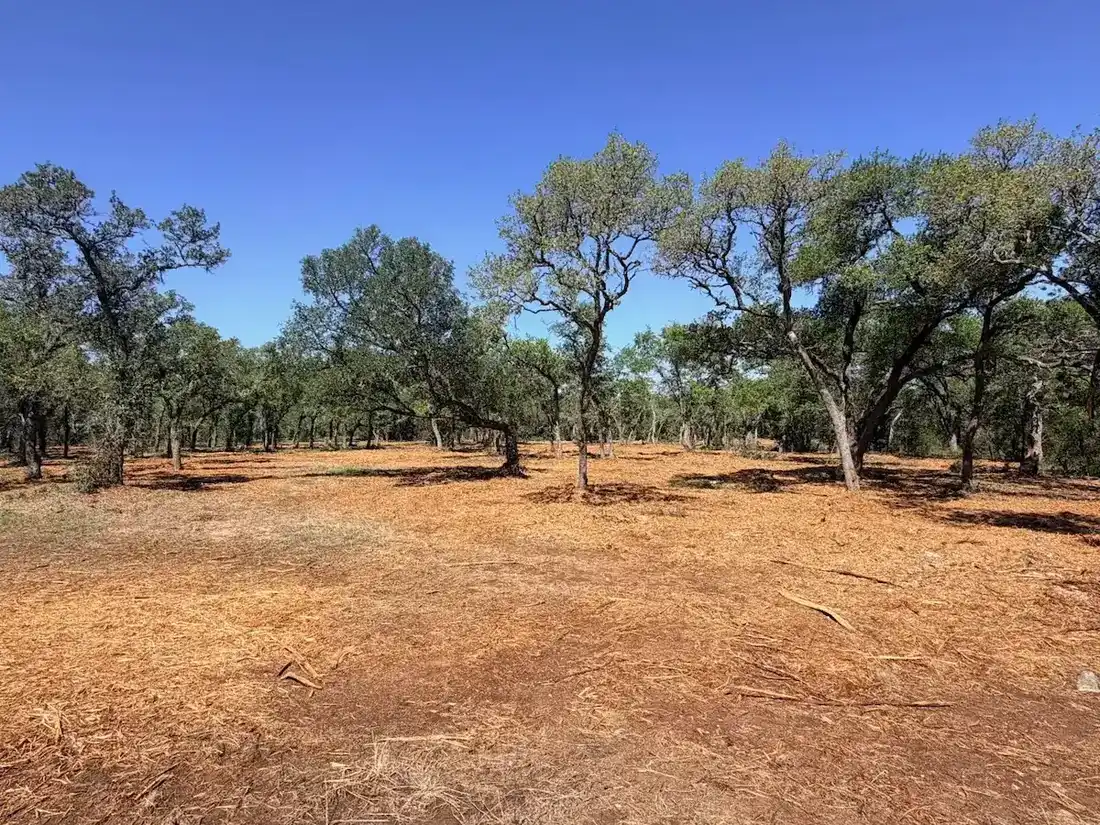
The day rate covers the operator, the machine, fuel and the mulching work itself. Forestry mulching grinds cedar, brush and small trees in place into a layer of mulch. There are no burn piles and no haul-off. That mulch protects thin, rocky soil, holds moisture and slows regrowth.
Other services aren't part of the mulching day rate. Rock grinding, stump grinding and dozer land clearing are quoted per job.
How Forestry Mulching Production Rate Affects Your Cost
Production rate is how much ground we clear in a day. The more ground covered per day, the fewer days the job takes, and the lower the total cost.
Dense Cedar and Rocky Terrain
In typical dense, rocky, hilly Hill Country cedar, we clear about half an acre per day. Cedar (Ashe juniper) grows thick here, and on steep slopes, rocky ground and tight access the operator plans each pass carefully. We plan the work around the terrain, and that keeps the job safe.
Light Brush on Flat Ground
On flat ground with light brush, we clear up to about 3 acres per day. There's less material to grind and fewer obstacles to plan around.
Same machine, same operator, same day rate. The ground and the vegetation make the difference.
Forestry Mulching Project Price vs. Day Rate
You can choose how to pay: by the day or by the project.
Day rate: you pay $2,300 for each day of work.
Project price: we look at the property, estimate the work and give you one price for the job.
Either way, the price is agreed before work starts, and we don't bill by the hour.
Preparing Your Property Before the Crew Arrives
A little preparation keeps the work moving once the crew is on site.
Mark the trees you want to keep with bright flagging or landscaping tape, including oaks and any saplings you want left standing.
Mark hidden hazards: property pins and boundary stakes, septic lids, shallow water lines, underground electrical, and metal like old T-posts, barbed wire or junk piles in the brush.
Make sure our truck and trailer can get in. If a gate is locked, leave it open for the start time or give us the code.
Our project preparation guide walks through each step.
What Changes the Pace of the Work
Beyond the vegetation and the ground, two more things shape how much ground gets covered in a day: the size of the trees and the trees you keep. The day rate stays the same either way.
Tree Size
Larger trees take longer to grind than small stems.
Our mulching heads run fixed carbide teeth for material up to 8 inches. For trees over 8 inches, up to 12 inches and larger, we run knife or chisel style teeth.
Project Scope and Heritage Trees
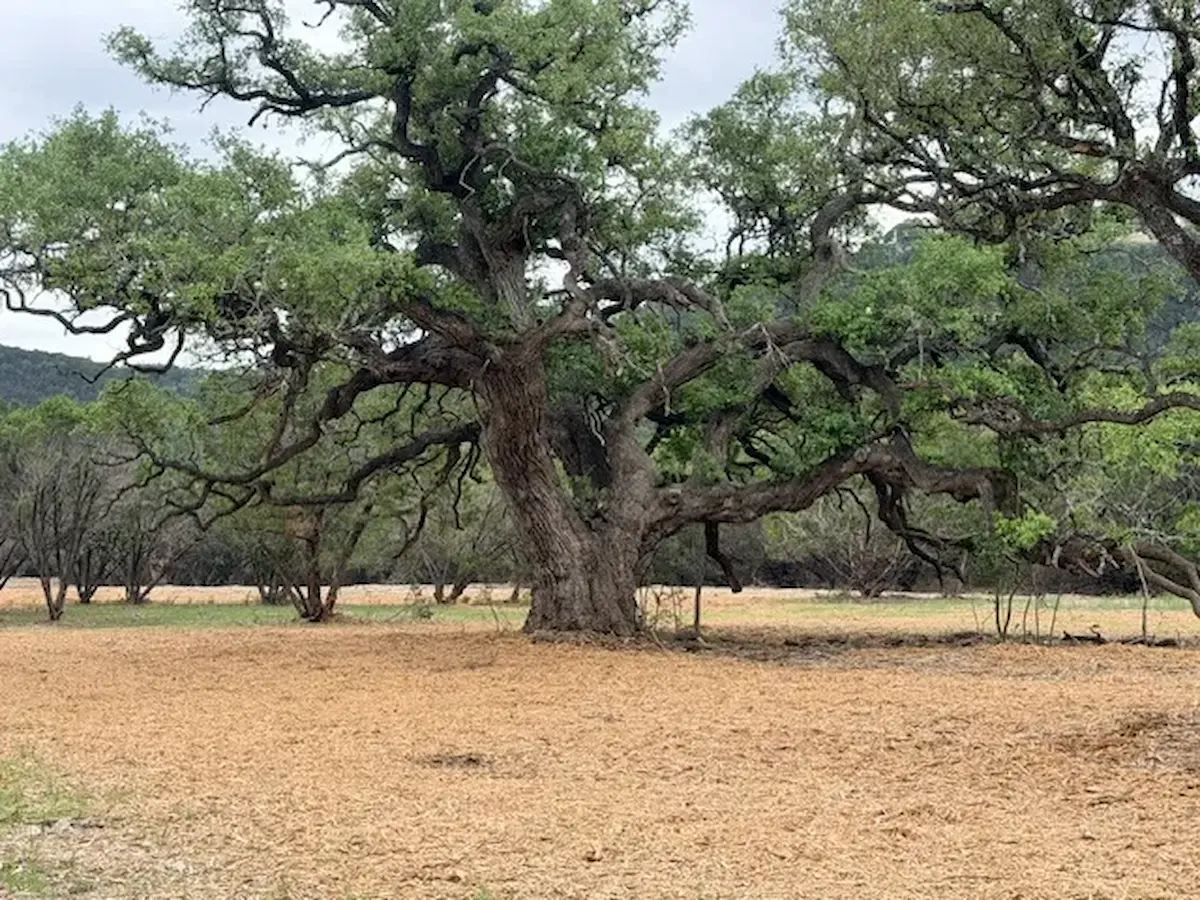
Working around mature oaks and other trees you want to keep takes more time than clearing everything, but you keep the trees that matter. Keeping mature oaks is central to how we work. Our selective clearing page explains how we approach it.
We also schedule oak-adjacent work with oak wilt in mind. We avoid wounding or pruning oaks February through June. Our land education resources cover oak wilt in more detail.
How to Get an Accurate Quote
Click Get a Free Quote Today and submit your project details first: property size, what you want cleared, any trees you want to keep and notes on the terrain.
Then add a few photos that show the density, the slope and the size of the trees. We typically reply within minutes.
An owner walks the property before any contract is signed. From there, you choose a project price or our day rate.
Financing is available for projects over 10 acres. Ask about it when you request your quote.
Conclusion
Forestry mulching runs $2,300 per day across the Texas Hill Country. How much ground gets covered in that day depends on the cedar, the terrain and the trees you keep.
Ready to get started? Click Get a Free Quote Today and send your project details and a few photos, or call or text (512) 641-5658.
Frequently Asked Questions
How much does forestry mulching cost per day?
Forestry mulching runs $2,300 per day across our whole service area. That one rate covers forestry mulching, cedar removal, wildfire mitigation, selective clearing and trail cutting.
How much land can a forestry mulcher cover in a day?
Production depends on vegetation and terrain. In typical dense, rocky, hilly Hill Country cedar, expect about half an acre per day. On flat ground with light brush, we can clear up to about 3 acres per day. The actual rate for your property depends on what's growing there and how steep it is.
What is included in a forestry mulching day rate?
The day rate covers the operator, the machine, fuel and the mulching work. The mulch stays on site to protect the soil, so there is no haul-off. Rock grinding, stump grinding and dozer land clearing are not included; those are quoted per job.
Can I choose a project price instead of a day rate?
Yes. You can pay by the day or choose a project price. An owner walks your property first, and the price is agreed before work starts.