Table of Contents
- What Rock Grinding Does for Rocky Driveways and Ranch Roads
- How Rock Grinding Equipment Breaks Down and Compacts Material
- Rocky Driveway Improvement: Assessment and Preparation
- Driveway and Ranch Road Access Planning
- Rock Grinding for Road Access: Production Rates and Timeline
- When You Need Rock Grinding vs. Other Clearing Methods
- Getting a Quote for Your Rocky Driveway or Ranch Road
- Frequently Asked Questions
What Rock Grinding Does for Rocky Driveways and Ranch Roads
Rock grinding for rocky driveways and ranch roads is common in the Texas Hill Country. Large rocks and boulders scatter across the surface. They make the road rough, slow, and hard on vehicles.
Rock grinding crushes and grinds rocks in place into smaller, angular particles. These particles lock together and compact under vehicle weight. The result is a stable, drivable surface. No haul-off required, just usable road.
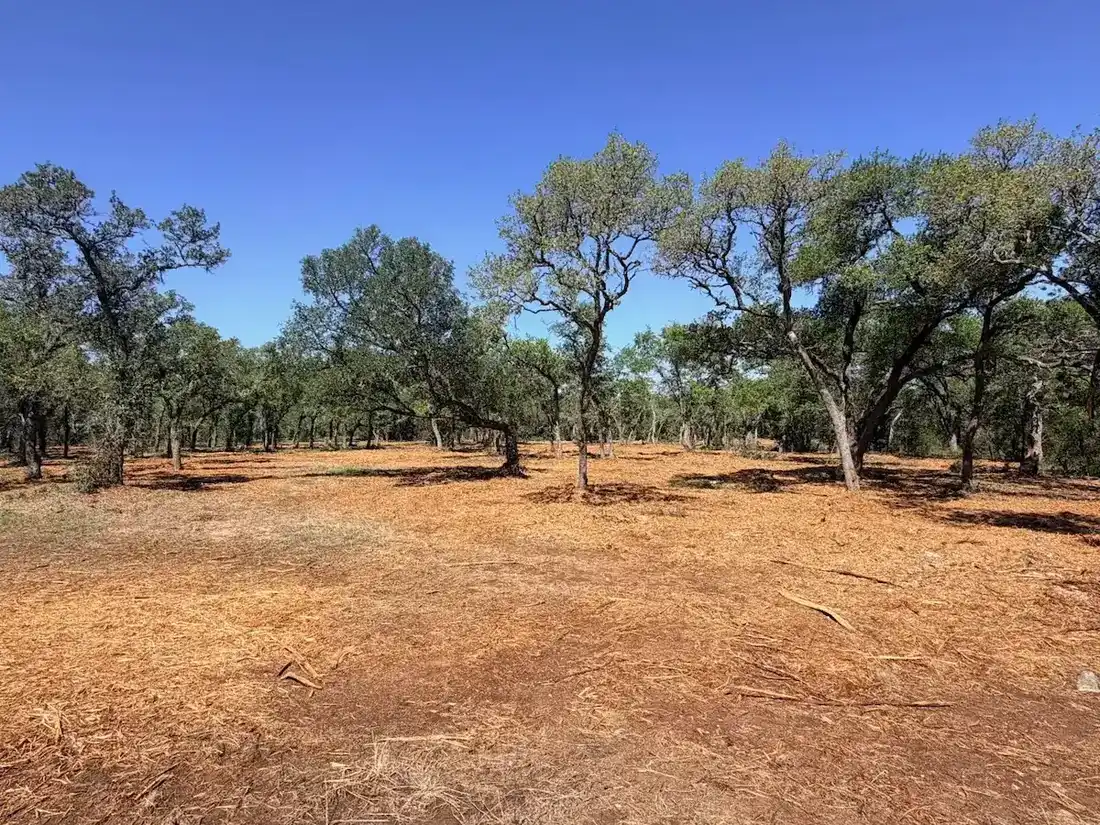
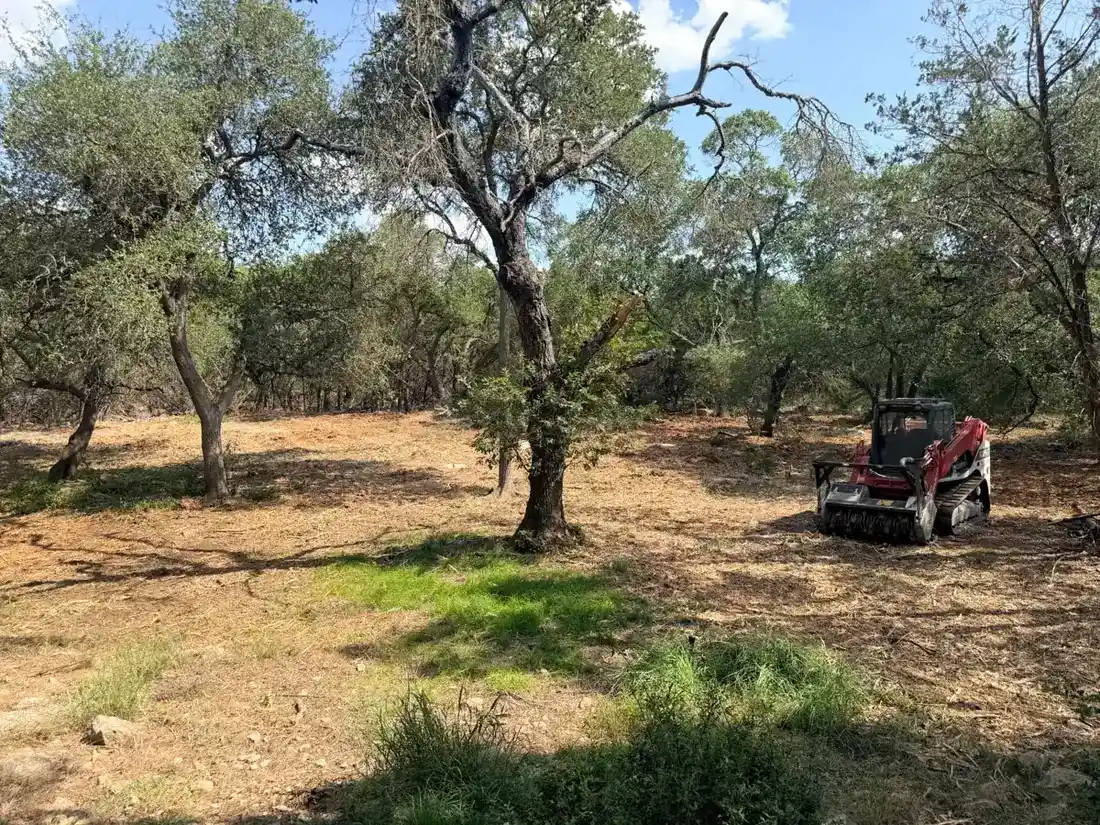
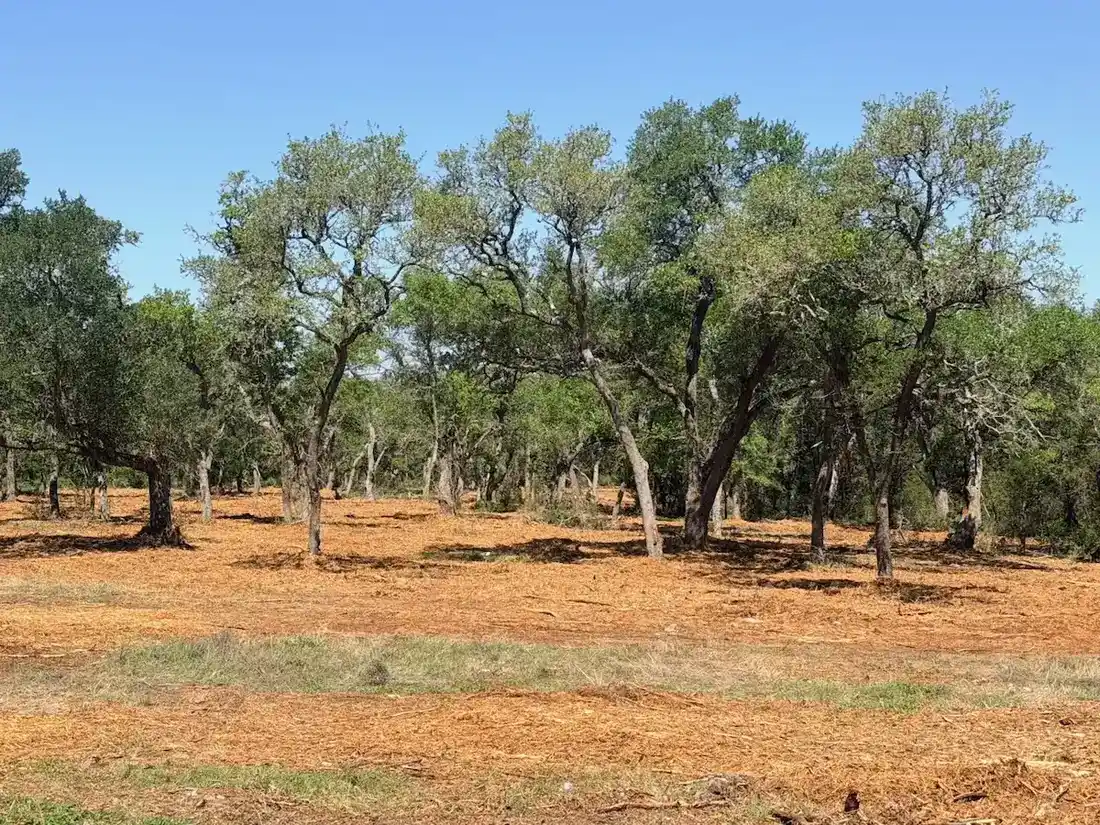
At Legacy Oak Land Clearing, Inc., we run a high-flow track loader with an FAE rock grinding head to tackle rocky driveways and ranch roads. The head grinds rock in place, and the crushed material packs into a firm base. Drainage improves. Access improves.
This process works best on properties where on-site rock can be reused.
How Rock Grinding Equipment Breaks Down and Compacts Material
Rock grinding relies on specialized equipment built for this work. The machine reduces rock in place, then the weight and motion of the machine help compact what's left behind.
High-Flow Track Loader with an FAE Rock Grinding Head.
A high-flow track loader is a tracked machine with a high-volume hydraulic system. It carries a dedicated grinding head on the front. The head spins at speed and reduces rock into smaller, angular pieces.
The track design matters on rocky ground. Tracks spread the machine's weight over a wide footprint, which keeps it stable on uneven surfaces and gives it traction where wheels would slip. That’s why we run a track loader rather than a wheeled machine.
As the loader moves forward, the head grinds material and the machine's weight presses the crushed rock down. The result is a compacted layer, not a loose pile of gravel.
Carbide Teeth Made for Rock.
Our FAE head runs fixed carbide teeth, built to stand up to Hill Country limestone. Teeth are wear parts. We maintain them and replace them on schedule, which keeps production steady and results consistent.
What good processed material looks like
The goal is a graded mix, not uniform dust. A good blend has larger angular pieces for structure and smaller particles and fines to fill the gaps between them. Angular pieces lock together under load. Rounded rock, like river gravel, rolls instead of locking, which is why it makes a poor road surface on its own.
When you look at a finished pass, you want to see a range of sizes, not one uniform grain. That range is what compacts into a firm base.
Safety and site considerations during grinding
Rock grinding throws material and makes dust. We plan for both. The operator runs enclosed and protected, and we keep people, pets, and livestock clear of the work zone while the head is running.
Dust is part of the job on dry ground. Water can be used to knock it down when conditions call for it. Noise is constant while the head is spinning, so hearing protection is standard for anyone nearby.
Before we start, we confirm where utilities run. Buried lines, water meters, and septic components need to be marked or located so the head doesn't contact them.
Rocky Driveway Improvement: Assessment and Preparation
Before any rock grinding work starts, we assess your property. This helps us understand the scope and plan the approach.
Evaluating rock size and density
A site visit reveals what you're working with. We look at rock size, density, and distribution across the driveway or road. Some properties have scattered large boulders. Others have dense, continuous rock.
Dense, continuous rock takes longer to process than scattered rock. Both are manageable. The difference is in timeline and planning.
We also check for free-floating rock versus rock embedded in soil. Free-floating material grinds more easily. Embedded rock requires more aggressive grinding to break it loose.
Clearing vegetation and debris
Vegetation often grows between rocks. The rock grinding head handles small brush as it works, but cedar trees and larger limbs need to be cleared first. We quote that as a separate line item.
Debris like fallen branches and trash should be cleared by the property owner before we arrive. A clean surface lets us see exactly what we’re working with and keeps material from jamming the grinding head.
Driveway and Ranch Road Access Planning
Access planning happens before work starts. We need to know how equipment reaches the work area and how water will move once the road is ground and shaped. Water is what ruins ranch roads, so we plan the surface and the drainage together.
Crown, ditches, and where the water goes
A driveway or ranch road needs a crown, a gentle high point down the center. The crown sheds water to both shoulders instead of letting it sit and soak in. Standing water softens the base, and soft base is where potholes and ruts start.
Alongside the road, a ditch or swale catches that runoff and carries it away from the road base.
On sloped roads, water gains speed and cuts channels. Water bars, angled ridges across the road, slow the flow and turn it off to the side. On a long grade, a series of water bars does more for road life than any single fix.
Reading the existing road before we grind
We look at how the road is failing now. Potholes in the same spot every time usually mean water is collecting there. Ruts along the wheel paths mean the base is soft or the crown is gone. Washouts on the downhill side mean runoff isn't being turned off soon enough.
Those clues tell us what to fix in the grind and grade, not just where to crush rock. A road that only gets ground without fixing drainage will be back to the same shape before long.
Access routes for equipment and vehicles
We plan how the track loader reaches your property. Gates, tight turns, low limbs, and steep approaches all factor into the route. Some properties need a little work first to open a path for the machine.
We also think about how you and your vehicles will use the road after. A driveway that needs to handle a heavy trailer is planned differently than a ranch road that only sees a pickup. Wider turnouts at gates and driveways make the road easier to live with.
Once grinding and shaping are done, we check that the surface drains the way it should. We look for low spots that would hold water and confirm the crown and shoulders are doing their job.
Rock Grinding for Road Access: Production Rates and Timeline
Production depends on rock density, rock size, and slope. Loose, scattered rock on gentle ground moves faster. Dense, embedded rock on steep ground takes longer.
Your property is unique. Slope, terrain, and on-site rock density all change the pace. We assess these factors during the site visit and give you a realistic timeline.
A driveway project might take one day. A longer ranch road might take several days. Either way, we quote the work upfront.
When You Need Rock Grinding vs. Other Clearing Methods
Rock grinding solves specific problems. It's not the right answer for every situation. Understanding when to use rock grinding versus other methods saves time and money.
Comparing rock grinding to dozer land clearing
Dozer land clearing is for bare dirt work. It removes stumps, roots, and debris. Dozers dig, grade, and push material out, often for hauling off-site. This method works when you need a clean slate for a new pad, driveway, or foundation.
Rock grinding is different. It crushes rock in place and packs it into a usable surface. No hauling. Your existing rock becomes the road base.
Use dozer clearing when you need to remove material entirely. Use rock grinding when you want to reuse on-site rock as a road base.
Approach | Best For | Result | Material Handling |
|---|---|---|---|
Rock Grinding | Rocky driveways, ranch roads, existing surfaces | Compacted base from on-site rock. | On-site material reused |
Dozer Land Clearing | New pads, house sites, complete removal | Bare dirt, clean slate | Material hauled off-site |
Slope, terrain, and on-site material use
Slope doesn't stop rock grinding. We work on steep terrain by planning the approach carefully. Tracked equipment handles slopes that would challenge wheeled machines.
Rocky terrain is actually ideal for rock grinding. The rock is already there. You're not hauling in material, you're processing what exists on your property.
If your driveway or ranch road has abundant on-site rock, grinding makes sense. You save the cost of buying and hauling aggregate. The material you have becomes your road base.
If your property has mostly clay or thin soil with scattered rock, rock grinding alone may not create a stable surface. A site visit helps us determine if grinding is the right fit or if you need additional material.
Getting a Quote for Your Rocky Driveway or Ranch Road
Getting a quote is straightforward. Click "Get a Free Quote Today" and submit your project details and a few photos.
Photos help us see the rock size, density, and terrain. We typically reply within minutes with a preliminary assessment and next steps.
An owner walks your property before any contract is signed. This visit confirms the scope and locks in the price.
Rocky driveways and ranch roads don't have to stay rough and slow. Rock grinding transforms them into stable, compacted surfaces using the material already on your property.
We've handled rocky driveways and ranch roads across the Texas Hill Country.
Get a Free Quote Today. Call or text (512) 641-5658, or submit your project details at our site visit booking page.
Frequently Asked Questions
What is rock grinding for a driveway?
Rock grinding uses specialized equipment to break down large rocks and boulders in place and compact them into a stable, drivable surface. Instead of hauling away rocky material, we grind it where it sits, creating a compacted road base from the stone already on your property. This transforms a rough, rocky driveway into something vehicles can navigate safely and smoothly.
Can rock grinding work on steep or rocky terrain?
Yes. Steep slopes and heavy rock don’t prevent rock grinding. They affect how long the job takes. We plan the work around your terrain and give you a realistic timeline after the site visit.
How does rock grinding differ from dozer land clearing?
Rock grinding crushes rock in place into compacted material for driveways and ranch roads. Dozer land clearing removes stumps, roots, and debris entirely and prepares bare dirt for pads, slabs, and foundations. If you want to keep the material on-site and create a drivable surface, rock grinding is the answer. If you need bare, clean dirt with all debris removed, dozer work is the right choice.
How should I prepare my driveway or ranch road before rock grinding?
Remove fallen branches, trash, and other debris from the work area before we arrive. Our rock grinder handles small brush along the way, but cedar trees and larger limbs need to come out first. We can clear those as a separate line item on your quote. Mark any trees, structures, or utilities you want protected. Submit project details and photos when you request a quote, and we’ll walk the property with you before any work starts.