Table of Contents
- Getting Started: What You'll Need Before You Clear
- Defensible Space Zones: The Three Management Areas Around Your Home
- Home Ignition Zones: Where Embers Land and How to Stop Them
- Wildfire Fuel Reduction Around Homes: Cedar, Brush, and Dead Vegetation
- Step-by-Step: Creating Defensible Space on Your Property
- Slopes, Access Routes, Fences, and Outbuildings
- Defensible Space Maintenance: Keeping Your Work Intact Over Time
- Frequently Asked Questions
Getting Started: What You'll Need Before You Clear
Creating defensible space in Texas starts with a plan, not a chainsaw. Defensible space is the managed zone around your home where you reduce fuel so a wildfire has less to burn and fewer ways to reach the structure. At Legacy Oak Land Clearing, Inc., we build these zones across the Texas Hill Country, and the work always starts the same way: walk the property, mark what stays, then clear.
You do not need much to begin. You need a few tools and a clear idea of your property lines.
- A tape measure or rangefinder for spacing
- A chainsaw and hand pruners for small limbs
- A rake for dead grass and debris
- Marking paint or flagging for trees you want to keep
- A water source and a phone
The National Fire Protection Association wildfire preparedness guidance treats the area right around the home as the highest priority. That is where we start too.
Defensible Space Zones: The Three Management Areas Around Your Home
Defensible space zones are the three bands of managed vegetation around a home, each with a different job. Think of them as rings, with the most work done closest to the house. The distances below are the common starting points used across the Texas Hill Country.
Zone 1, the home ignition zone, 0 to 5 feet. This is the noncombustible band. Bare ground, gravel, pavers, or low green ground cover. No mulch beds against the wall, no firewood, no propane tanks, no cedar limbs touching the siding or roofline.
Zone 2, the lean, clean, and green zone, 5 to 30 feet. Thin the cedar and brush here. Space tree crowns so a fire cannot run branch to branch. Keep grass short and irrigated if you can. Isolate shrubs and small trees into clumps instead of a continuous hedge.
Zone 3, the reduced fuel zone, 30 to 100 feet or more. This is where you break up the continuous cedar and brush that carries fire toward the house. Thin the stand, remove dead material, and keep the remaining trees spaced. On a slope, this band needs to be wider on the downhill side, because fire moves faster uphill.
Slope is the part most guides skip. A common rule of thumb is to add roughly one foot of extra clearance for every one degree of slope under the home. A gentle 10-degree grade means about 10 more feet of thinning on that side.
Exact distances also vary by your county's wildfire guidance and by what your insurer wants to see. Check both before you cut. What does not vary is the principle: the closer to the house, the less fuel you allow, and the more the slope, the wider the ring.
If you want the full zone-by-zone treatment for your lot, see our wildfire mitigation page.
Home Ignition Zones: Where Embers Land and How to Stop Them
Home ignition zones are the areas where embers and radiant heat can ignite your home. Most homes that burn in a wildfire are ignited by embers, not by a wall of flame.
Start with the roof and the roof edge. Cedar needles and oak leaves collect in valleys, behind chimneys, and in gutters. A single dry gutter full of cedar litter is enough to catch a windblown ember. Clear the roof and gutters, and keep them clear through the dry months.
Then look at the openings. Embers slip into attic vents, soffit vents, dryer vents, and the gaps around garage doors. Screening those openings with a fine metal mesh is one of the cheapest, highest-value steps a landowner can take.
Next, the first five feet around the foundation. This is the band that decides whether a ground fire reaches the wall. Keep it bare, gravel, or low green ground cover. No mulch bed against the siding, no cedar chips, no stacked firewood, no propane tank against the wall.
Decks and porches need their own look. Embers and cedar litter collect under the deck and in the gap between the deck boards and the siding. Keep the space under a deck clear of stored material, and keep the ground beneath it bare or gravel.
Finally, the outbuildings. A shed, barn, or shop at the end of a long drive is its own ignition zone. Treat it the same way: clear the roof, screen the vents, and keep the first few feet around the walls free of fuel. If a shed catches, it becomes a brand that throws embers back at the house.
A clean roof, screened vents, and a bare foundation line do more than most people expect. If you want a crew to handle the vegetation side of that picture, start with our wildfire mitigation page, and read our land education page for background on cedar, oak wilt, and wildfire in the Hill Country.
Wildfire Fuel Reduction Around Homes: Cedar, Brush, and Dead Vegetation
Wildfire fuel reduction around homes means removing the material that carries fire: cedar, dense brush, dead vegetation, and piled debris. In the Hill Country, cedar (Ashe juniper) is the main culprit. It grows thick, holds oils, and burns hot.
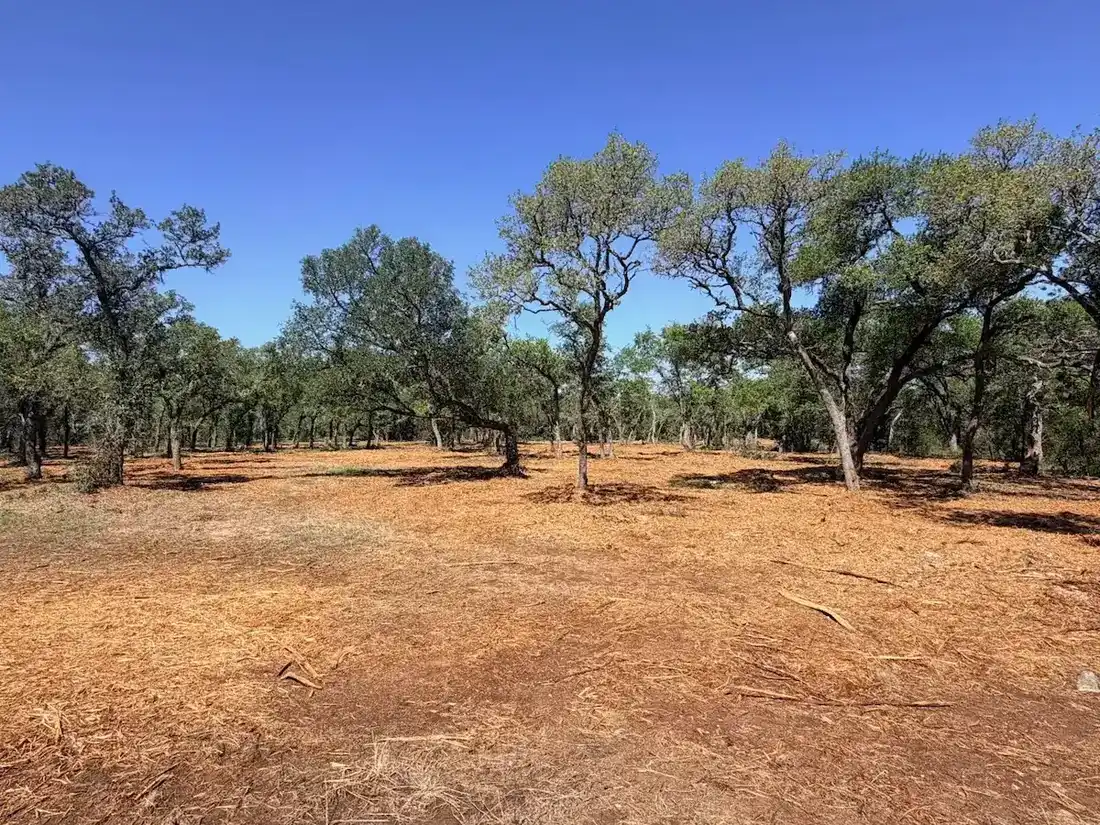
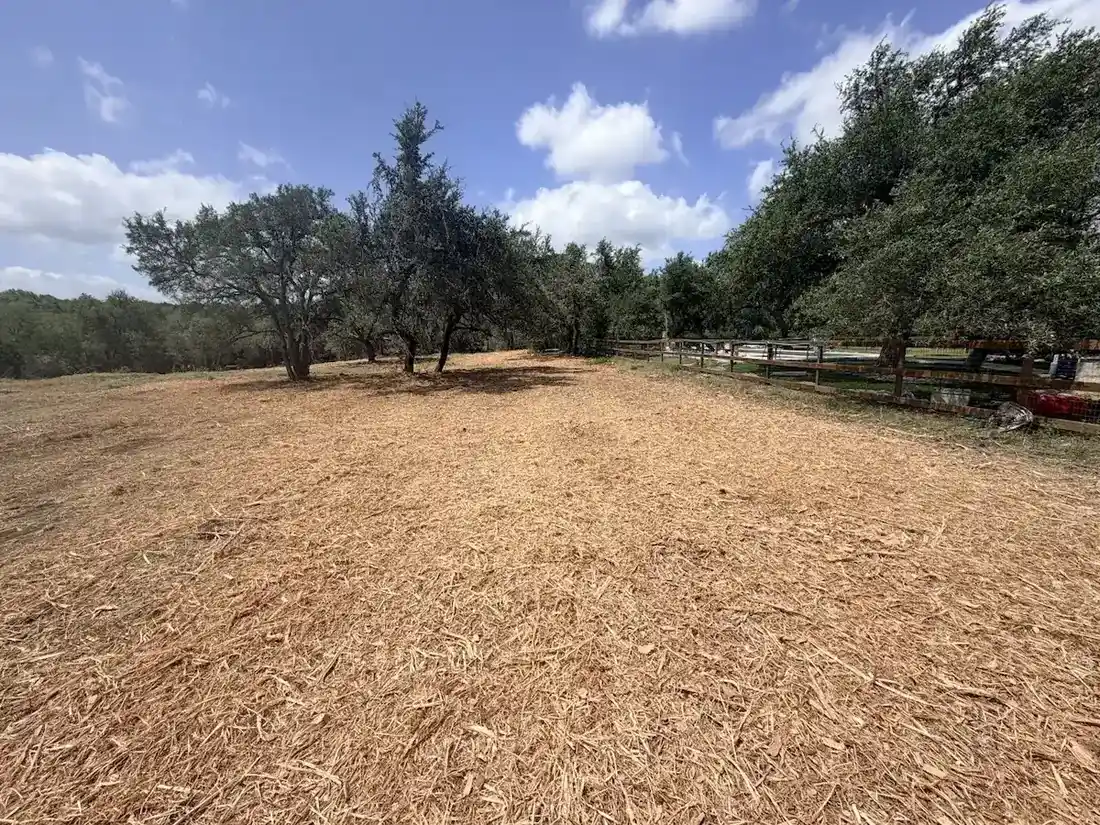
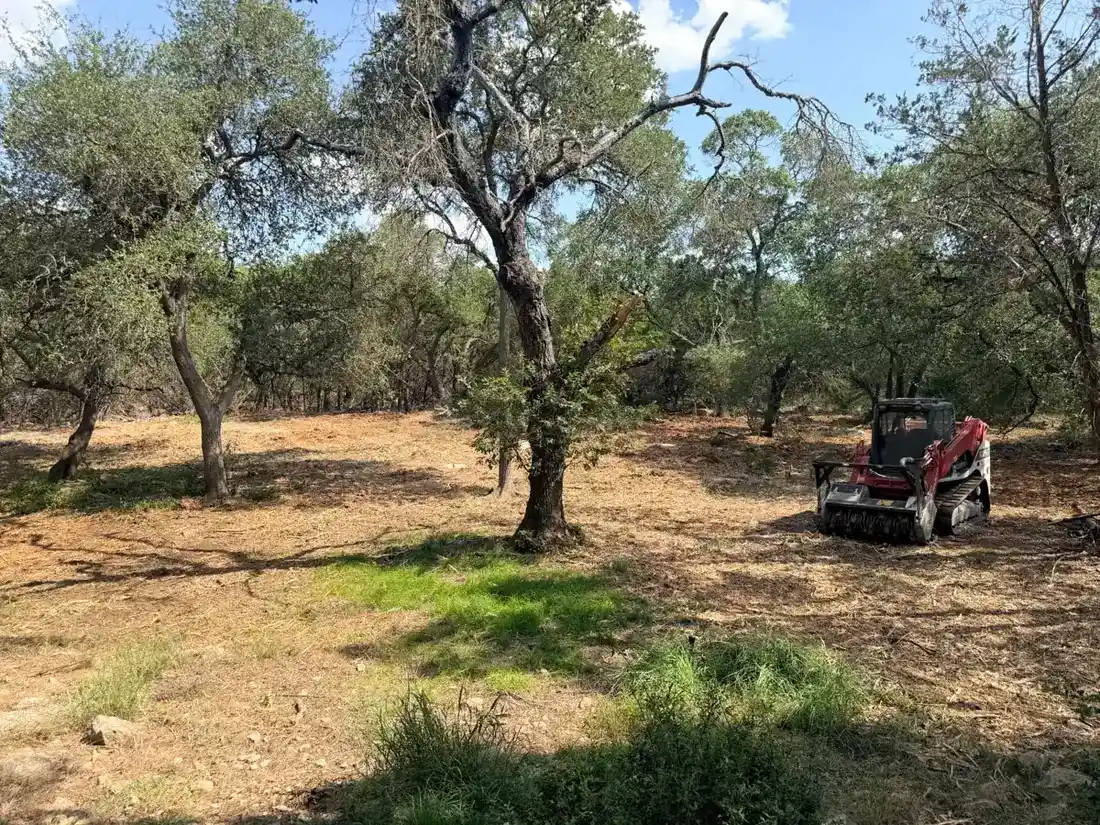
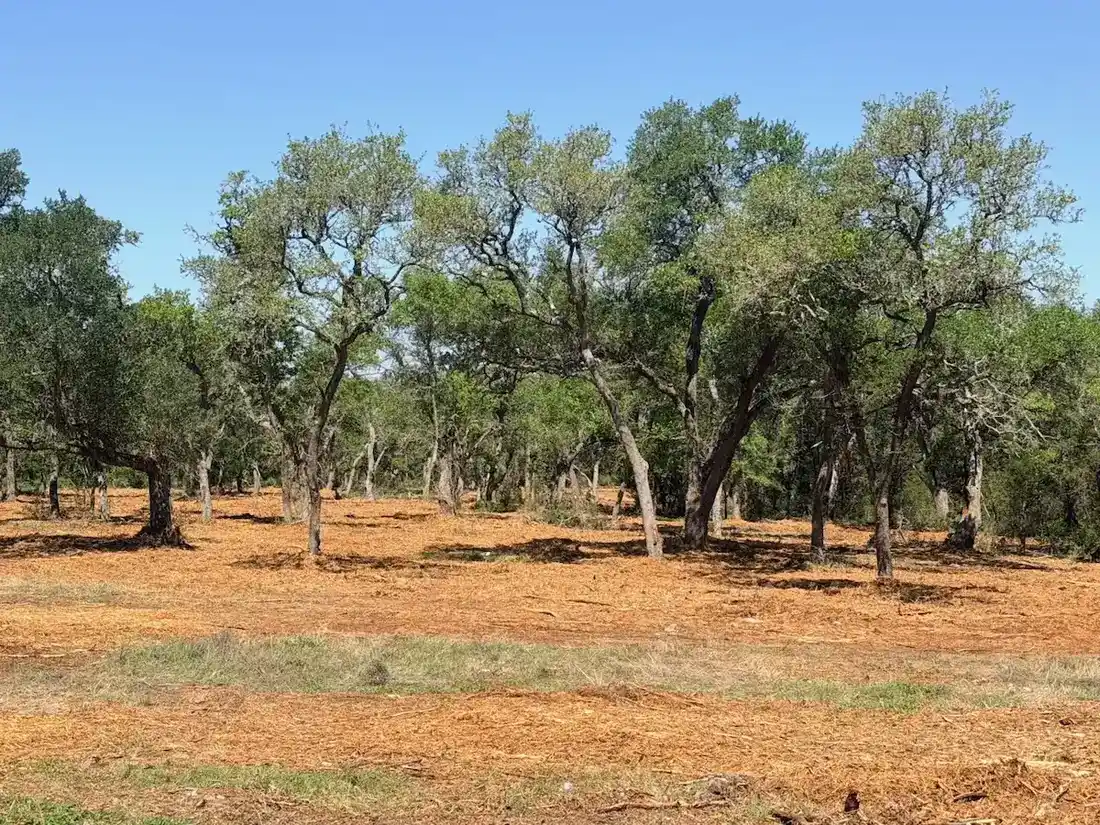
Forestry mulching grinds cedar, brush, and small trees in place in one pass. It leaves a mulch layer, so there are no burn piles and no haul-off. The mulch protects thin, rocky soil and holds moisture. Cedar does not resprout from the stump once it is cut below the green, so a maintenance pass every few years keeps new growth small.
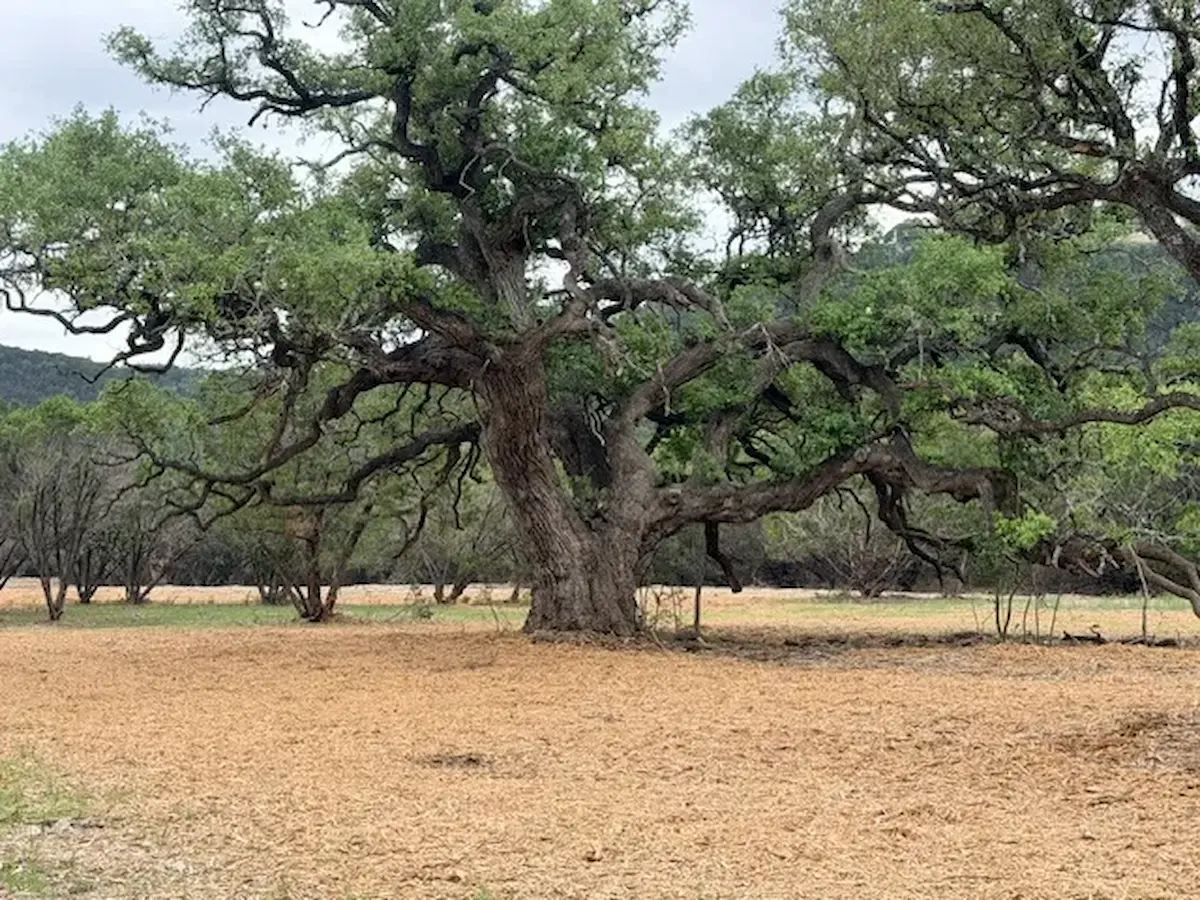
We never clear oaks. Keeping mature oaks is central to how we work. See our selective clearing page for how we protect the trees you want to keep.
Step-by-Step: Creating Defensible Space on Your Property
Creating defensible space on your property follows a set order. Do the work closest to the house first, then move outward. That way, every hour you spend lowers risk immediately.
- Walk the property and mark the trees you want to keep.
- Clear dead grass, weeds, and debris from the first few feet around the home.
- Remove limbs that overhang the roof or reach toward the chimney.
- Thin cedar and brush in the middle zone and space the tree crowns.
- Break up continuous brush so fire has no path to follow.
- Clear the outer zone and keep access routes open.
- Haul off or grind anything you cut.
Here is how the two main methods compare:
Method | Best For | Result |
|---|---|---|
Forestry mulching | Cedar, brush, small trees | Mulch left in place, no haul-off |
Dozer clearing | Bare dirt, pads, driveways | Stumps and roots removed, haul-off needed |
Forestry mulching and cedar removal run $2,300 per day. That is one rate across the whole service area. The day rate is the simplest way to price this work, and it is what we lead with. Production runs about half an acre per day in dense, rocky, hilly cedar, and up to about 3 acres per day on flat ground with light brush. Most Hill Country jobs are the slow, dense kind.
Dozer work is quoted per job. So are rock grinding, stump grinding, fence line clearing, and haul away.
Oak wilt is the one timing rule we never bend. Avoid wounding or pruning oaks February through June. We schedule oak-adjacent work around that window.
Slopes, Access Routes, Fences, and Outbuildings
Slopes, access routes, fences, and outbuildings change how you build defensible space, and most guides skip them. Fire moves faster uphill, so a slope below the house needs more clearance than flat ground. Keep driveways and gates wide enough for a fire truck, and keep them clear of overhanging limbs.
Fences and outbuildings need the same treatment as the house. Clear the grass and debris against them, and keep fuel away from their walls. If a shed or barn sits at the end of a long drive, treat it as its own zone.
Access and slope are also what change how fast the work goes. Rock, steep ground, and tight gates slow everything down. That is why we walk the property before any contract is signed. An owner looks at the ground, not just a photo.
Defensible Space Maintenance: Keeping Your Work Intact Over Time
Defensible space maintenance is the work you do after the first clearing to keep the zone intact. Cedar comes back from seed, not from the stump, so regrowth starts small and stays manageable if you stay ahead of it.
- Re-clear the first few feet around the home each year
- Keep roofs and gutters free of leaves and needles
- Pull new cedar seedlings while they are small
- Re-mow pasture and field edges
- Check fences, gates, and access routes for regrowth
A maintenance pass every few years keeps new cedar small. Skip it, and you are back to a thick stand. For pasture and field edges, brush hogging handles the light work.
Some landowners offset part of the cost through the Texas A&M Forest Service MFR grant or NRCS EQIP (Practice 314, brush management). We point readers to our grants page for the details. Some programs and insurers may recognize documented brush management, so check with them directly.
Frequently Asked Questions
How far should brush and other fuels be kept from a house?
The distance depends on the zone. In the immediate zone, roughly the first 5 feet from the structure, you want no combustible vegetation at all. In the intermediate zone, from about 5 to 30 feet, keep trees and shrubs thinned and separated. In the extended zone, from about 30 to 100 feet, reduce dense cedar and brush. Slopes change these distances. A steeper slope means you need more separation because fire moves uphill faster.
How can I reduce cedar and brush around a home while keeping mature oaks?
We use forestry mulching to grind cedar and brush in place without disturbing the soil or damaging the oaks you want to keep. The machine cuts vegetation at ground level and leaves a mulch layer that protects thin soil and slows regrowth. Cedar does not resprout from the stump once it is cut below the green, so a single pass handles it. New cedar comes back from seed, so a maintenance pass every few years keeps it small. We schedule oak-adjacent work outside the February through June oak wilt window.
How do I maintain defensible space as vegetation grows back?
After the initial clearing, plan on a maintenance pass every few years. Cedar regrows from seed, not from the stump, so the regrowth starts small and is easy to knock back if you stay ahead of it. Keep the immediate zone around the house free of combustible mulch and dead vegetation. Mow pasture and field areas on a regular schedule. Check fences, outbuildings, and access routes each time you do a maintenance pass. Staying on a cycle is far cheaper than letting the cedar grow back to where you started.
Can I do this work myself or should I hire a professional?
Small jobs in the immediate zone, such as clearing dead weeds, moving mulch, and trimming low branches, are good do-it-yourself work. Larger jobs involving dense cedar on rocky or sloped ground are a different story. Forestry mulching requires specialized equipment and experience to avoid damaging oaks and other trees you want to keep. We walk the property before any contract is signed so you know exactly what the work involves. Financing is available for projects over 10 acres.
Wildfire risk in the Hill Country does not wait, and neither should your plan. Legacy Oak Land Clearing, Inc. is licensed and insured, and we walk every property before we start. Our forestry mulching leaves mulch in place, protects your soil, and keeps the oaks you want standing. We reply to most quote requests within minutes. Get a Free Quote Today at our site visit page or call or text (512) 641-5658.