Last Updated: October 30, 2026
Quick Summary
The main oak wilt precautions for land work in Texas are simple: avoid wounding or pruning oaks February through June, paint any fresh oak wound right away at any time of year, and don’t move unseasoned oak firewood. Texas A&M Forest Service recommends all three.
- Oak wilt spreads above ground when sap-feeding beetles carry spores to fresh wounds, and underground through connected roots.
- Avoid wounding or pruning oaks February through June.
- Paint every fresh oak wound right away, any time of year. Latex or pruning paint works.
- Wood from diseased red oaks can carry the fungus. Use firewood seasoned at least a full year.
- Have a forester or arborist confirm any oak you suspect has oak wilt.
Table of Contents
- How Oak Wilt Spreads
- Avoid Wounding Oaks February Through June
- Paint Fresh Oak Wounds Right Away
- Handle Oak Firewood Carefully
- Know the Signs of Oak Wilt
- How We Clear Around Oaks
- Planning Land Work Around Oak Wilt
- Frequently Asked Questions
How Oak Wilt Spreads
Oak wilt is a fungal disease that kills oaks across Central Texas. Texas A&M AgriLife describes two ways it spreads:
- Above ground. Fungal mats form on red oaks that died of oak wilt. Sap-feeding beetles visit those mats, then carry spores to fresh wounds on healthy oaks.
- Underground. The fungus moves between oaks through connected roots. Live oaks are especially prone to this, which is how disease centers grow from tree to tree.
Land work matters because of the first route. Any fresh wound on an oak, from a scraped trunk to a cut limb or a broken surface root, gives beetles a way in.
Avoid Wounding Oaks February Through June
Texas A&M Forest Service recommends avoiding wounding or pruning oaks February through June, when the risk of spreading oak wilt is highest.
We schedule oak-adjacent work with that window in mind. Cedar and brush clearing away from your oaks isn’t limited by the window. If your project has oaks close to the work area, tell us when you send your project details so we can plan around them.
Paint Fresh Oak Wounds Right Away
Texas A&M Forest Service also recommends painting every fresh oak wound right away, no matter the time of year. That includes pruning cuts, scraped bark and damaged surface roots.
Any paint works. Latex or pruning paint is fine. The goal is a thin coat that covers the wound before beetles find it.
Handle Oak Firewood Carefully
Wood from red oaks that died of oak wilt can carry the fungus to a new place. Texas A&M AgriLife recommends:
- Use firewood that has dried for at least a full year. Seasoned wood has loose bark and cracked ends.
- Avoid oak firewood that looks fresh, with tight bark and no cracks.
- Never store wood from diseased oaks near healthy oaks. If you must, cover the pile with clear plastic and bury the edges so insects can’t get in or out.
Burning infected firewood doesn’t spread the disease. The risk comes from storing and moving unseasoned wood.
Know the Signs of Oak Wilt
Oak wilt symptoms differ by species, and they can look like other problems. If you suspect it, have a forester or arborist confirm it. Texas A&M Forest Service has oak wilt foresters who can help.
Live oaks
Leaves often show yellow veins that later turn brown. This is called veinal necrosis. Leaves may drop quickly. Most infected live oaks die within one to six months of symptoms appearing, though some decline more slowly.
Red oaks
Red oaks usually die within three to four weeks of symptoms. Mature leaves turn pale green or bronze, starting at the edges, and in summer the whole crown can turn fall colors. Fungal mats, which look like narrow cracks in the bark and smell like fermenting fruit, are a reliable sign.
If any of your oaks show these signs, mention it in your project details so we can plan the work away from them.
How We Clear Around Oaks
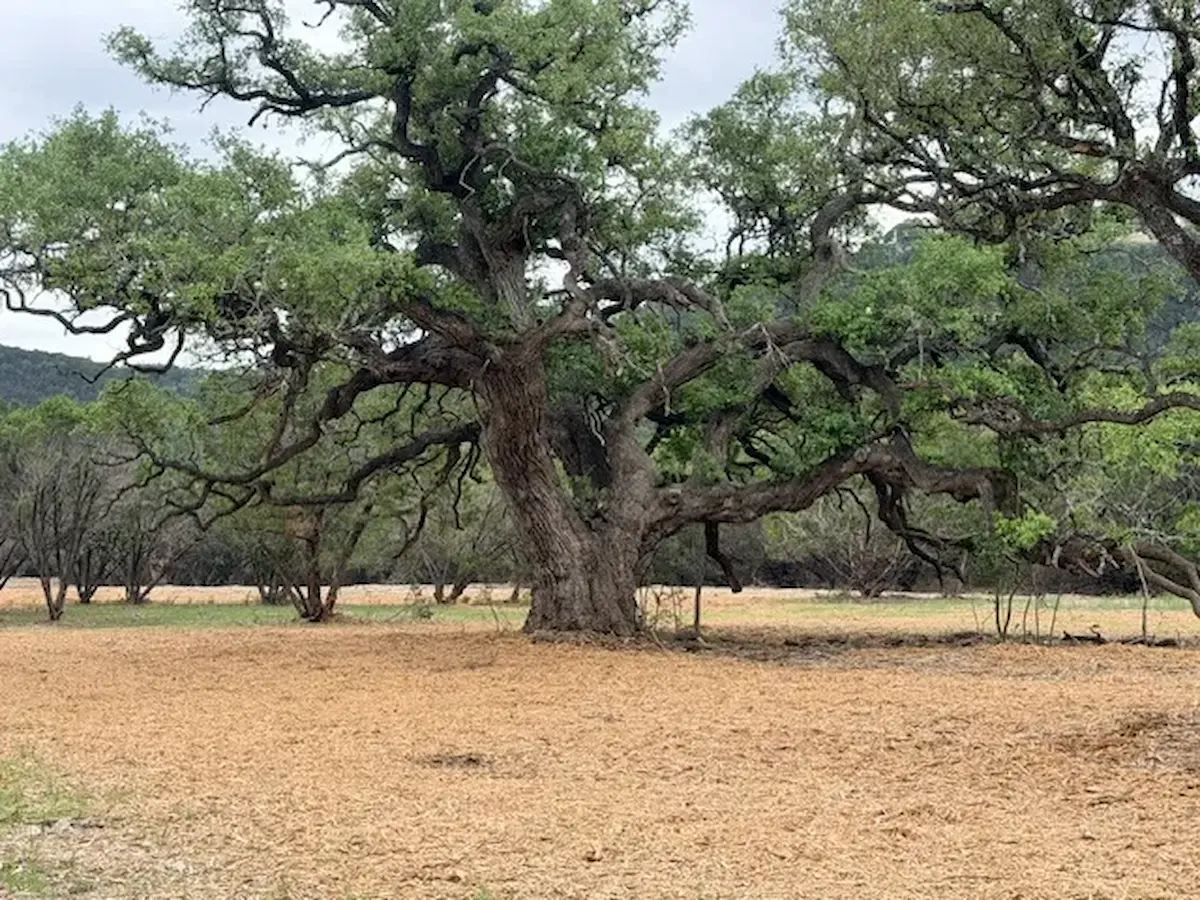
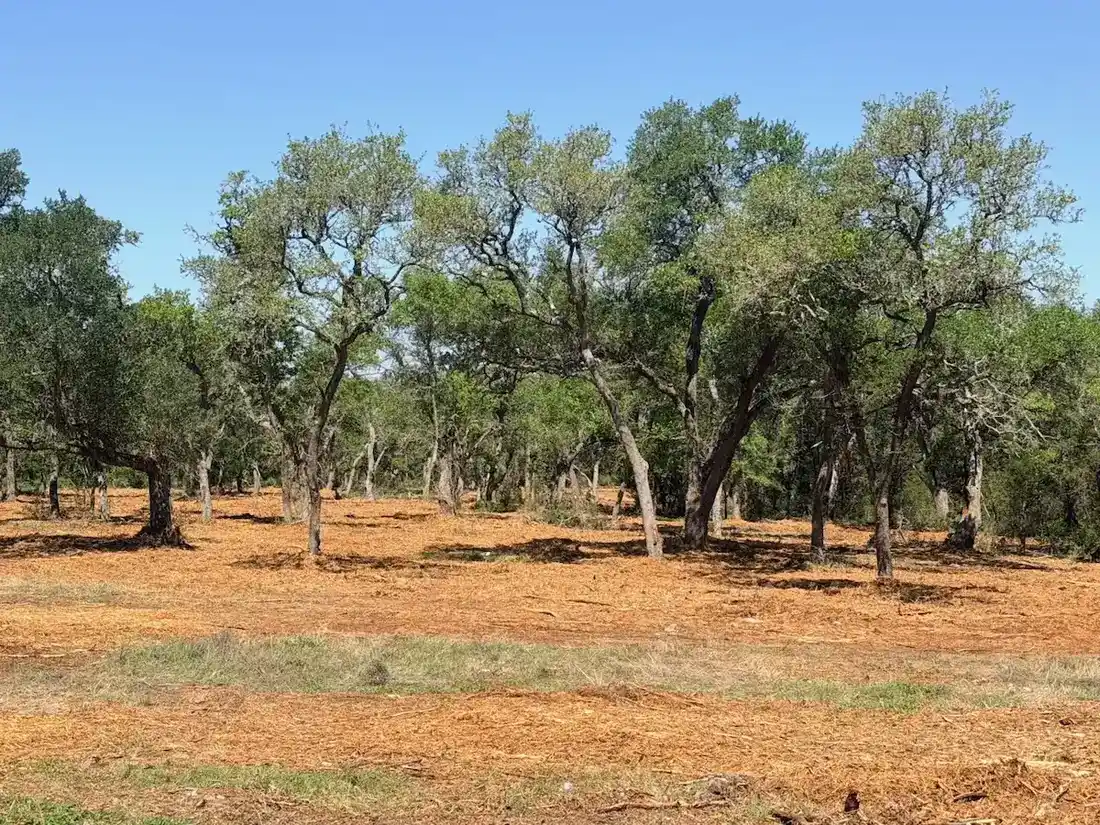
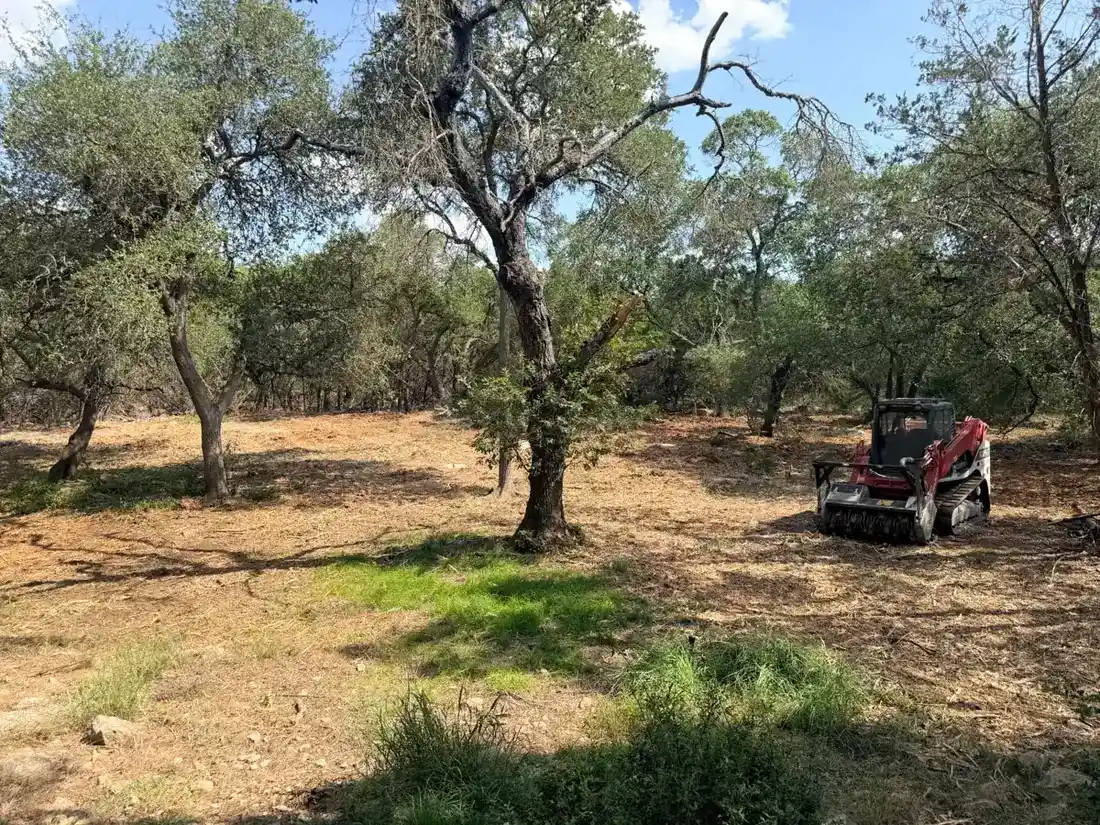
Most of what protects oaks from oak wilt during clearing is the same planning that protects them in general: mark the trees you want to keep, limit machine traffic over their root zones, and keep equipment off their trunks.
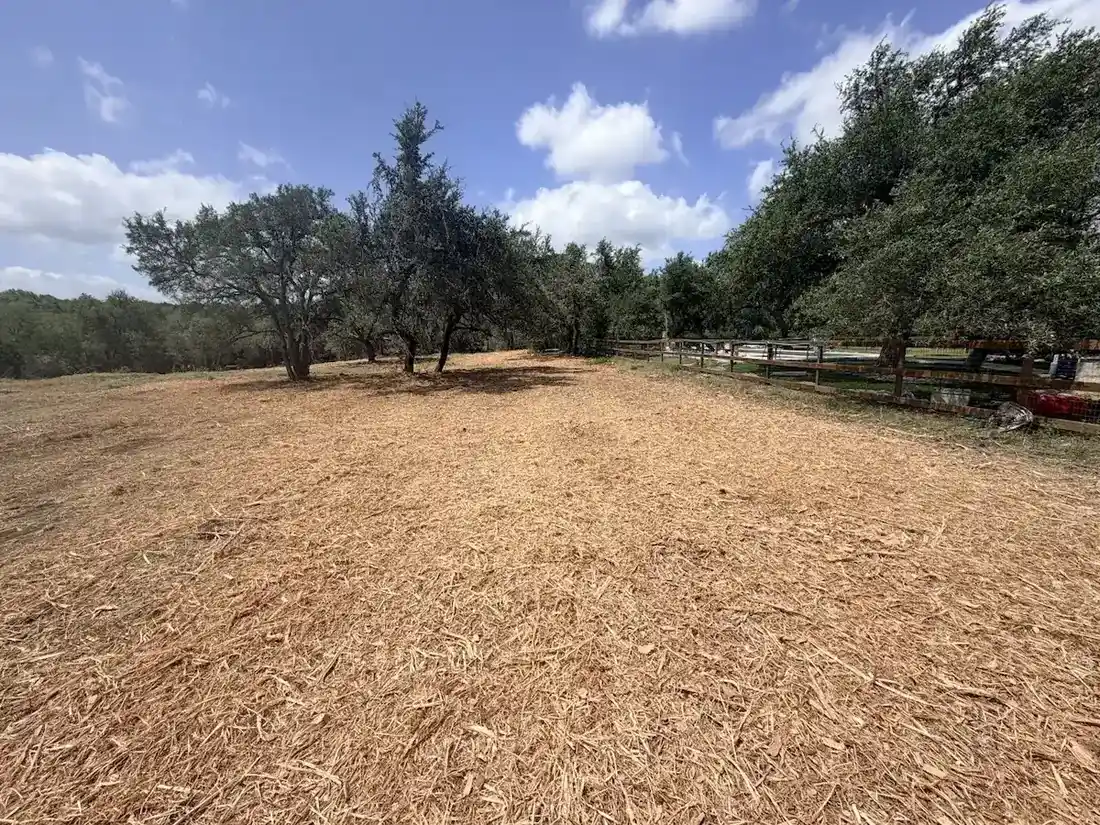
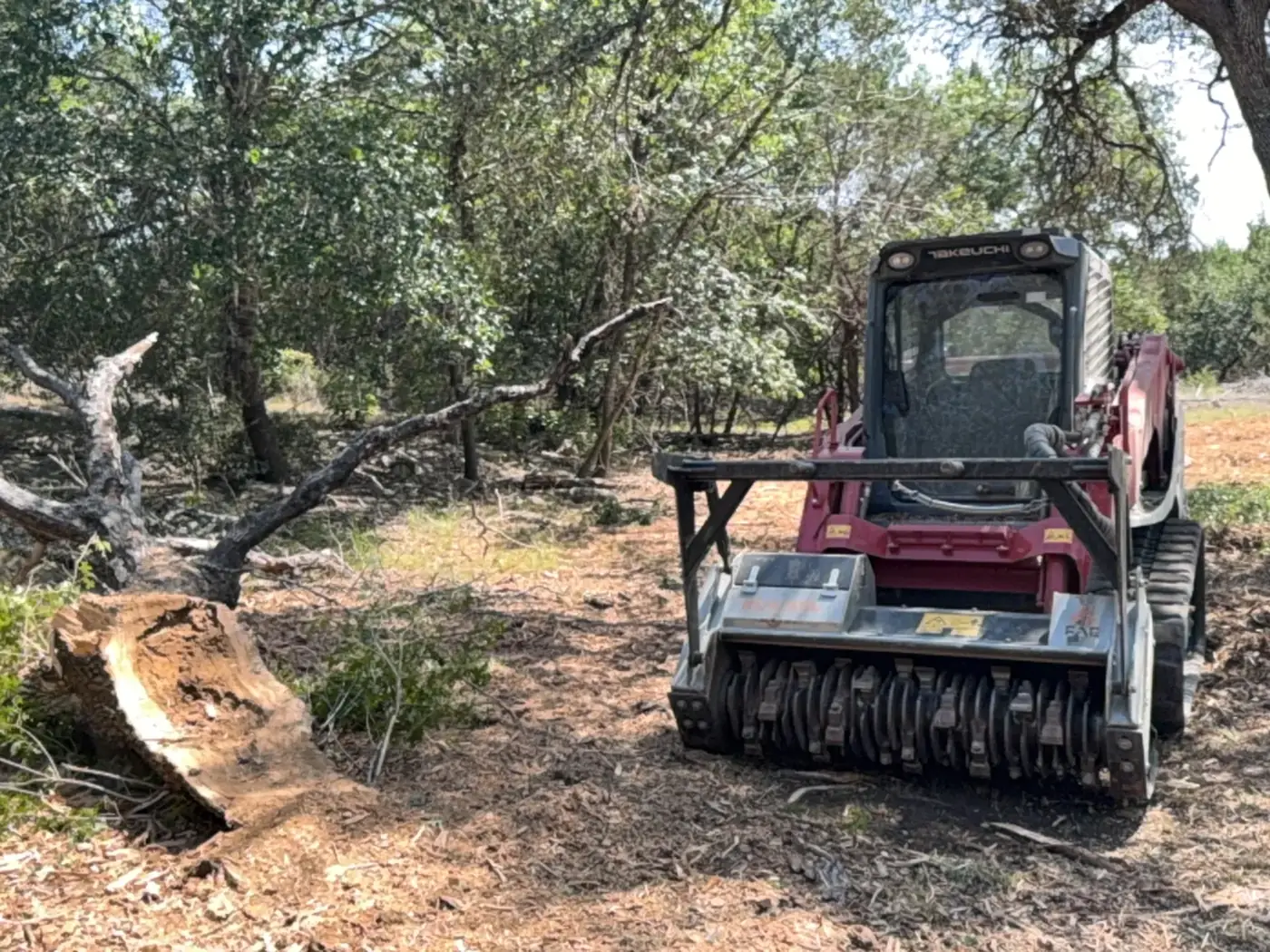
We do most clearing around oaks with forestry mulching. A high-flow track loader with a mulching head grinds cedar and brush in place, one tree or thicket at a time, so the operator can work around the oaks you marked. There are no burn piles and no haul-off.
For the full planning steps, see our guides on selective land clearing while preserving oak trees and protecting heritage trees during land clearing. Our Hill Country land education guide covers cedar, oak wilt and wildfire background.
Planning Land Work Around Oak Wilt
Before any contract is signed, an owner walks the property with you. We go over the oaks you want to keep, the work around them and the timing.
To get started, click “Get a Free Quote Today” and send your project details first, then a few photos. We typically reply within minutes. You can also call or text (512) 641-5658.
Frequently Asked Questions
When is the oak wilt risk window for land work?
February through June. Texas A&M Forest Service recommends avoiding wounding or pruning oaks in that window, when the risk of spreading oak wilt is highest. We schedule oak-adjacent work with that window in mind.
What should you do if an oak gets wounded?
Paint it right away, at any time of year. Texas A&M Forest Service recommends a thin coat of latex or pruning paint on every fresh oak wound, including scraped bark and damaged surface roots.
How does oak wilt spread?
Two ways. Sap-feeding beetles carry spores from fungal mats on diseased red oaks to fresh wounds on healthy oaks, and the fungus also moves between oaks through connected roots, especially live oaks.
Can forestry mulching be done near oaks without harming them?
Yes, when the work is planned around them. You mark the oaks you want to keep, and we limit machine traffic over their root zones and keep equipment off their trunks. We grind the cedar and brush in place and leave your oaks standing.
Oak wilt precautions come down to three habits: avoid wounding oaks February through June, paint any fresh wound right away, and handle oak firewood carefully.