Quick Summary
Does forestry mulch increase fire risk? No. Forestry mulching is the core of our wildfire mitigation work. It removes the cedar and brush that carry fire, and that reduces your wildfire risk.
- Forestry mulching removes standing fuel and ladder fuels that fire climbs through to reach tree canopies.
- We lay out the mulch so it stays broken up and away from your home.
- Keep wood mulch out of the first 5 feet around your home, deck, and wooden structures.
- Keep fallen branches and debris off the mulch layer.
- Plan maintenance passes every few years to keep cedar seedlings small and your defensible space effective.
Table of Contents
- How Forestry Mulching Changes Fuel on Your Property
- Forestry Mulching and Defensible Space
- Fire-Resistant Mulch Practices
- Conclusion
- Frequently Asked Questions
How Forestry Mulching Changes Fuel on Your Property
Does forestry mulch increase fire risk? No. Forestry mulching removes the standing cedar and brush that carry fire. Then we lay out the mulch so it stays away from your home and broken up across the land. Here’s how.
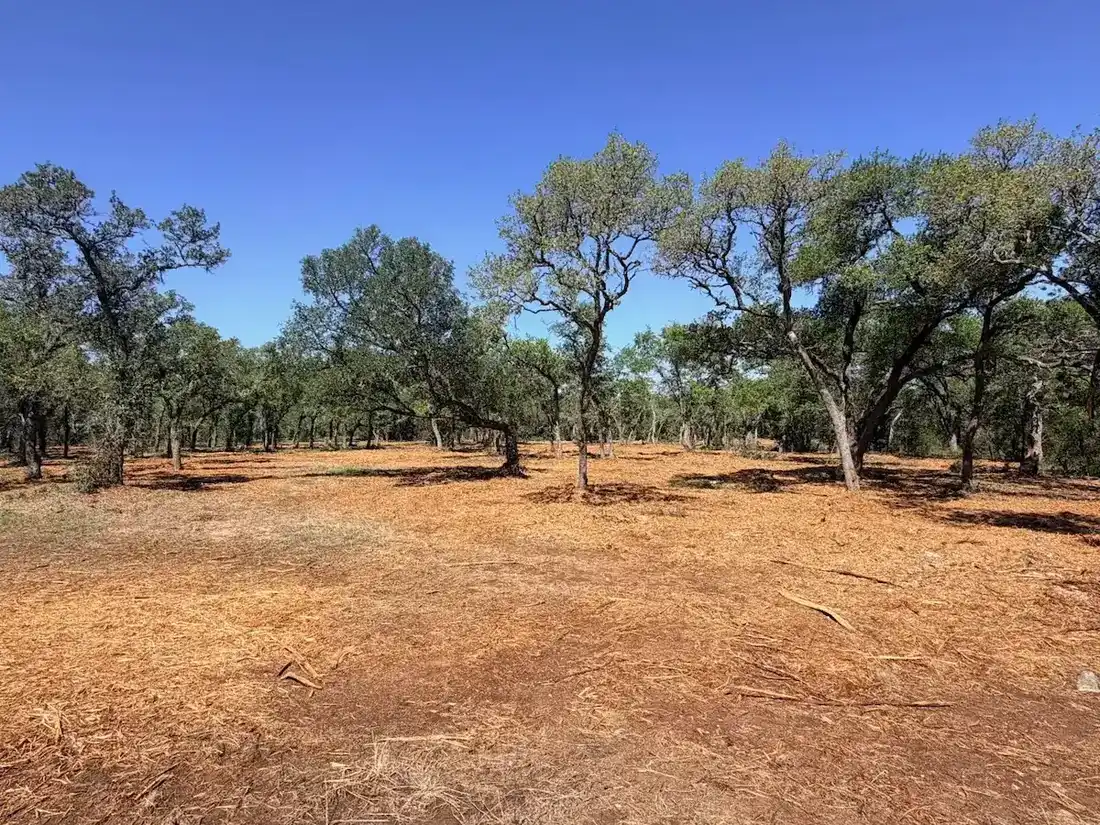
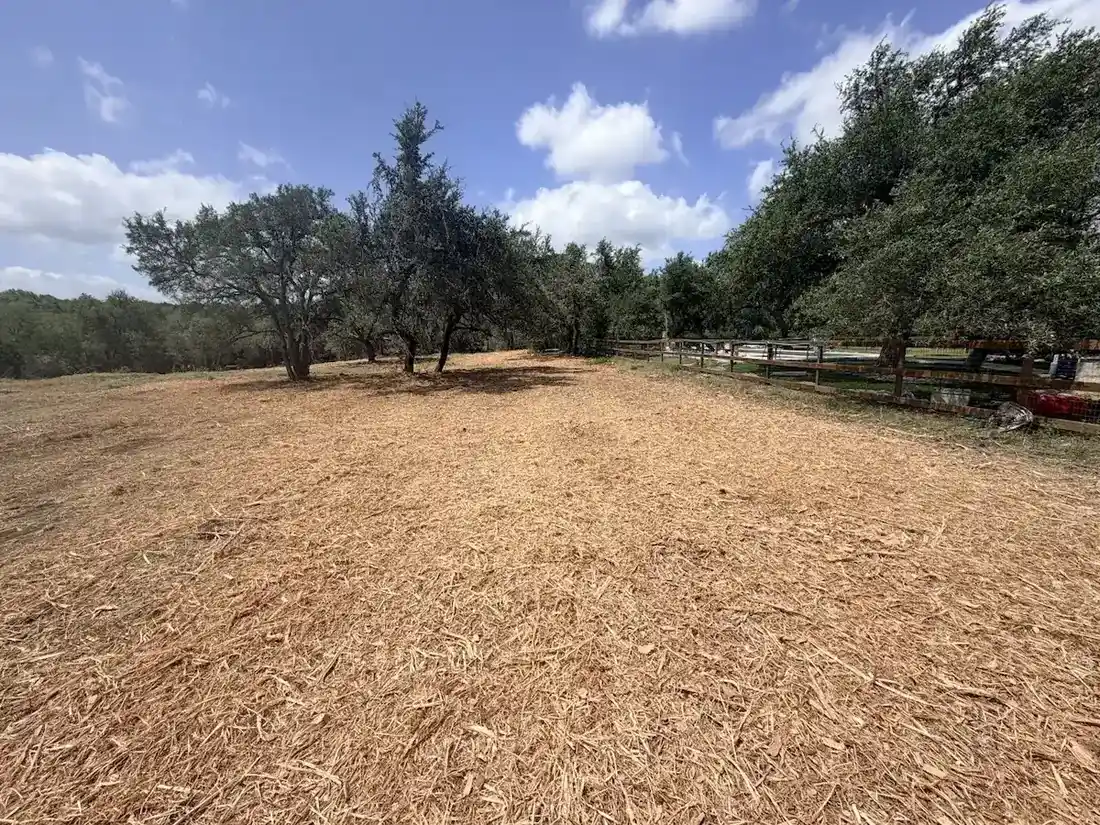
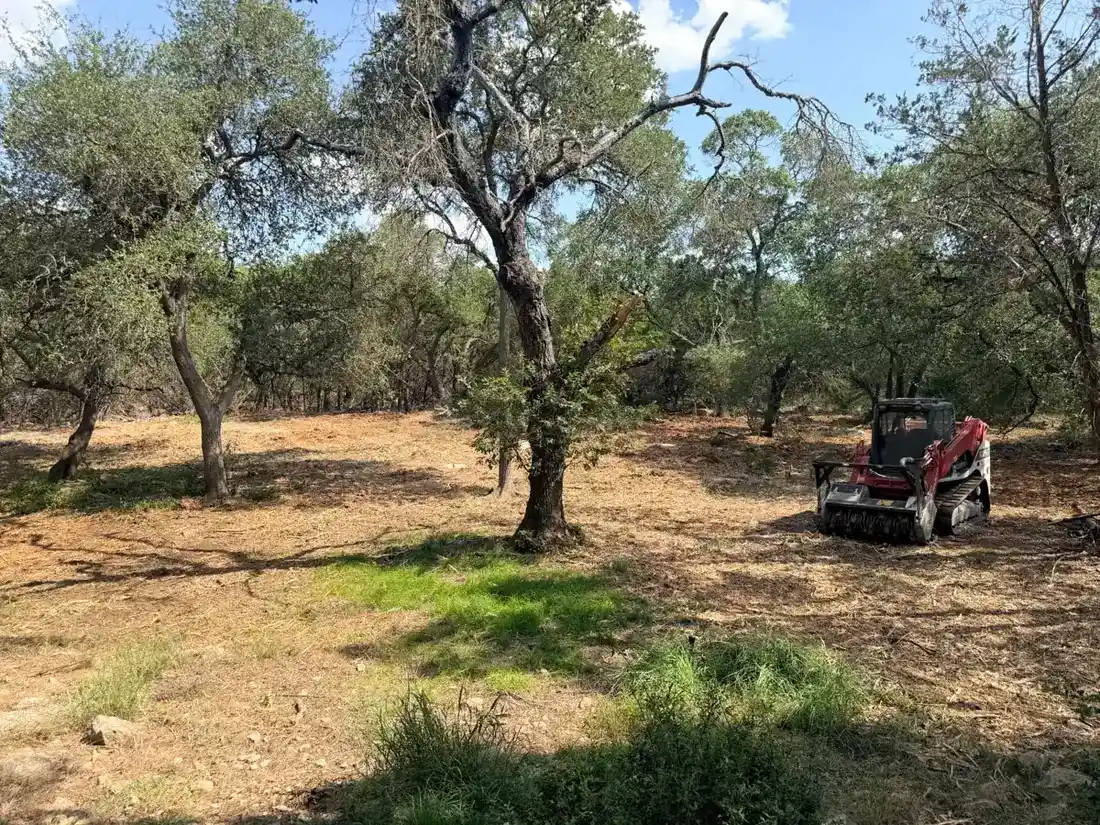
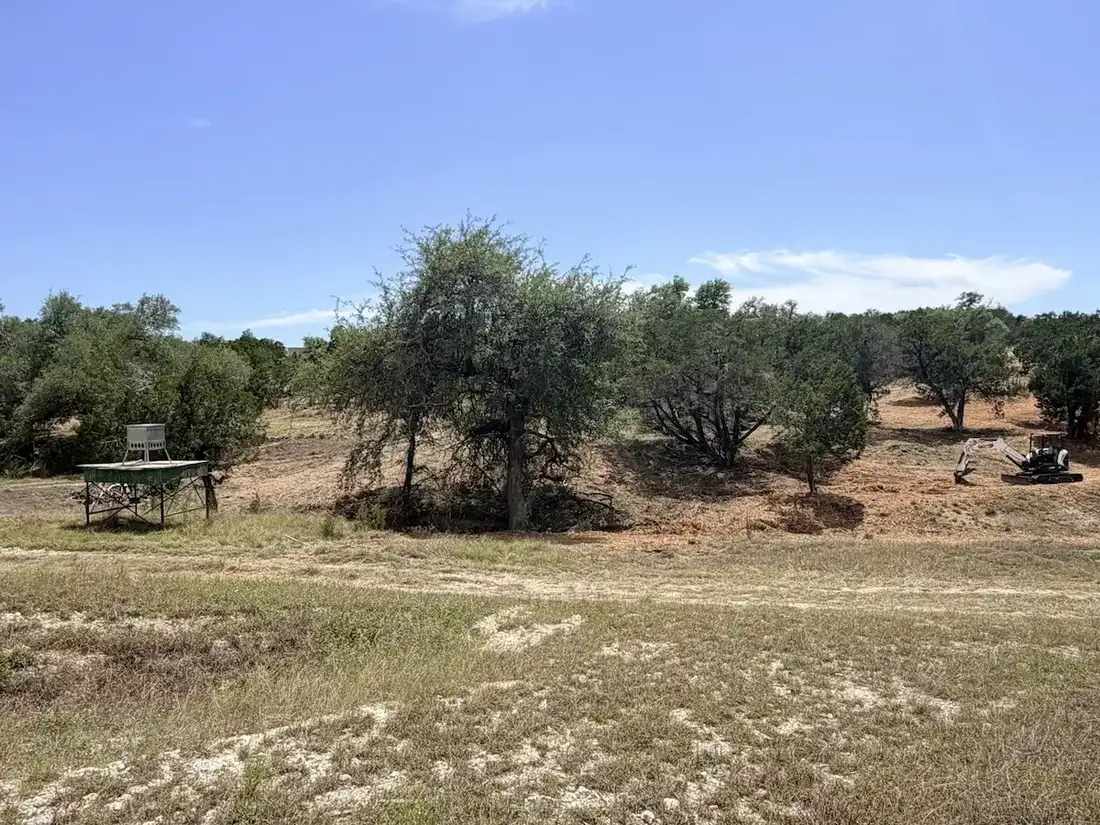
Forestry mulching grinds cedar, brush, and small trees in place into a mulch layer. No burn piles. No haul-off. The material stays on your land and breaks down naturally.
Standing cedar is resinous and carries fire up into the trees fast. Mulch lies flat on the ground, so it can’t carry fire into the canopy.
Forestry Mulching and Defensible Space
Defensible space is the cleared area around your home where fire cannot easily spread. Creating defensible space is one of the most direct ways to reduce wildfire risk.
Ladder fuels are small trees and brush growing beneath larger trees. Fire uses these like a ladder to climb into the canopy.
The mulch layer that remains after forestry mulching also protects soil and slows the regrowth of new brush. This means your defensible space stays clear longer.
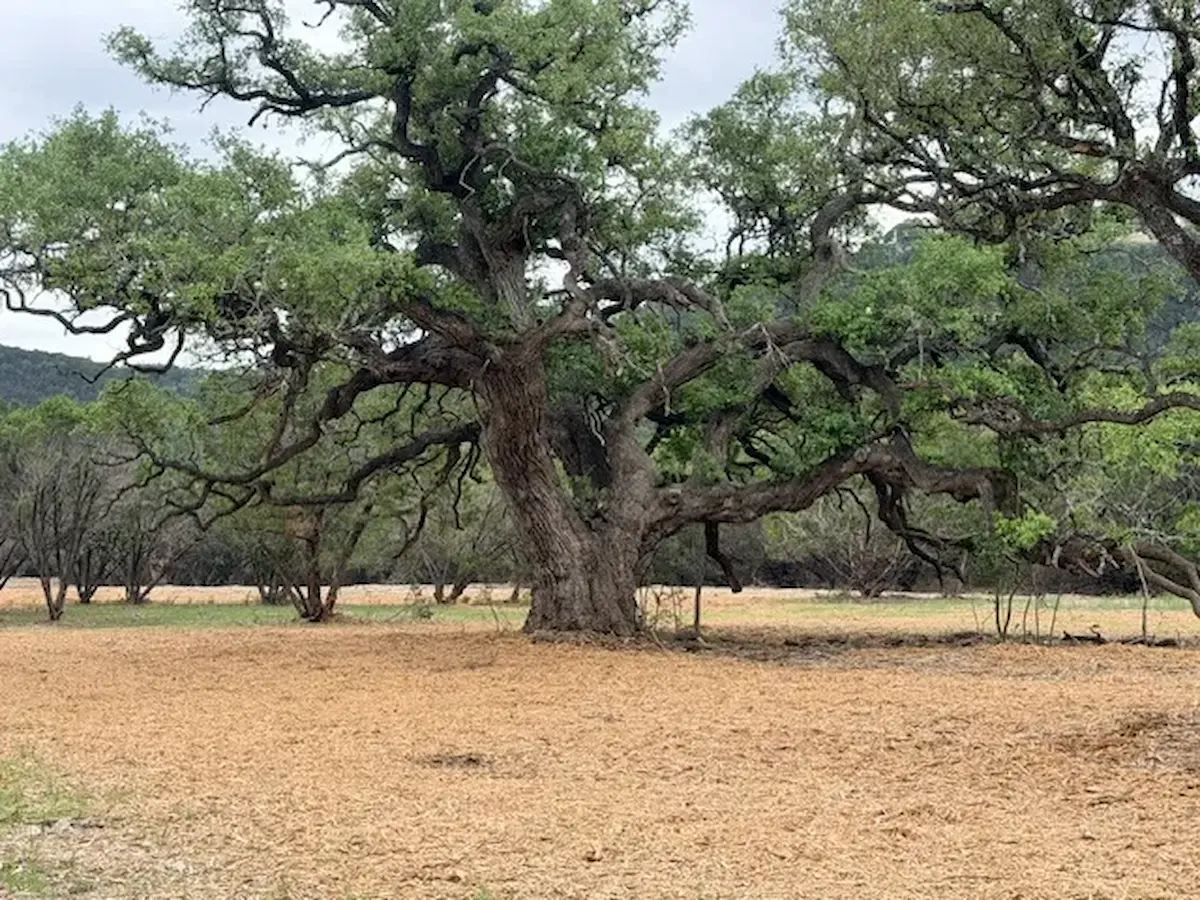
We work around oaks and other trees the owner wants to keep. Keeping mature oaks is central to how we work.
Fire-Resistant Mulch Practices
The way a mulched property is laid out is what keeps it low-risk. Here is how we design the treatment across the acreage.
Design the Treatment in Zones
Think of the ground around your home in bands. The band closest to the structure should have the least combustible material and the most clearance. The band farther out can carry a heavier mulch layer because there is more distance between it and anything you are protecting.
When we mulch, we keep the immediate perimeter around the house, deck, and outbuildings clear of mulch and debris. Texas A&M Forest Service recommends keeping the first 5 feet around a home free of wood mulch. Farther out, the mulch layer is fine. This zoning is how defensible space works on the ground.
Avoid Continuous Fuel Beds
A continuous carpet of fine fuel gives fire a path to travel. Forestry mulch spread across open ground is broken up by terrain, rock outcrops, driveways, and the mature trees you keep. That natural fragmentation is good. Where you can, keep it that way. Do not rake mulch into long, unbroken windrows against a fence or along a structure. Spread it, and let the ground and the trees break it up.
Keep Debris Out of the Layer
Once the job is done, keep fallen limbs and trash off the mulch layer. Keeping the big stuff out keeps the layer low-risk.
Water When It Counts
During extreme drought or a heat wave, keep the grass and plants around your home watered. On acreage, focus that watering on the area closest to the house.
Plan for Regrowth
Cedar comes back from seed, not from the stump. Birds and wildlife spread the berries, and Ashe juniper seed is short-lived in the soil, so most regrowth comes from fresh seed off nearby cedar. Mulch slows that regrowth but does not stop seedlings. A maintenance pass every few years keeps new growth small and keeps your defensible space working. We can build maintenance passes into your plan. See our wildfire mitigation page for how the treatment is laid out.
Mulching vs. Dozer Work
Forestry mulching clears cedar and brush and leaves a mulch layer behind. If you need bare dirt for a pad, slab, or driveway, or full removal of stumps and roots, that is dozer work. See our land clearing page. A site walk tells us which treatment fits. An owner walks the property before any contract is signed, and we agree on the approach before work starts.
Conclusion
Does forestry mulch increase fire risk? No. Our wildfire mitigation work uses forestry mulching to take out the cedar and brush that carry fire, and that lowers your risk.
Keep mulch away from structures. Remove debris from the mulch layer. Plan maintenance to keep regrowth small. Do this, and forestry mulching is one of the most effective ways to create defensible space and reduce wildfire fuel load on your property.
Frequently Asked Questions
Can forestry mulch actually catch on fire?
Under extreme conditions, any wood material can. That’s why we keep the first 5 feet around your home free of wood mulch and leave the layer broken up farther out. Removing the standing cedar and brush takes out the fuel that carries fire into the trees.
How does forestry mulching reduce wildfire fuel compared to leaving brush?
Forestry mulching removes the standing cedar, brush, and small trees that carry fire up into the canopy. These are called ladder fuels. Grinding them in place breaks the path that lets a ground fire climb into mature oaks. The mulch that remains sits on the ground instead of reaching toward your roof.
How do we keep the mulch layer low-risk?
We keep the first 5 feet around your home free of wood mulch and leave the layer broken up farther out. After the job, keep fallen limbs and trash off it, and plan a maintenance pass every few years to keep cedar regrowth small.
Should I use forestry mulch or landscape mulch for fire safety?
They serve different purposes. Forestry mulch is the ground-up material left on site after we clear cedar and brush. Landscape mulch from a bag is often dyed and meant for ornamental beds. Near your home, keep both out of the first 5 feet. The real difference is that forestry mulching removes the standing fuel that drove the fire risk in the first place.
Get a Free Quote Today. Click the button below and submit your project details and a few photos. We typically reply within minutes. An owner will walk your property before any contract is signed, so we can plan the work around your terrain, your trees, and your fire risk. Call or text us at (512) 641-5658 if you have questions.