Last Updated: November 16, 2026
Quick Summary
A lot of Hill Country homes sit above a view that cedar has slowly grown over. View clearing opens it back up while keeping the oaks that frame it.
- Pick the spots you’ll look from, then clear the line of sight from there.
- Cedar is usually what blocks the view. Cut below the green, it doesn’t resprout from the stump.
- Flag every oak you want kept. We clear around them.
- You don’t have to clear the whole hillside. A corridor can open the view and leave the rest as it is.
- Forestry mulching runs $2,300 per day, and the scope of work is agreed before we start.
Table of Contents
- Start Where You’ll Look From
- What Usually Blocks the View
- Keep the Oaks That Frame It
- Open a Corridor, Not the Whole Hillside
- How We Clear It
- When Cedar Comes Back
- Less Brush Below the House
- Getting Ready for the Crew
- What View Clearing Costs
- Get a Free Quote Today
- Frequently Asked Questions
Start Where You’ll Look From
View clearing starts with a simple question: where will you be standing when you look out? For most owners it’s the porch, a deck, a few windows or a spot on the hill where they like to sit.
Stand in each of those spots and look toward what you want to see. Note what’s in the way. That line of sight is the work.
What Usually Blocks the View
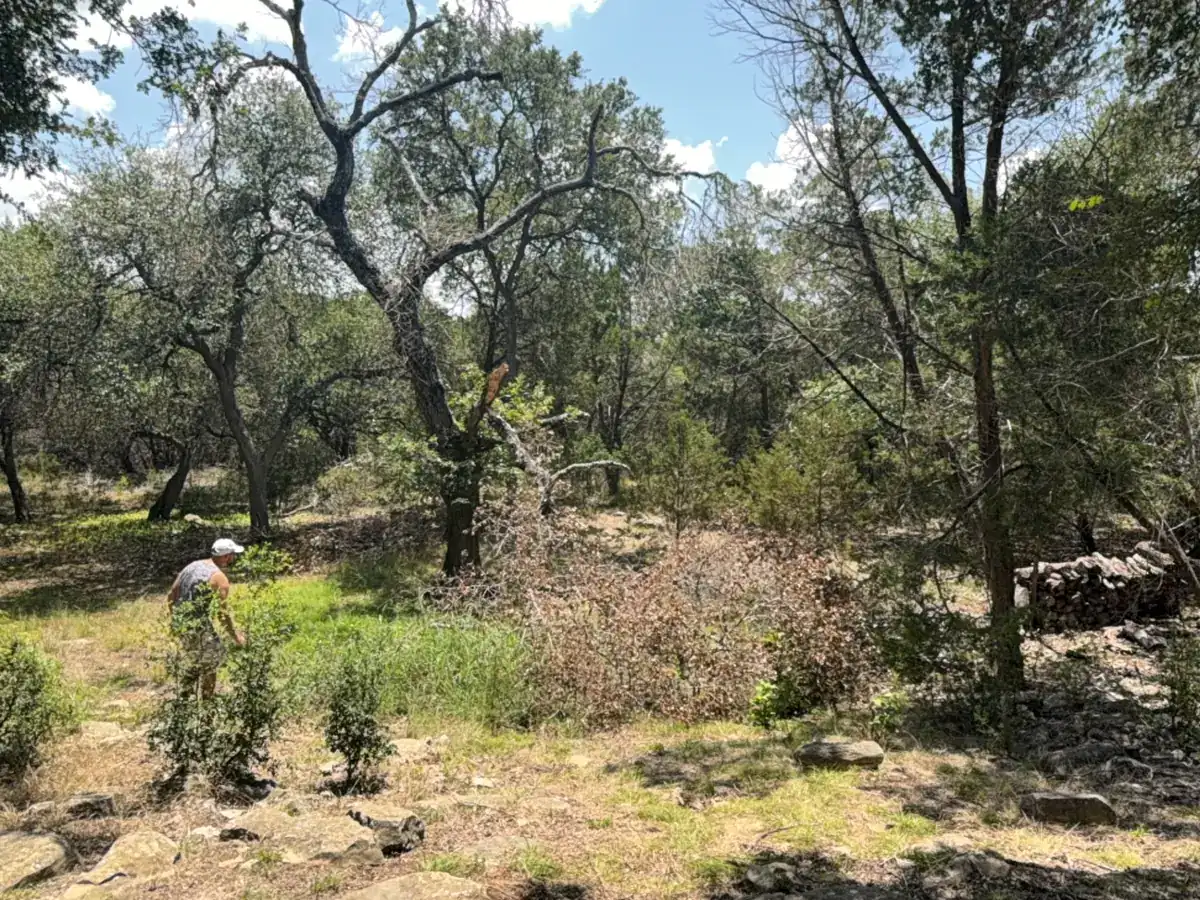
On Hill Country land, it’s usually cedar. Cedar here is Ashe juniper. It fills in draws and slopes and grows up thick around the oaks. Over the years, a wide view can shrink to a gap.
Cedar cut below the green does not resprout from the stump. Our cedar removal page covers how we clear it.
Keep the Oaks That Frame It
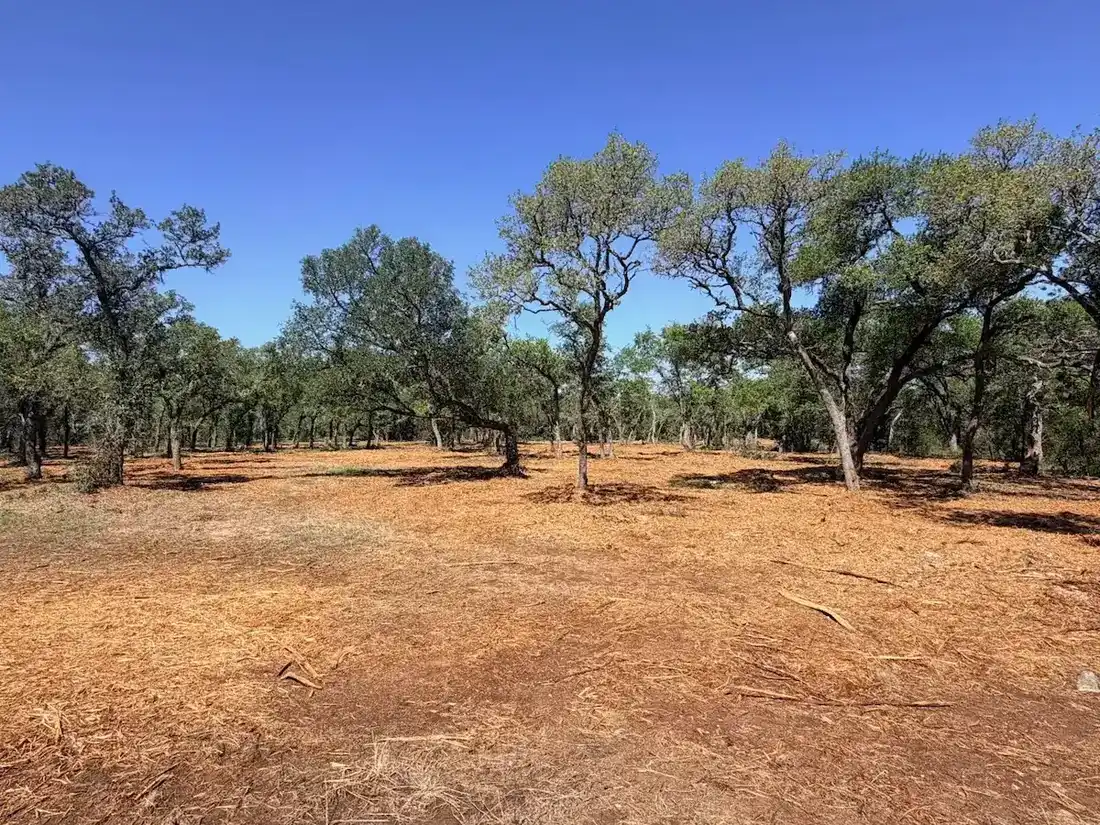
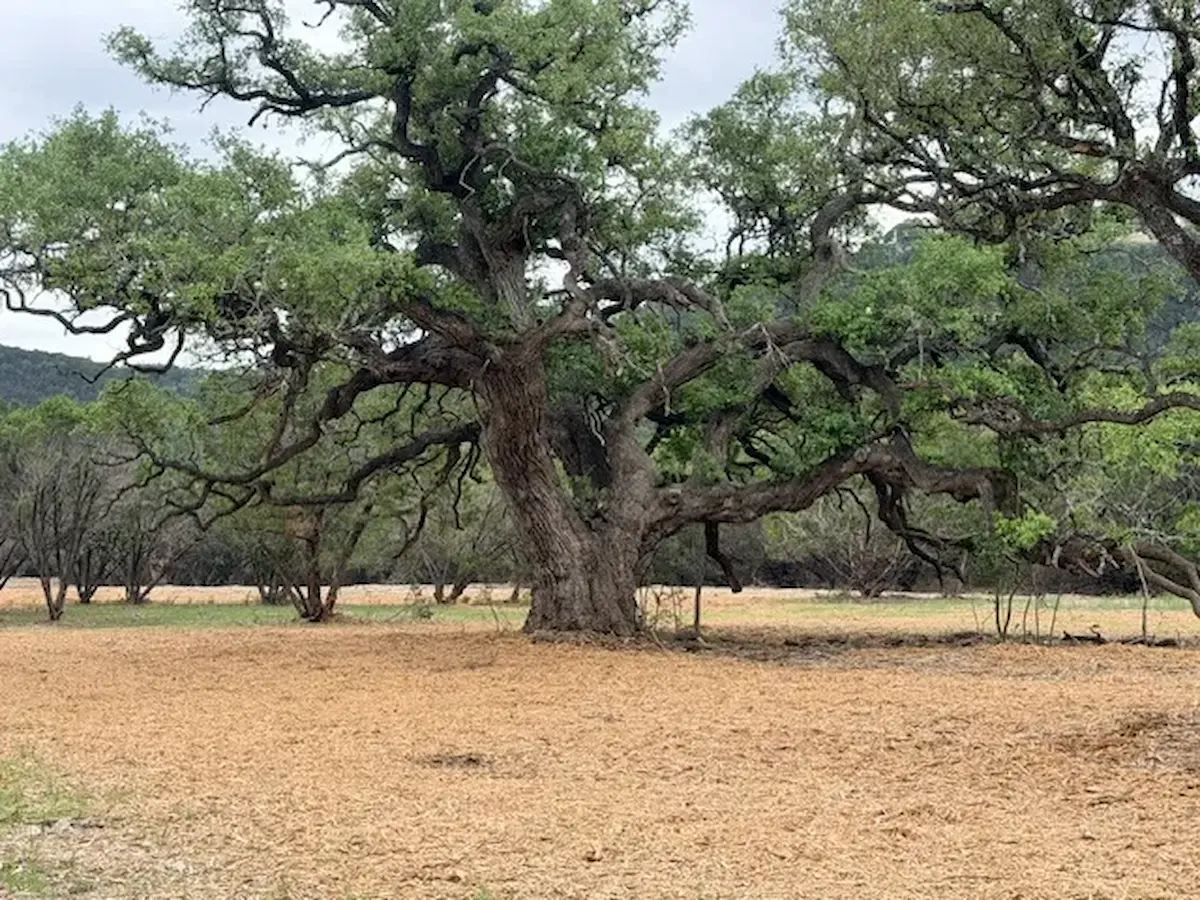
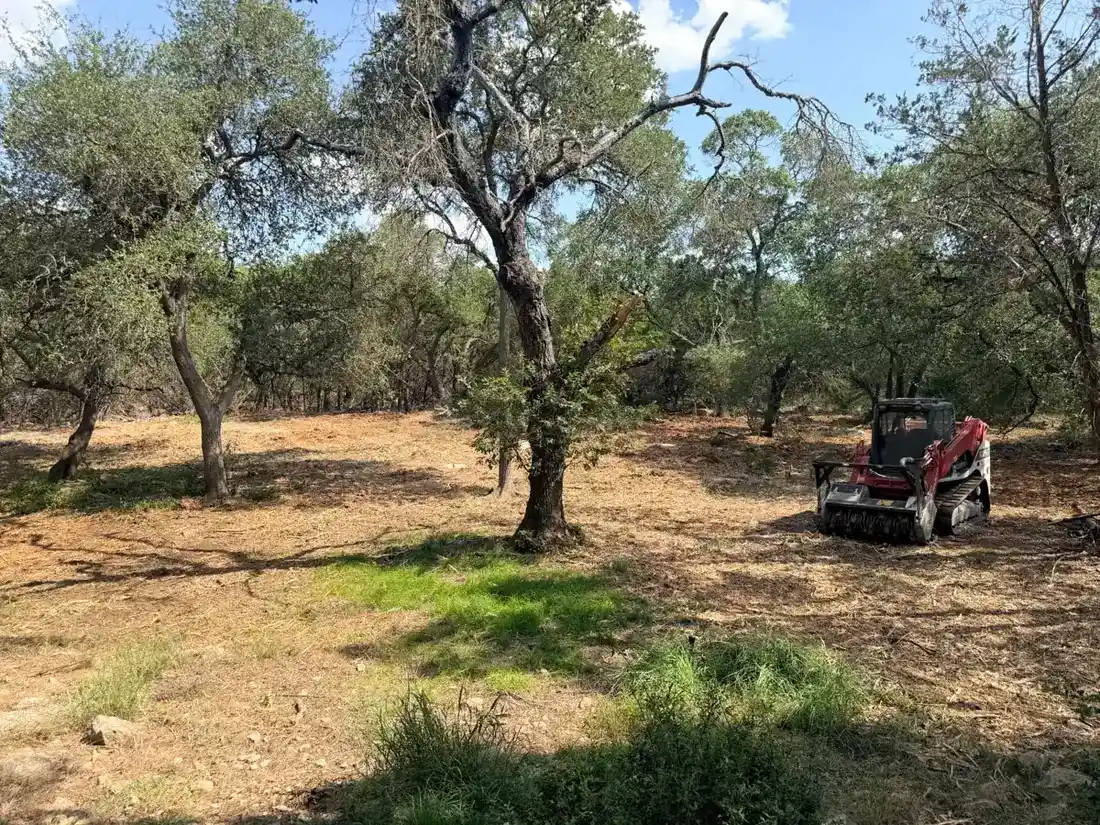
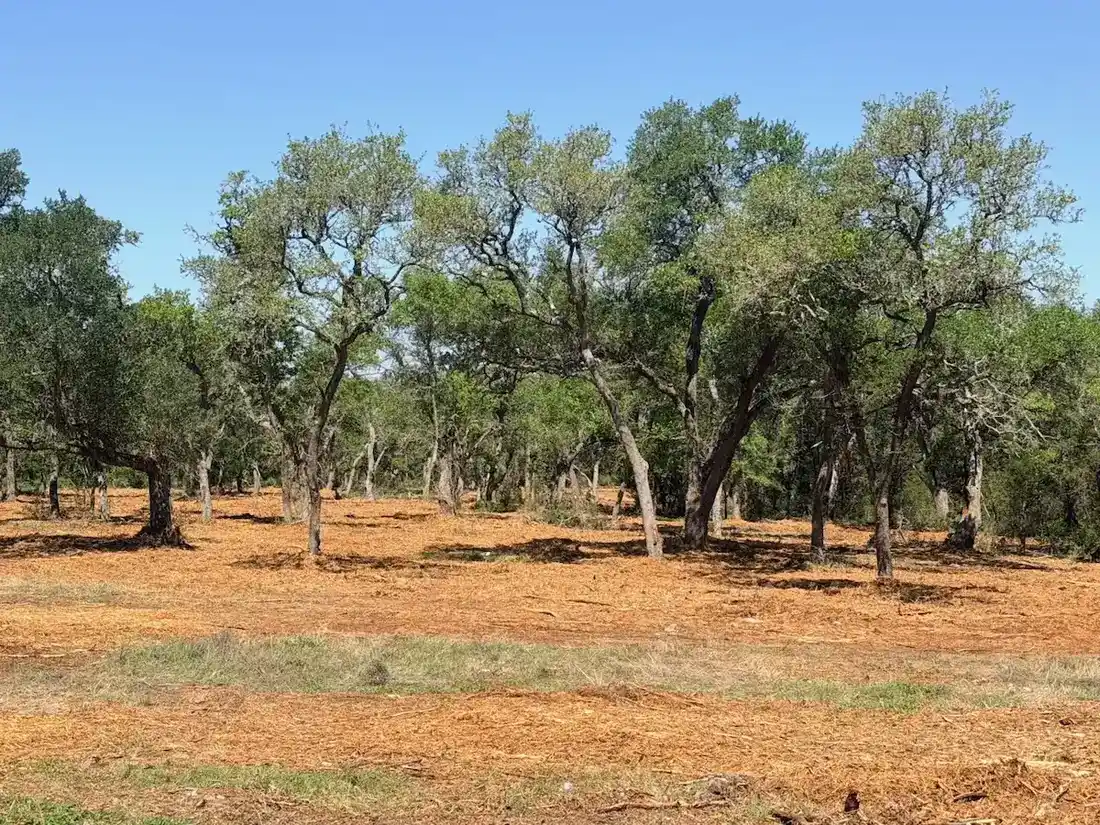
The best views usually have oaks in them. A big live oak at the edge of the view gives it shade, shape and depth. Clearing the cedar around it often makes that tree the best part of the view.
Flag the oaks and any other trees you want kept with bright tape or flags. We clear around them. Keeping mature oaks is central to how we work.
Texas A&M Forest Service advises against wounding or pruning oaks February through June.
Open a Corridor, Not the Whole Hillside
You don’t have to clear everything between you and the horizon. Often a corridor through the cedar in the line of sight is enough to bring the view back.
The ground on either side can stay as it is. We can leave patches of brush for privacy from a road or a neighbor, or as cover for wildlife. Our selective clearing page explains how we plan what stays and what goes.
How We Clear It
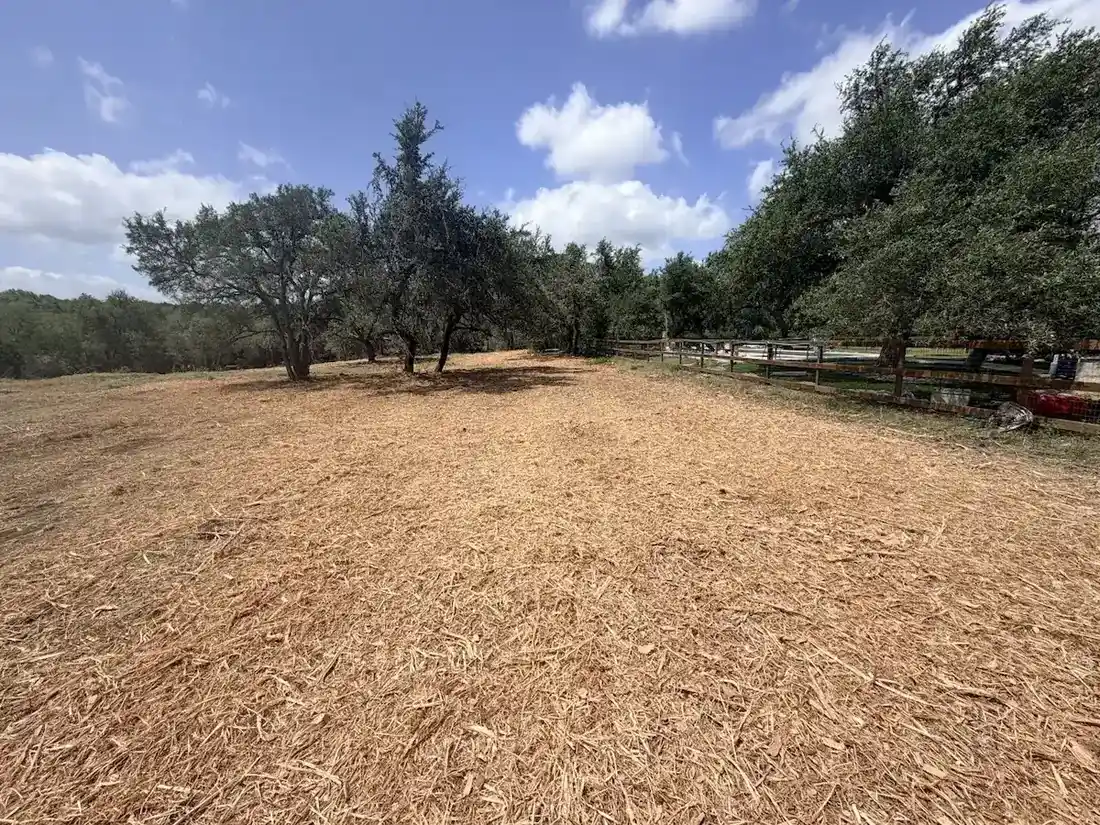
We clear views with forestry mulching. A mulching head on a high-flow track loader grinds cedar, brush and small trees in place into a mulch layer. There are no burn piles and no haul-off.
The mulch protects thin, rocky soil, holds moisture and slows regrowth.
When Cedar Comes Back
New cedar comes back from seed. Birds and wildlife eat the berries and spread the seed, mostly from cedar standing nearby. A maintenance pass every few years keeps the new cedar small, so the view stays open.
Less Brush Below the House
Thick cedar on a slope below a house is heavy fuel. Clearing it for a view also reduces wildfire risk close to home.
For the first 5 feet around the house, Texas A&M Forest Service recommends rock or other noncombustible cover instead of wood mulch. Our wildfire mitigation page covers how we clear around homes.
Getting Ready for the Crew
Our truck and trailer need an entry about 10 feet wide, and gates have to open. If there’s a locked gate, leave it open for the start time or share the code.
Mark septic lids, shallow water lines, underground electrical lines and any old wire or T-posts in the area to be cleared. Tell us about anything you know is out there, even if you can’t reach it.
What View Clearing Costs
Forestry mulching and cedar removal run $2,300 per day, one rate across the Texas Hill Country. On flat ground with light brush, we can mulch up to about 3 acres per day. In larger, mature cedar in dense thickets on rocky, hilly ground, we mulch about half an acre per day.
The diameter and height of the trees you choose to remove, surface rock and slope have a big effect on how much we can mulch in a day. They also drive fuel use and wear on the mulching teeth and the loader’s tracks, which is part of why the work costs what it does. Views often sit on slopes, so we plan the work around the terrain and account for it in the estimate.
You can choose a project price or our day rate. Either way, the scope of work is agreed before we start. An owner walks the property before any contract is signed.
Get a Free Quote Today
Getting a view back comes down to a few decisions. Pick the spots you’ll look from, flag the oaks that frame the view, and decide how wide to open it.
To get a quote, click “Get a Free Quote Today” and submit your project details first, then a few photos of the property. We typically reply within minutes. You can also call or text us at (512) 641-5658.
Frequently Asked Questions
What is view clearing?
View clearing removes the cedar and brush that block a view while keeping the oaks and other trees you want. We do it with forestry mulching.
Do I have to clear the whole hillside to get a view?
No. A corridor through the cedar in the line of sight is often enough, and the ground on either side can stay as it is.
Will you keep my oaks?
Yes. Flag the oaks and any other trees you want kept, and we clear around them.
How much does view clearing cost?
Forestry mulching and cedar removal run $2,300 per day. We can mulch up to about 3 acres per day on flat ground with light brush and about half an acre per day in larger, mature cedar in dense thickets on rocky, hilly ground.
Will cedar grow back and block the view again?
Cedar cut below the green won’t resprout from the stump, but new cedar comes back from seed. A maintenance pass every few years keeps it small, so the view stays open.