Quick Summary
Two programs can offset part of the cost of brush management on Texas land: the Texas A&M Forest Service Mechanical Fuel Reduction (MFR) grant and NRCS EQIP Practice 314. MFR is a reimbursement grant for wildfire fuel reduction around homes. EQIP is a USDA program that helps pay for conservation practices on working lands. Neither pays for work done too early.
- MFR reimburses actual costs up to $2,000 per acre for heavy equipment such as a forestry mulcher, up to $20,000 per landowner.
- MFR work can’t start until Texas A&M Forest Service completes a pre-inspection.
- EQIP doesn’t pay for work done before you sign the contract.
- Don’t assume both programs will pay for the same acres. Confirm with both offices first.
Table of Contents
- Two Programs That Can Offset Brush Management Costs
- The Texas A&M Forest Service MFR Grant
- NRCS EQIP Practice 314 for Brush Management
- Using MFR and EQIP on the Same Property
- Getting a Contractor Quote for Your Application
- Frequently Asked Questions
Two Programs That Can Offset Brush Management Costs
Brush management on Hill Country land can qualify for help from two programs. They have different goals, different rules and different offices, so it pays to understand both before any work starts.
- MFR is run by Texas A&M Forest Service with USDA Forest Service funding. It focuses on reducing the risk of home loss to wildfire.
- EQIP Practice 314 is run by the USDA Natural Resources Conservation Service (NRCS). It addresses natural resource concerns on working lands.
The Texas A&M Forest Service MFR Grant
The MFR grant is a competitive cost-share reimbursement grant for private Texas landowners in eligible counties. It pays for mechanical fuel reduction that creates defensible space around homes and structures, and for fuel breaks. Eligible counties can change each year, so check the Texas A&M Forest Service eligibility map.
What MFR pays
Landowners are reimbursed for actual costs up to these limits:
- $750 per acre for hand-cut treatments
- $1,500 per acre for a combination of hand-cut and heavy equipment
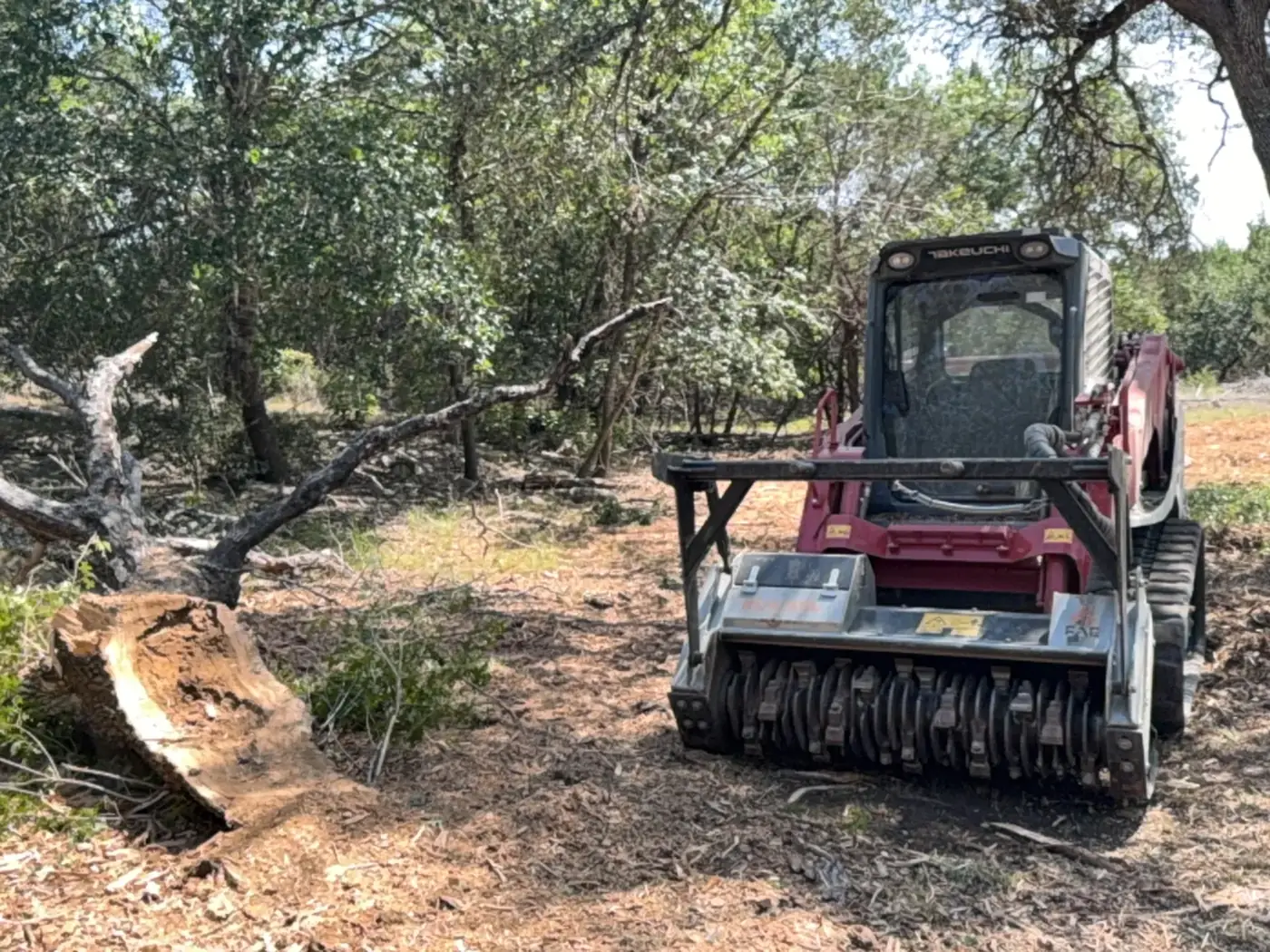
- $2,000 per acre for heavy equipment, such as a forestry mulcher or masticator
- Up to $20,000 per landowner
Because it’s cost-share, the grant may not cover 100% of the project.
What the work must look like
- Priority goes to defensible space within 0 to 100 feet of a home or structure. Treatments may extend up to 300 feet in all directions.
- Each treatment must be at least 66 feet wide.
- All debris must be removed from the property or mechanically reduced to mulch or chips.
- Remaining mature native trees must have their lower branches limbed up or reduced to limit ladder fuels.
- Burning of any kind is not allowed and disqualifies the project.
- The work must be done by a contractor the landowner hires. The landowner can’t do the work, and the contractor can’t be affiliated with the landowner.
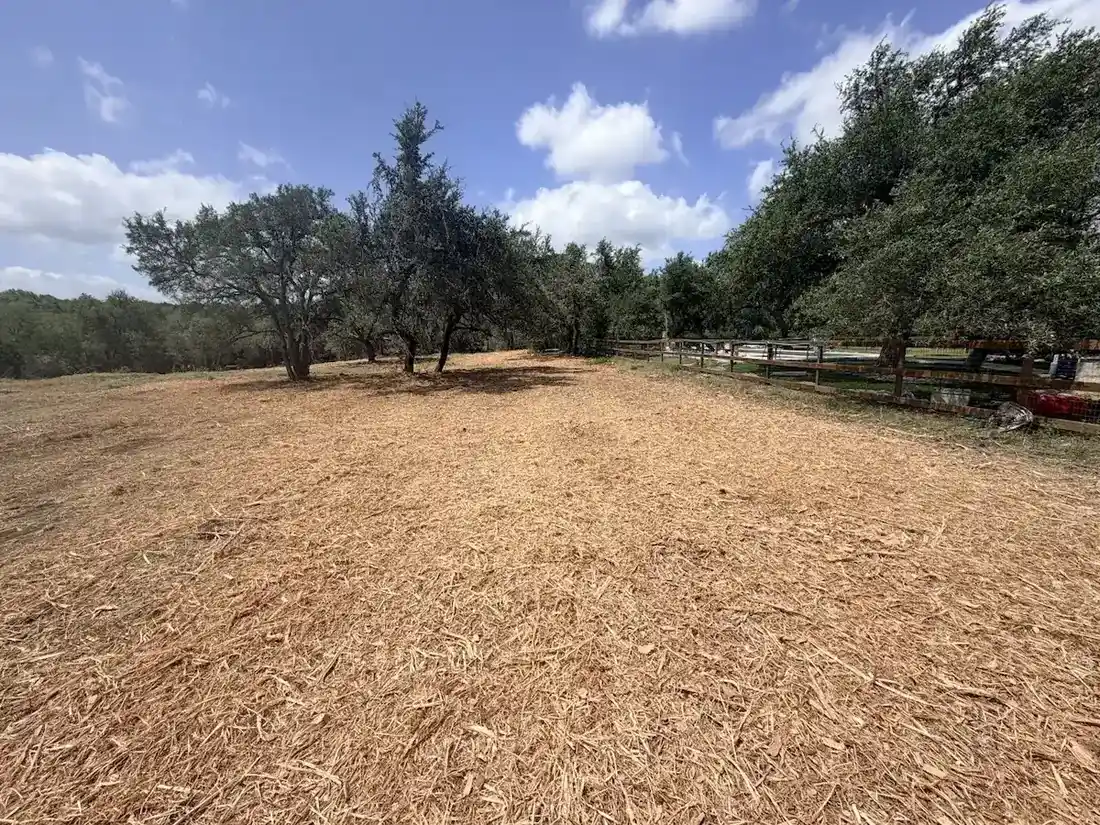
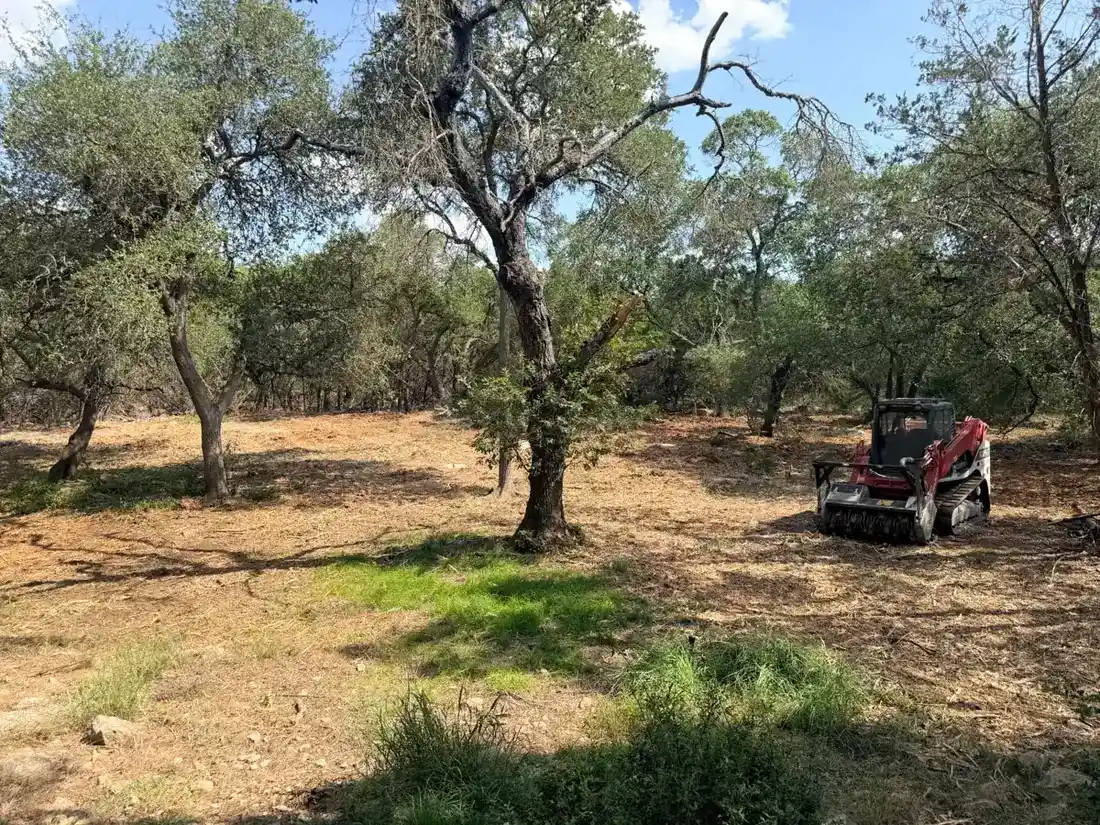
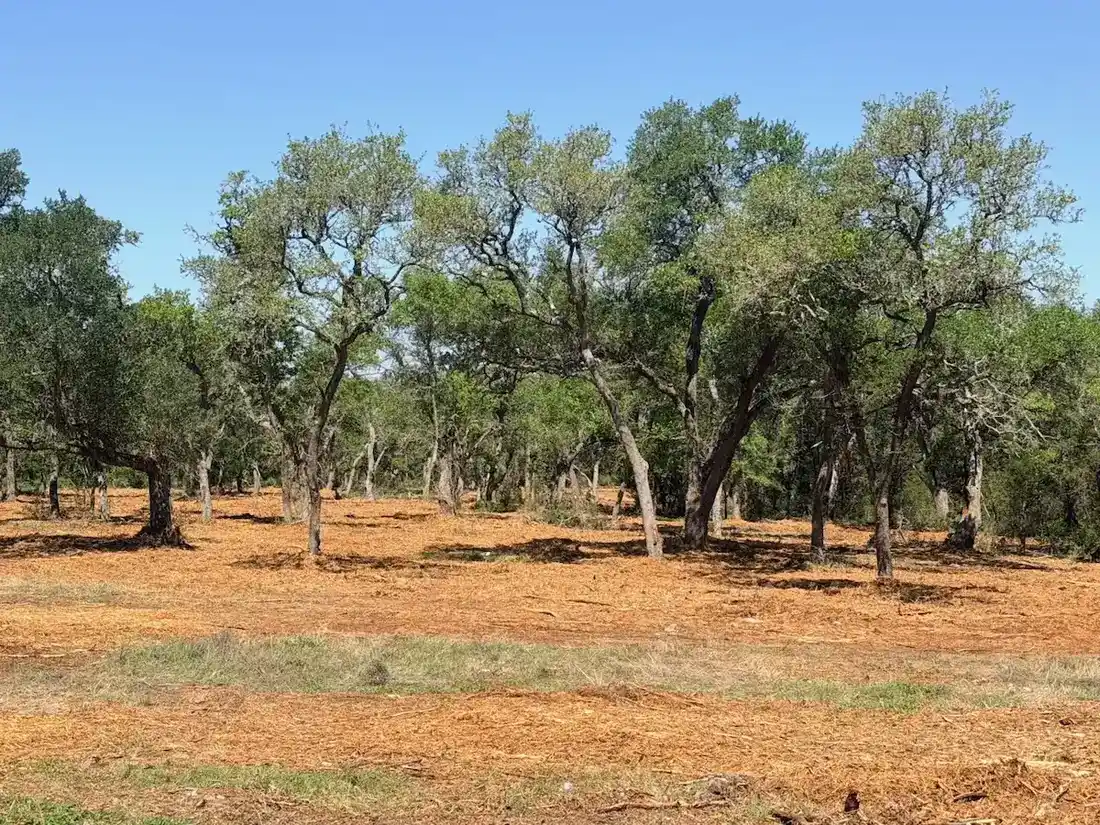
Forestry mulching fits the debris rule well: it grinds cedar and brush in place into mulch, with no burn piles and no haul-off. Our wildfire mitigation page covers how we use it for defensible space.
How the MFR process works
- Apply online during the Texas A&M Forest Service application window. Include a map of the project area, contractor information and a cost estimate.
- Applications are scored on wildfire mitigation factors. Approval isn’t guaranteed.
- If approved, Texas A&M Forest Service schedules a pre-inspection. Work can’t begin until it’s complete.
- The contractor finishes the work by the program deadline.
- A post-inspection verifies the acreage and dimensions.
- Submit receipts and invoices for reimbursement.
Any MFR work done before the pre-inspection isn’t eligible for reimbursement, even if the application is approved.
Application windows and deadlines change each cycle. Our grants page lists the current dates.
NRCS EQIP Practice 314 for Brush Management
EQIP is the NRCS’s main conservation program. It gives technical and financial help to address natural resource concerns on working lands. Brush management is Conservation Practice 314, and payment rates are set by the Texas EQIP payment schedule.
Who EQIP is for
EQIP is for farmers, ranchers and forest landowners. To check eligibility, NRCS asks for an official tax ID, a deed or lease showing you control the property, and a farm number. If you don’t have a farm number, the USDA Farm Service Agency can issue one.
How the EQIP process works
- Contact your local NRCS office. A conservation planner walks the land with you and develops a conservation plan.
- NRCS helps you with the application and eligibility forms.
- Applications are accepted year-round but are ranked and funded by state ranking dates.
- If your application is selected, you decide whether to sign the contract. You then get the practice standards and a set time to finish the work.
- Once the work is done and inspected, you’re paid the practice rate if it meets NRCS standards.
NRCS technical assistance is free, and some producers may qualify for advance payment. Work done before your contract is signed isn’t paid.
Using MFR and EQIP on the Same Property
Don’t assume both programs will pay for the same acres. Before any work starts, ask both Texas A&M Forest Service and your NRCS office:
- Whether funding from one program affects your eligibility for the other
- How they want separate treatment areas mapped
- How they want the other program’s funding disclosed
Get their answers in writing and keep them with your project file.
Getting a Contractor Quote for Your Application
An MFR application needs contractor information and a cost estimate, so get your quote before you apply. Forestry mulching, cedar removal and wildfire mitigation run $2,300 per day. You can choose a project price or our day rate, and either way the price is agreed before work starts.
Click “Get a Free Quote Today” and send your project details first, then a few photos. We typically reply within minutes, and an owner walks the property with you before any contract is signed. You can also call or text (512) 641-5658.
Frequently Asked Questions
Can MFR and EQIP pay for the same brush management acres?
Don’t assume they will. Before any work starts, ask both Texas A&M Forest Service and your NRCS office whether funding from one affects the other and how they want treatment areas mapped. Get the answers in writing.
Who is eligible for the MFR grant and EQIP?
MFR is for private Texas landowners in eligible counties, which can change each year, for work that reduces the risk of home loss to wildfire. EQIP is for farmers, ranchers and forest landowners addressing resource concerns on working lands, and NRCS confirms eligibility.
When can MFR or EQIP work start?
Only after your program says so. MFR work can’t begin until Texas A&M Forest Service completes the pre-inspection, and EQIP pays only for work done after you sign the contract. Work done earlier isn’t paid.
Does MFR pay for forestry mulching?
Yes, when the project qualifies. MFR reimburses actual costs up to $2,000 per acre for heavy equipment, such as a forestry mulcher, up to $20,000 per landowner. All debris must be removed or reduced to mulch or chips, and burning isn’t allowed.
MFR and EQIP can each offset part of the cost of brush management when the rules and timing are followed from the start. Check the current dates, get your quote, and don’t start work until your program says you can.